
Just recorded a YT shorts on this amusing topic: ‘boomerasking’ Where “A coworker asks if you had a good weekend, then without responding to your answer, goes on to share about his own awesome Saturday night at a rock concert or birthday party”. Hence: “Like a boomerang that returns to its thrower, people who boomerask… Continue reading ‘Boomerasking’: The annoying habit of asking a question only to answer it yourself
Author: Ben Hutchinson

Safe As: Is tired driving as deadly as drunk driving?
This covers three lab studies comparing cognitive performance between extended time awake vs alcohol intoxication (lab only, not real or simulator driving studies…But if there’s interest I’ll cover some of those, too)
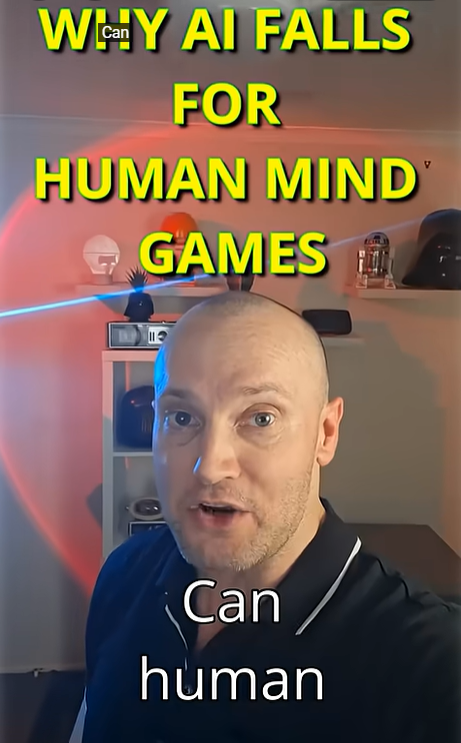
Safe As: Why AI falls for human mind games: testing human persuasion on AI LLMs for shady stuff
Why AI falls for human mind games – testing human persuasion techniques on AI LLMs to entice them to break their own internal rules. https://youtube.com/shorts/jAYJOEiuTwE?si=SN5x1U4k1ZImZy4d

The fifth paradox of safety: New article from Erik Hollnagel
Are our efforts to make ‘safety’ more measurable actually making it harder to manage? New article from Erik Hollnagel is available on his site – discussing four paradoxes from James Reason, and then his own fifth addition. See attached image. Links to the article in comments. PS. Check out my new YouTube channel. If you… Continue reading The fifth paradox of safety: New article from Erik Hollnagel
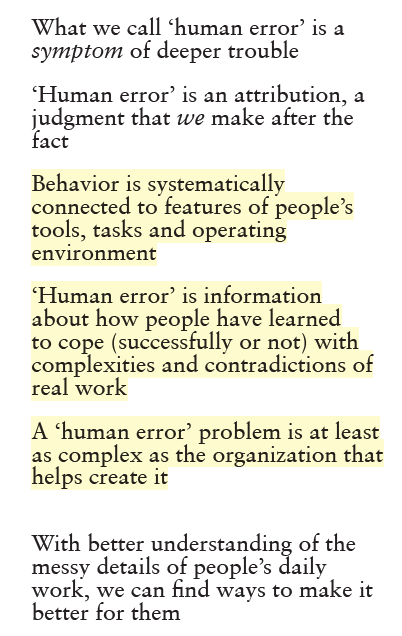
“A ‘human error’ problem is at least as complex as the organization that helps create it” – Dekker
“Behavior is systematically connected to features of people’s tools, tasks and operating environment” — and — “A ‘human error’ problem is at least as complex as the organization that helps create it” Some extracts I like from Dekker’s classic ‘Field Guide to Understanding Human Error’ (3rd ed in this case). Just a lazy post, as… Continue reading “A ‘human error’ problem is at least as complex as the organization that helps create it” – Dekker

Risk information source preferences in construction workers
What source do workers prefer for informing on risk? 106 UK frontline construction workers were surveyed, from a single building site. More extracts in comments. Extracts: · In this study, “supervisors and safety managers were the most preferred sources of risk information overall”, but further analysis “suggested that workers’ risk information source preference is risk dependent… Continue reading Risk information source preferences in construction workers

Human error is like saying falls are due to gravity – and we may as well reprimand a light-bulb: Trevor Kletz
“Saying an accident is due to human failing is about as helpful as saying that a fall is due to gravity. It is true but it does not lead to constructive action”. – — and — “it is no use telling [somebody] to be more careful. We might just as well reprimand a light-bulb for… Continue reading Human error is like saying falls are due to gravity – and we may as well reprimand a light-bulb: Trevor Kletz
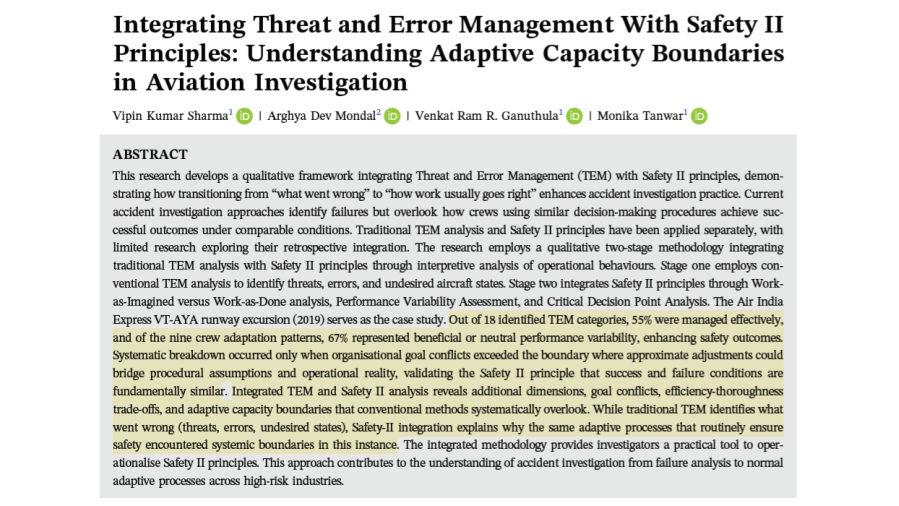
Integrating Threat and Error Management With Safety II Principles: Understanding Adaptive Capacity Boundaries in Aviation Investigation
How does Safety-II thinking enable different insights in aviation safety? This study explored things like Threat & Error Management (TEM), performance variability, and a shift from ‘what went wrong’ to ‘how work usually goes right’, based on an analysis of the Air India Express VT-AYA runway excursion. Skipped heaps. Background: Findings: Several limitations present, including… Continue reading Integrating Threat and Error Management With Safety II Principles: Understanding Adaptive Capacity Boundaries in Aviation Investigation

If you find this work useful, then please sub, like and comment on my YT channel
Hey all, Per the title – if you find any of my work useful, then I’d really appreciate subbing, liking, sharing and commenting on my two youtube videos. Particularly a share and COMMENT. Even if your comment is negative or critical, it helps feed the YT algorithm’s lust for engagement! https://youtube.com/@safe_as_pod?si=u-c_JpQqPK_NHIxD
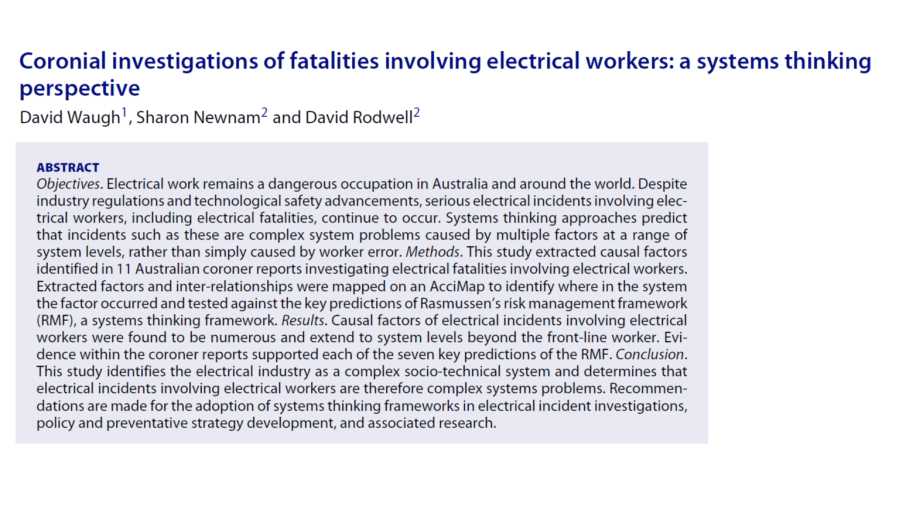
Coronial investigations of fatalities involving electrical workers: a systems thinking perspective
Are electrical safety incidents complex systems problems? This evaluated 11 Australian coronial reports using Rasmussen’s Risk Management Framework Extracts: · A “key finding of this study is the identification of the electrical industry as a complex socio-technical system and the determination that electrical incidents involving electrical workers are therefore a complex systems problem” · “evidence within the… Continue reading Coronial investigations of fatalities involving electrical workers: a systems thinking perspective
 SafetyInsights.org