For those in the throes of developing, reviewing or decluttering procedures then the model 1 / model 2 described by Hale and Borys (2013) may interest you (source below, but which originally drew on work from Sid Dekker).
In short and to butcher a far more nuanced description but:
model 1: sees rules as an embodiment of the better way to work, designed by experts in advance to cover requirements & where things are seen to be safe providing people just follow the rules.
It’s said that from this perspective “Once devised, they are ‘carved in stone’, communicated to, and imposed on, the operators or workforce by management … to be enforced by suitable means to overcome the fallible human tendency to make errors and deviate from the rules” (Hale & Borys, 2013).
Model 1 is largely based on a top-down view of performance, where a goal is “aimed at trying to understand, explain and counteract violations from imposed or agreed rules, which are themselves seen as the ‘gold standard’ of correct behaviour” (Hale & Borys, 2013).
Model 2: focuses on rules as tools that people use for support but relying more on their experience – accepting that rules can’t cover all contingencies & people need to adapt to successfully & safely complete work. E.g. As suggested by Carim et al. (2016), rules can rather act as “resources for action”, highlighting a dynamic nature of flexible interpretation and adaptation of rules.
Importantly, one model isn’t implicitly good or bad, nor should we advocate to eliminate model 1 (or eliminate procedural systems, which would likely not be a good idea). Nor should we overemphasise adaptations under model 2. Both have their place, and the first image helps to clarify some relative strengths and limitations.
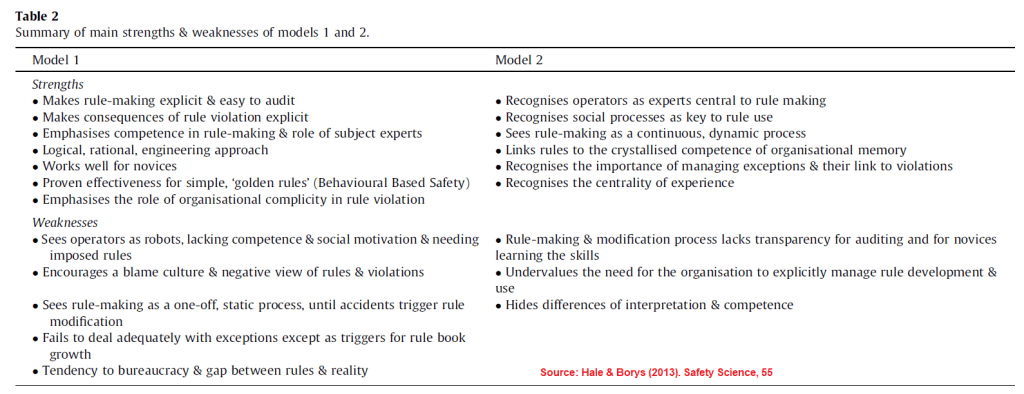
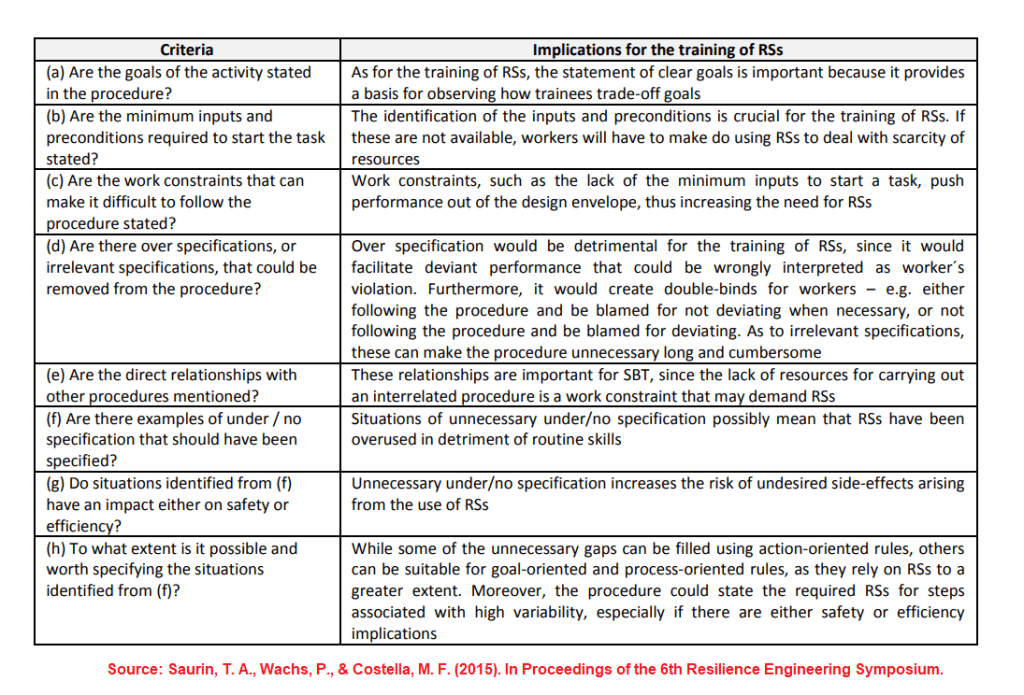
Image 2 below highlights something I’ve shown previously from Sarin et al. (2015), which I think is an interesting and simple set of principles for thinking about rules and how they influence adaptive skills.
Link to sources below, including a recent study which explored the application of model 1 / model 2 thinking from participants across the process industries.
Image 1 source: https://doi.org/10.1016/j.ssci.2012.05.011
Model 1 / model 2 study summary: https://wordpress.com/post/safety177496371.wordpress.com/292
Link to the LinkedIn post: https://www.linkedin.com/posts/benhutchinson2_for-those-in-the-throes-of-developing-reviewing-activity-6933180971554934784-gTxU?utm_source=linkedin_share&utm_medium=member_desktop_web

 SafetyInsights.org
Hi Ben, great post again. I’d like to point you to further work using model 1 and 2 to identify local ingenuity completed very recently: https://www.mdpi.com/2313-576X/8/2/37. There is also a better readable white paper on this which you have found on linked in.
Regards, Robert.
LikeLiked by 1 person
Thanks Robert. I have that paper in my read pile to summarise (really nice work putting it together), but I hadn’t yet read the whitepaper so I’ll give that a crack next. Cheers.
LikeLike