Amy Edmondson discusses some nuances about what group psychological safety is or isn’t. (I’ll post further on this in the near future).
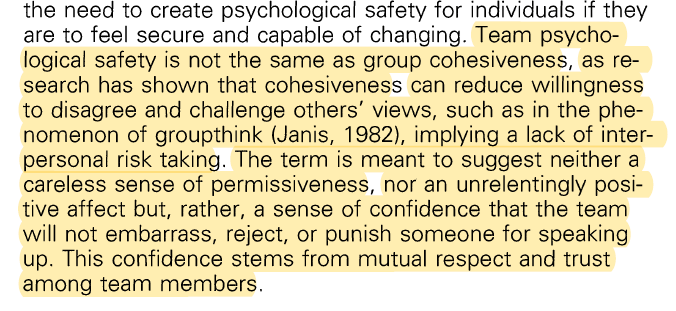
1. It’s not coherence since coherence can make it more difficult to voice dissenting views (image 1).
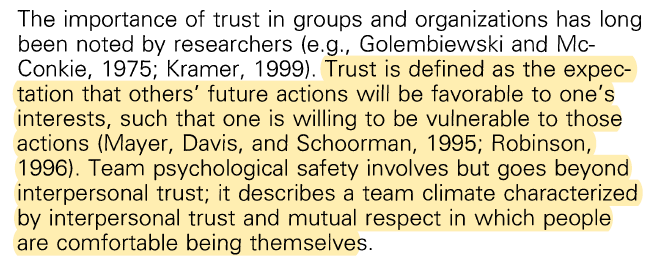
2. It’s also not trust, but trust is important. Trust refers to interactions between two individuals and parties, like trusting one colleague but not another. Psychological safety is a group phenomenon.
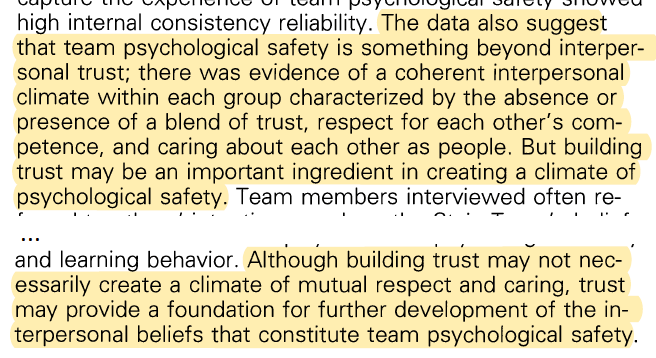
3. Further, psychological safety is “something beyond” interpersonal trust, where groups could have a “coherent interpersonal climate” with the absence or presence of trust, respect for each other and care.
4. Nevertheless, while trust may not necessarily lead to creating a climate of mutual respect and caring, it “may be an important ingredient in creating a climate of psychological safety”.
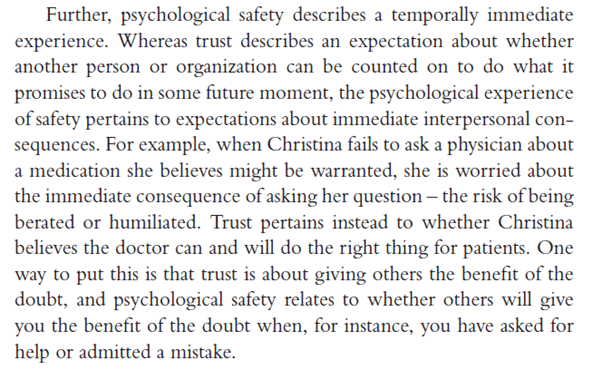
5. Psychological safety is said to describe a “temporally immediate experience”. While trust involves an expectation about another person in some future moment, psychological safety “pertains to expectations about immediate interpersonal consequences”.
6. An example of the above is that trust is “about giving others the benefit of the doubt, and psychological safety relates to whether others will give you the benefit of the doubt when, for instance, you have asked for help or admitted a mistake”.
Sources:
1. Edmondson, A. (1999). Psychological safety and learning behavior in work teams. Administrative science quarterly, 44(2), 350-383.
2. Edmondson, A. (2019). The fearless organization: creating psychological safety in the workplace for learning, innovation, and growth. John Wiley & Sons.
Link to the Linkedin post: https://www.linkedin.com/posts/benhutchinson2_amy-edmondson-discusses-some-nuances-about-activity-6996598297373143040-prpK?utm_source=share&utm_medium=member_desktop

 SafetyInsights.org
2 thoughts on “Psychological safety isn’t trust or team coherence”