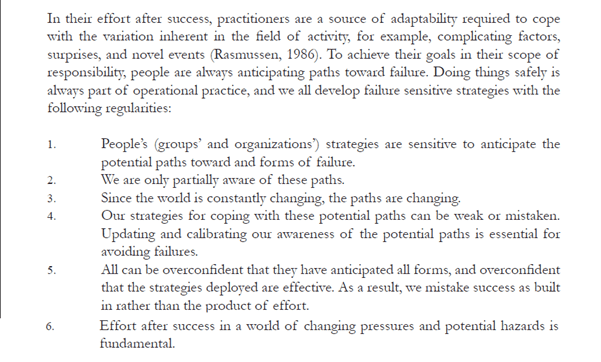
Not much to add to the attached. Woods et al. in “Behind Human Error” discuss the necessary adaptation required by operators.
That is, they argue “In contrast with the view that practitioners are the main source of unreliability in an otherwise successful system, close examination of how the system works in the face of everyday and exceptional demands shows that people in many roles actually “make safety” through their efforts and expertise. People actively contribute to safety by blocking or recovering from potential accident trajectories when they can carry out these roles” (p6). [Image 1]
Or, “The human role at the sharp end is to “make up for holes in designers’ work”.
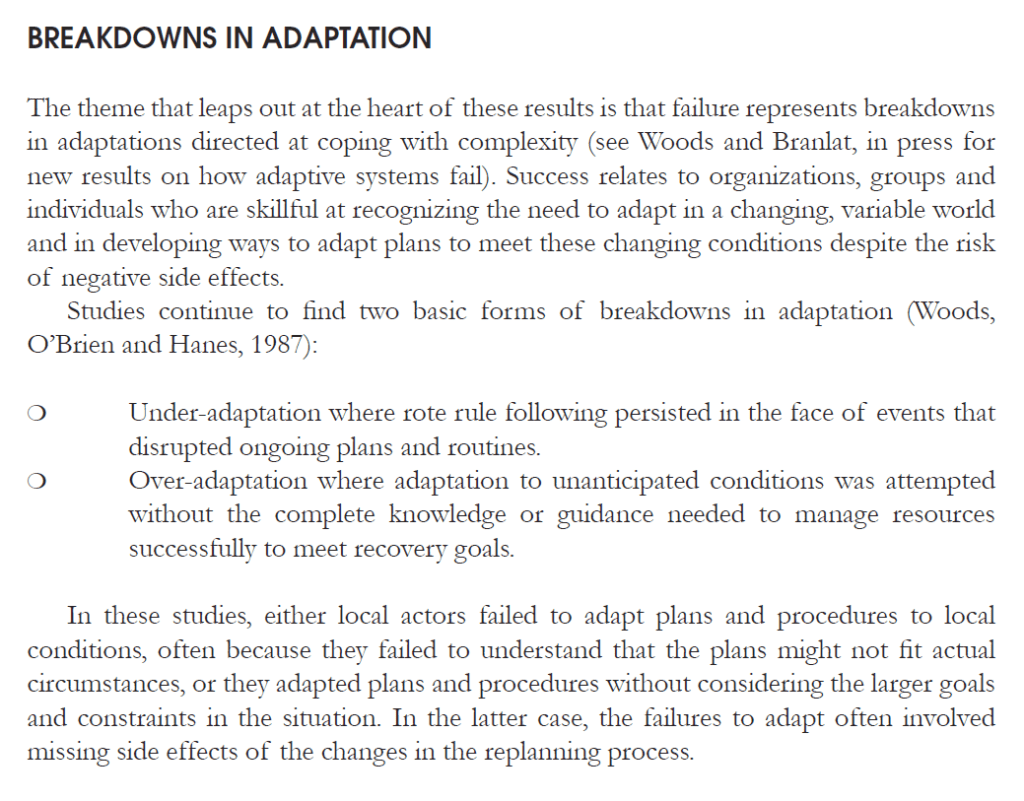
However, people don’t always adapt in the way necessary to maintain expected performance, and may under- or over-compensate; and at times introduce new failure pathways that were not anticipated by designers. [Image 2]
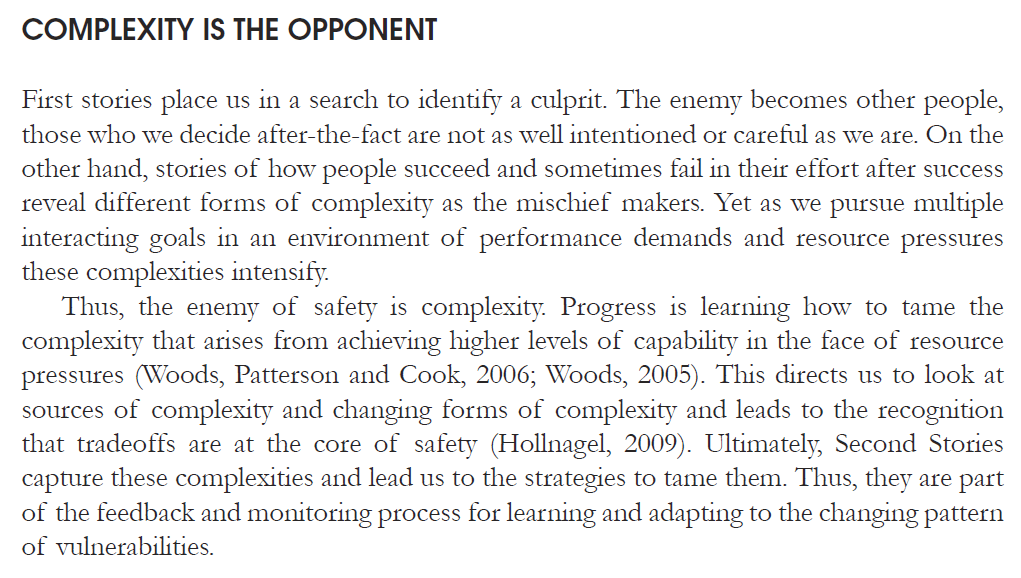
Finally, they talk about first and second stories; how first stories push us towards adversarial relationships, whereas complexity under competing demands should instead involve considered thought and action (which they figuratively refer to as the opponent requiring taming).
Source: Woods, D. D. (2010). Behind human error. Ashgate Publishing, Ltd.
Link to the LinkedIn post: https://www.linkedin.com/posts/benhutchinson2_not-much-to-add-to-the-attached-woods-et-activity-7071593527436070913-ewgM?utm_source=share&utm_medium=member_desktop


One thought on “Sharp end adaptations and complexity”