Do fatal and severe accidents result in effective and targeted improvements? Not necessarily according to this research.
Leslie Rex Stockel’s PhD dissertation was an interesting read – exploring contributory factors and precursors, and the types of corrective actions in serious and fatal accidents/investigations.
150 reports were analysed from NIOSH Face reports, OSHA and internal company reports.
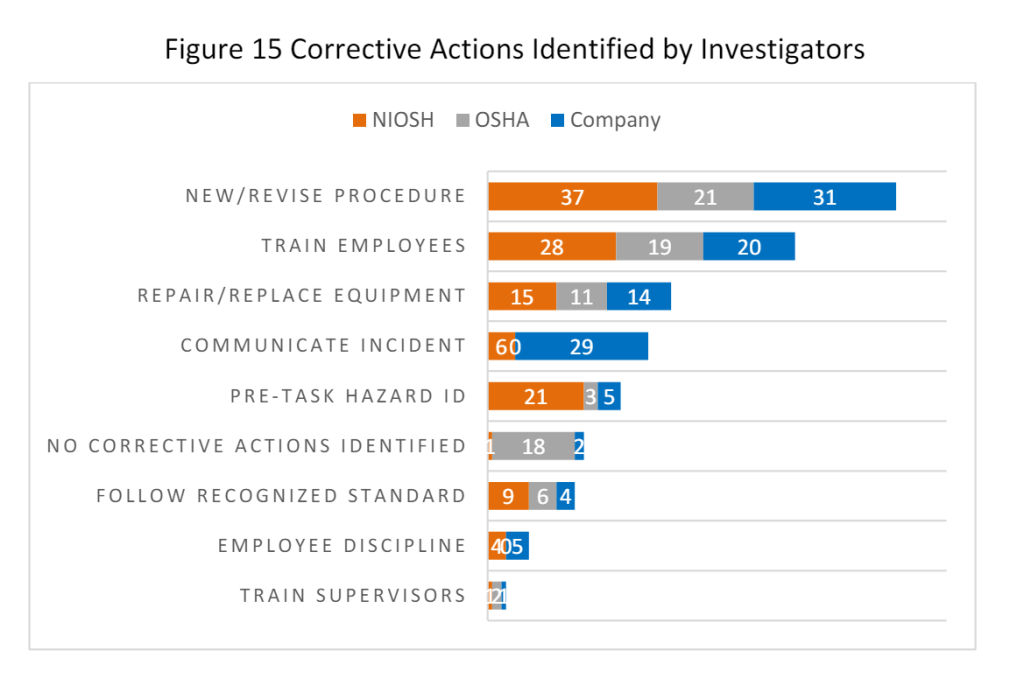
The most interesting findings in my view related to corrective actions following incidents. Leslie found:
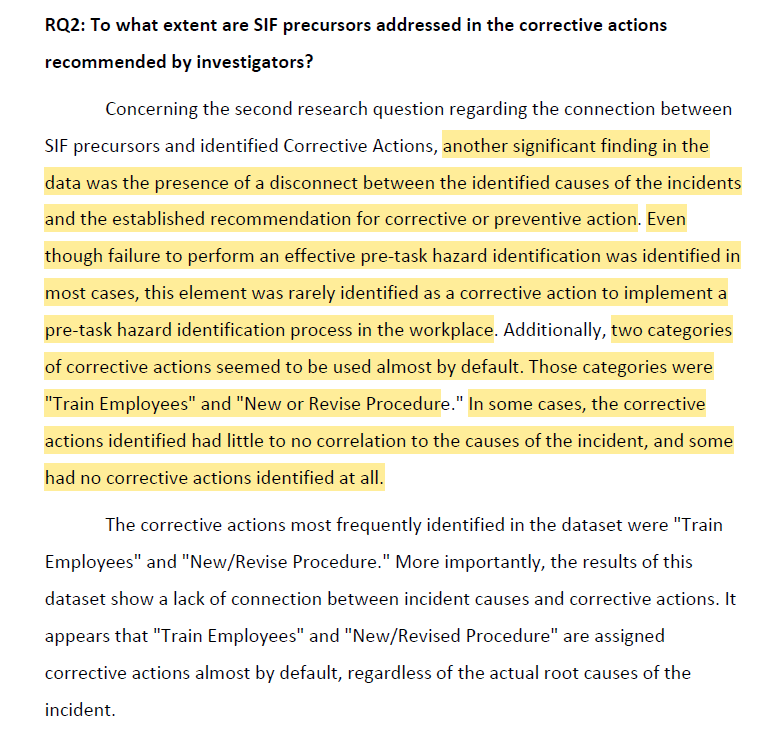
- A “significant finding in the data was the presence of a disconnect between the identified causes of the incidents and the established recommendation for corrective or preventive action”
- “None of the reports included recommended corrective actions that fully addressed the Precursor causes for the incident”
- None of the 150 sampled reports had corrective actions fully addressing the precursors, 23 didn’t address them at all, and the remaining 127 reports partially addressed the precursors
- E.g. failure to conduct an effective pre-task hazard ID was identified in most reports, yet this was rarely specified as a corrective action.
- And ‘train employees’ and ‘new or revise procedure’ “seemed to be used almost by default”, where in some cases “the corrective actions identified had little to no correlation to the causes of the incident”

I think these findings at least partially supports other works, like the Brady review of fatal Qld mining accidents (see link in comments). Our study of safety auditing also found a disconnect between corrective actions and the underlying issue.
Some other findings were:
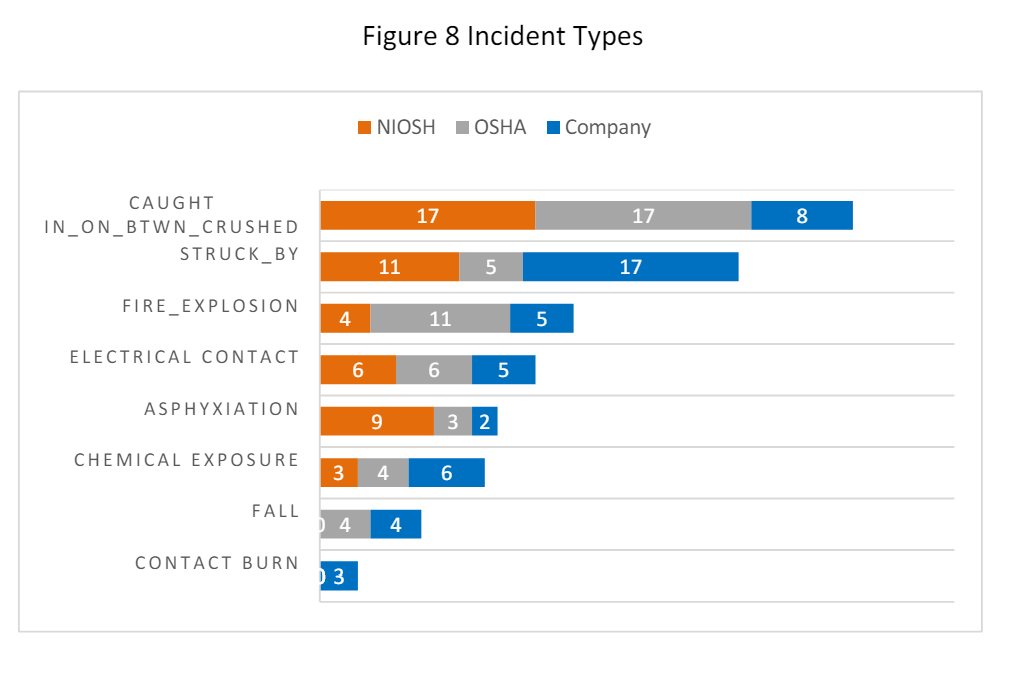
- Caught between or struck by was the most prevalent incident types in this dataset
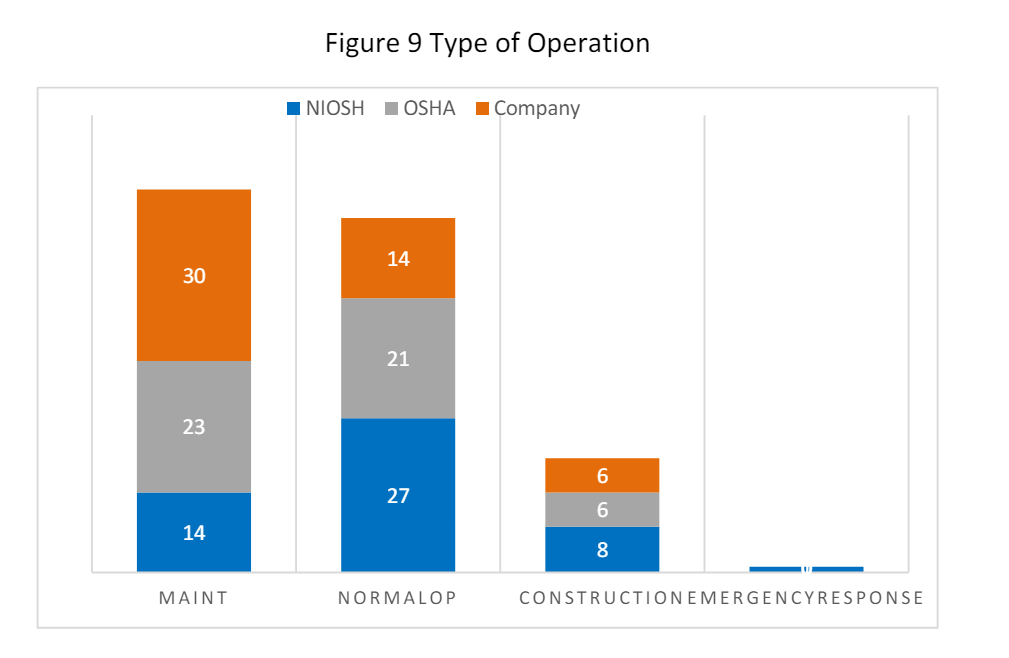
- A higher proportion of incidents occurred in maintenance compared to normal operations
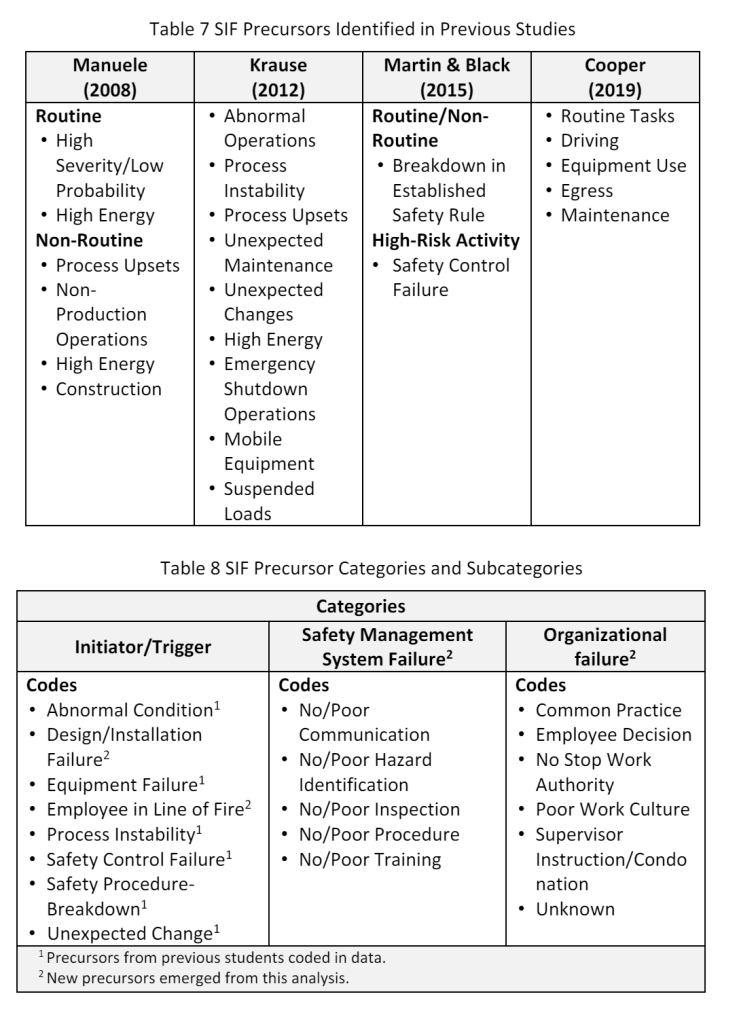
- SIF precursors routine and non-routine may have been miscategorised and “poorly defined in previous studies”; nevertheless, a higher proportion of serious and fatal events in routine work was identified compared to non-routine
- Three major categories of SIF precursors were identified: the incident trigger, SMS failure, and organisational failure
- Previous studies may have also conflated worker experience and task frequency; this dataset found a higher proportion of incidents related to workers who were experienced in the task
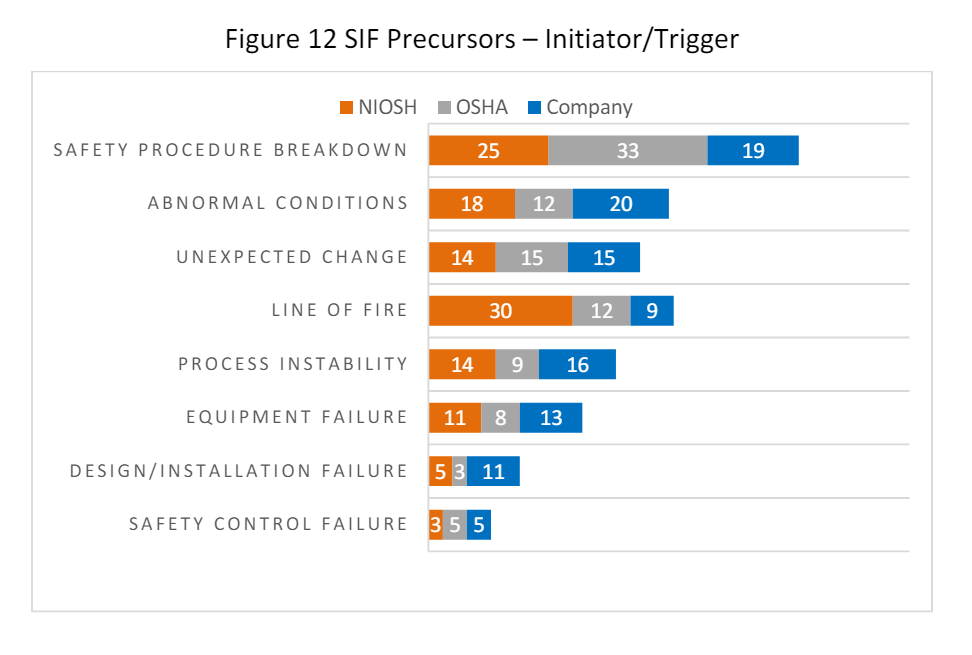
- 52% of incidents had a type of ‘safety procedure breakdown’, expressed in three main ways. 1) an appropriate procedure didn’t exist, 2) there was a breakdown in the procedure, where it may be incomplete or poorly implemented, 3) the procedure wasn’t executed as expected
- And heaps more specific findings relating to the types of safety system breakdowns
Interestingly, investigations were found to spend “an inordinate amount of content was devoted to elements that did not contribute to the overall purpose and goal of the process”.
For instance, on emergency response actions after the incident, “hyperfocus on medical treatment outcomes for injured employees, and, perhaps most importantly, a disconnect between incident causes and corrective actions”.
Many investigations were also found to provide considerable details about the injuries suffered by the employee, rescue means, provided medical care, transport to medical facility, treatment plans and more. These focus areas in investigations “suggest a hyper-focus on OSHA reporting and recording requirements, a common fallacy among employers who use OSHA reporting requirements as organizational measures of safety performance, a problematic and arguably unethical practice”.
Ref: Stockel, L. R. (2023). What Causes Accidents at Work? Workplace Serious Incident & Fatality Investigations: A Study of Precursors.
Report link: https://ttu-ir.tdl.org/bitstreams/47080fec-ed1d-4e76-9a25-100cb6db3ac6/download
Other reports:
Brady Haywood fatal mining report: https://documents.parliament.qld.gov.au/tableOffice/TabledPapers/2020/5620T197.pdf
My post on the report: https://www.linkedin.com/posts/benhutchinson2_how-well-are-critical-risks-being-managed-activity-6900210363527258112-9ZQ1?utm_source=share&utm_medium=member_desktop
My audit study: https://doi.org/10.1016/j.ssci.2023.106348

 SafetyInsights.org
Hi Ben,
Is there any research that can reliably predict future workplace fatalities, or is it like TRIR, which is 96-98% random according to the Construction Safety Research Alliance paper on The Statistical Invalidity of TRIR as a Measure of Safety Performance?
Thanks,
Hayden
LikeLike