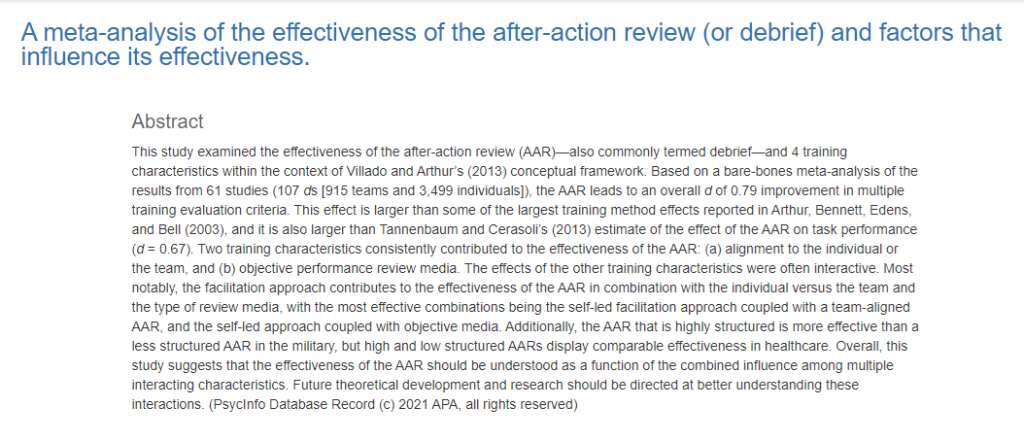
A newer meta-analysis evaluating the evidence on the effectiveness of debriefs / after-action reviews (AAR).
tl;dr: This larger study found stronger evidence for the effectiveness of AARs in some training indices.
61 studies met inclusion.
Key findings
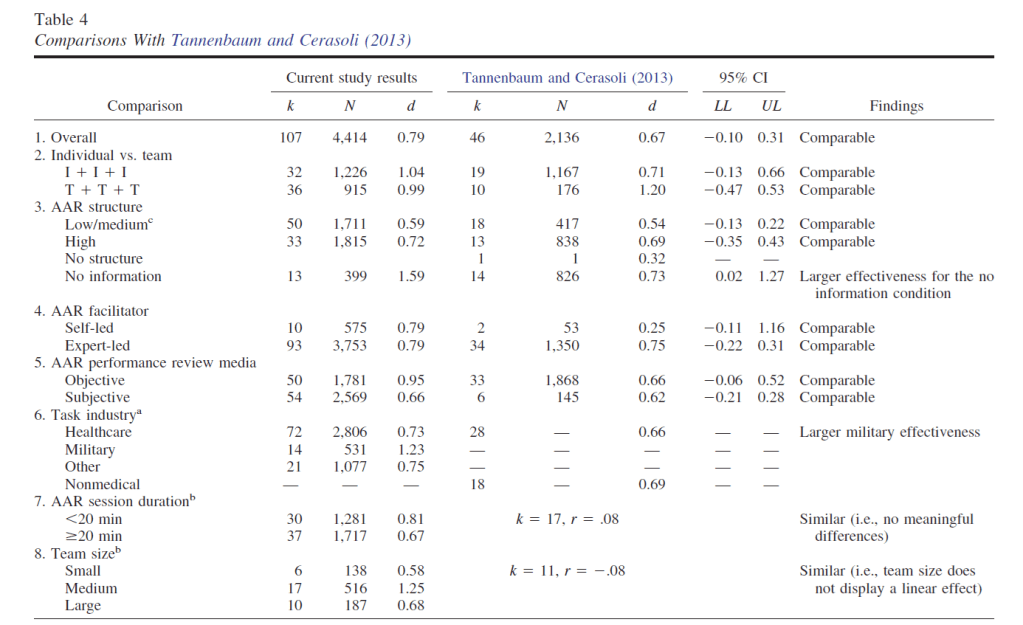
• AAR leads to an overall effect size of 0.79 in multiple training evaluation criteria
• This effect size is larger than some other meta-analyses estimations• Two training characteristics consistently contributed to the effectiveness of AARs:
o alignment to the individual or the team learning objectives
o objective performance review media (e.g. videos)
• The effects of other training characteristics were found to be interactive
• The facilitation approach in AARs also contributes to their effectiveness
• The AARs that are highly structured are more effective than less structured in the military, but high and low structured AARs were equally effective in healthcare
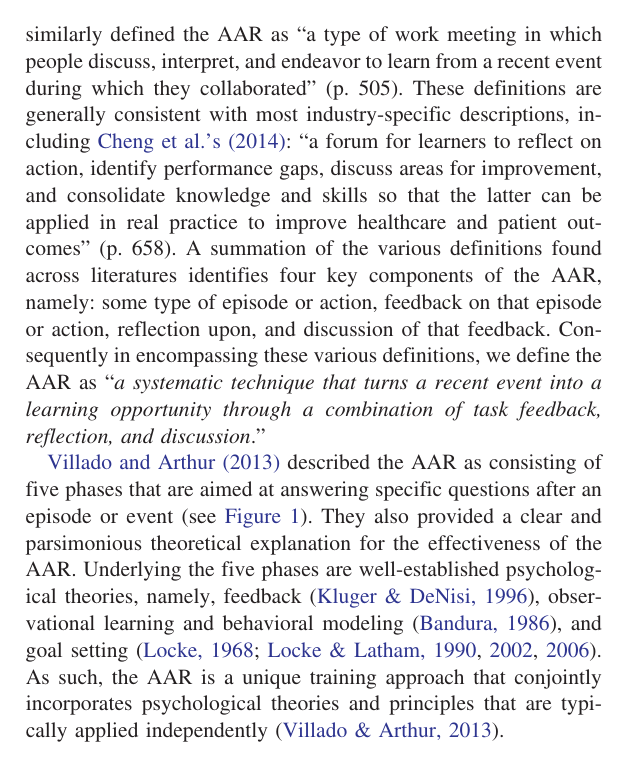
• While AARs most commonly lead to improvements in training criteria, they are “not summarily effective … and there are certain task, training, and trainee characteristics that contribute to and detract from its effectiveness”
• Contextual and enviro factors influenced the effectiveness of AARs – psychological safety is one influential factor; being shown to be both a predictor and outcome
• High structure AARs is most effective in the military, but a structured approach seems to be less important in healthcare and elsewhere
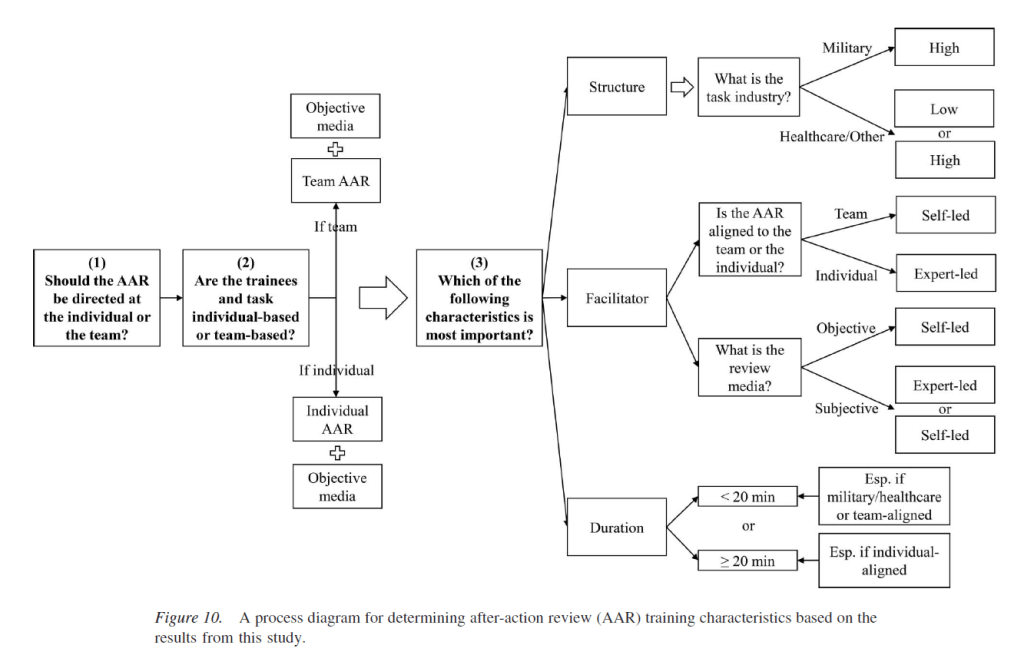
• Decisions about AAR facilitation should be made based on the alignment of the AAR to the individual or team
• Self-led approach is more effective for teams, whereas an expert-led approach is best coupled with an individually aligned AAR
• A self-led approach is best coupled with objective performance review media, whereas expert-led and self-led AARs are best coupled with subjective media
• The most effective combinations of these factors, but based on a small number of samples, seems to be a self-led approach and objective media
• Shorter duration AARs are more effective when the AAR is aligned to the team, whereas longer AARs are more effective when the AAR is individually aligned
Keiser, N. L., & Arthur, W., Jr. (2021). A meta-analysis of the effectiveness of the after-action review (or debrief) and factors that influence its effectiveness. Journal of Applied Psychology, 106(7), 1007–1032.
Study link: https://doi.org/10.1037/apl0000821
My site with more reviews: https://safety177496371.wordpress.com

 SafetyInsights.org
One thought on “A meta-analysis of the effectiveness of the after-action review (or debrief) and factors that influence its effectiveness”