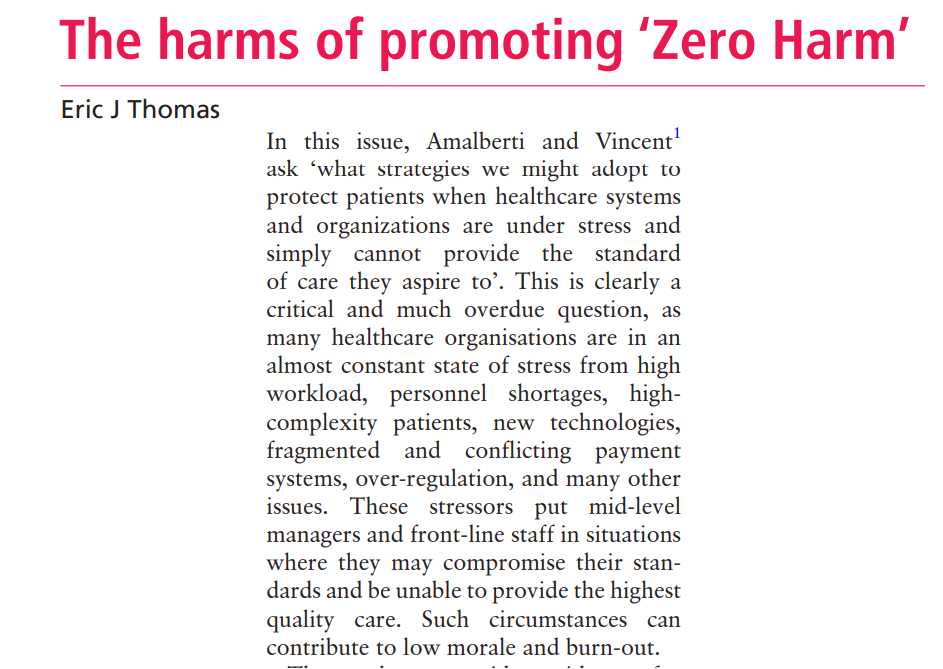
This brief editorial discussed some challenges to zero harm approaches (‘absolute safety’) in healthcare.
I particularly liked how the author argued that not only is zero harm not attainable, in an absolute sense, but “is unknowable”.
Some points:
· The authors encourage shifting away from ‘absolute safety’ “towards doing a better job of actively managing risk, and an “excessive focus on absolute safety may paradoxically reduce safety”
· There are two groups of preventable harms that cannot be eliminated – like infections, and following the introduction of new technologies, drugs, procedures and workflows since “These are only preventable after they first appear and become known”

· Focusing on absolute safety/zero harm can be “frustrating and demoralising for clinicians to be asked to strive for an unattainable goal. A basic tenet of quality improvement is to set a goal that is lofty, but still attainable”
· “Second, the goal of zero harm is not measurable. Even for the limited set of preventable harms that could practically be measured, we do not have measurement systems that are reliable and valid enough to ensure patients that we have truly met or even made progress towards zero harm”
· “The safety measurement methods described to date also fail to capture all harms”
· Hence, “The goal of zero harm is not only unattainable, it is unknowable”
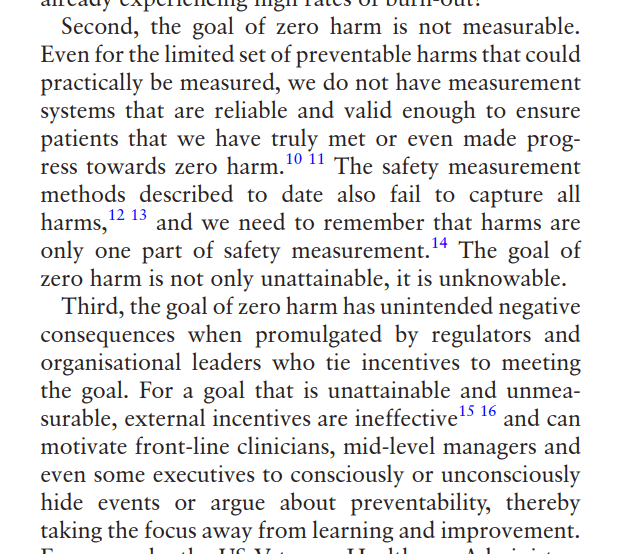
· “Third, the goal of zero harm has unintended negative consequences when promulgated by regulators and organisational leaders who tie incentives to meeting the goal”
· “For a goal that is unattainable and unmeasurable, external incentives are ineffective and can motivate [workers] and even some executives to consciously or unconsciously hide events”
· “A related negative consequence of overemphasis on zero harm is that given our flawed safety measurement systems we will continue to rely on clinicians to report harms. However, they can simply choose to not report in order to meet a zero harm goal”
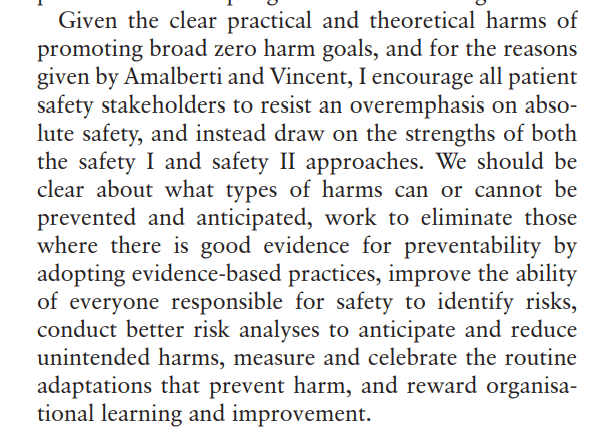
· “Fourth, as Amalberti and Vincent argue,1 to improve overall safety and reduce harm, we should focus on reducing risk instead of eliminating harm”
· “Safety II’s emphasis on reducing risk over absolute safety, or zero harm, is needed given the inevitability of unintended and unanticipatable harms”
Ref: Thomas, E. J. (2020). The harms of promoting ‘Zero Harm’. BMJ quality & safety, 29(1), 4-6.
Study link: https://doi.org/10.1136/bmjqs-2019-009703
My site with more reviews: https://safety177496371.wordpress.com

 SafetyInsights.org