
How does attributions of ‘human error’ create hidden hazards? Interesting article discussing a failure type in intraocular surgery using a cannula and how it’s effectively become hidden. PS. Check out my YouTube and recent Critical Control / barrier vid: https://youtu.be/Ly1mEn_KCLQ?si=yG3yRVOM0r2eyyKI Shout a coffee: https://buymeacoffee.com/benhutchinson Extracts: · “The way we look for harm shapes what we are… Continue reading When the interface fails: a patient-safety hazard hidden by the assumption of human error
Tag: healthcare
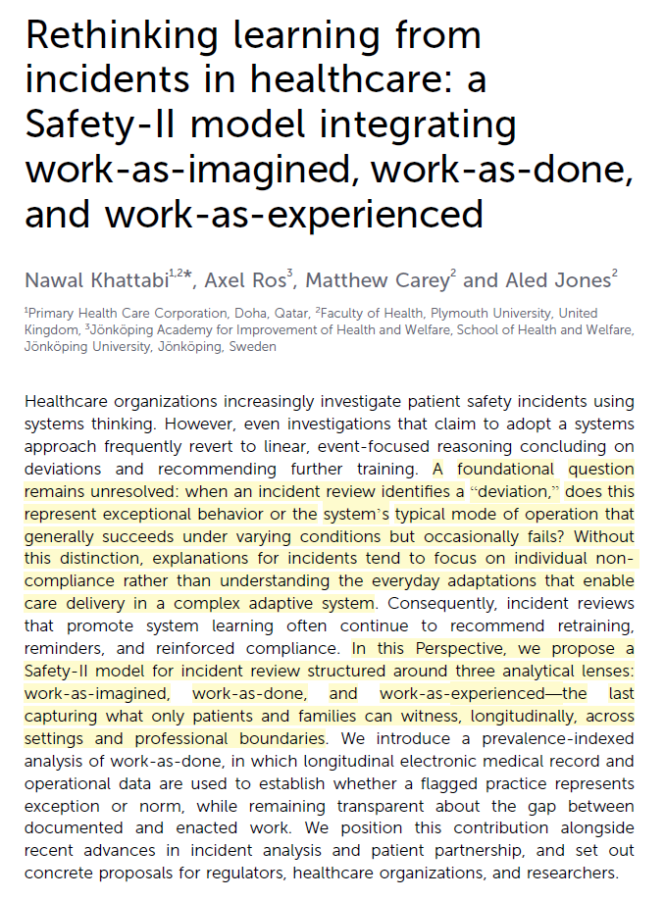
Rethinking learning from incidents in healthcare: a Safety-II model integrating work-as-imagined, work-as-done, and work-as-experienced
Can Safety-II principles expand learning within investigations? This article proposes a Safety-II framed incident review model for healthcare capturing WAI (work-as-imagined), WAD (work-as-done) and WAE (work-as-experienced). Shared under an open access licence. PS. Check out my YouTube and recent Critical Control / barrier vid: https://youtube.com/@safe_as_pod?si=iUaDPJynPemQRZhY Shout a coffee: https://buymeacoffee.com/benhutchinson Extracts: · “A foundational question remains unresolved:… Continue reading Rethinking learning from incidents in healthcare: a Safety-II model integrating work-as-imagined, work-as-done, and work-as-experienced
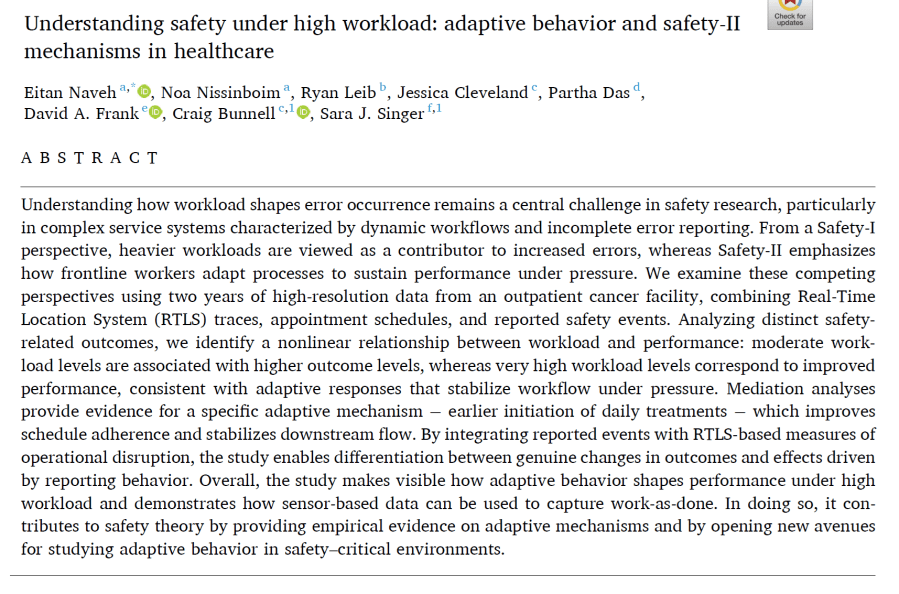
Understanding safety under high workload: adaptive behavior and safety-II mechanisms in healthcare
What does Safety-II tell us about workload, adaptations, and error? This study analysed the effects of workload on error and adaptations across >580 days in 6 hospital departments and 924 reported safety events. PS. Check out my YouTube and recent Critical Control / barrier vid: https://youtube.com/@safe_as_pod?si=iUaDPJynPemQRZhY Shout a coffee: https://buymeacoffee.com/benhutchinson Extracts: · “From a Safety-I perspective,… Continue reading Understanding safety under high workload: adaptive behavior and safety-II mechanisms in healthcare
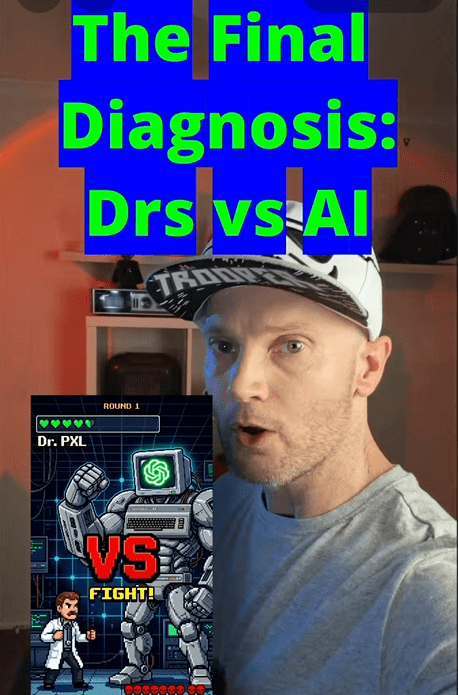
Your Doctor vs AI Chatbot – who do you trust more for medical advice?
Who would you trust more for medical advice – your doctor or an AI chatbot? I think most people would say their doctor. Interesting, some new research has found AI LLMs to outperform doctors on a range of recall knowledge tests – and sometimes quite significantly so. Though, of course, this is largely based on… Continue reading Your Doctor vs AI Chatbot – who do you trust more for medical advice?
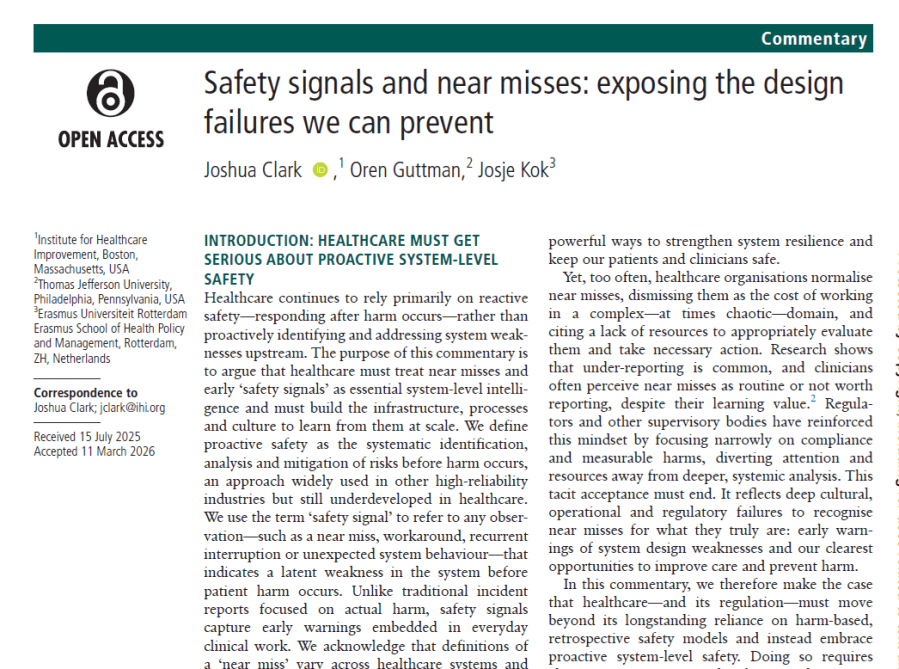
Safety signals and near misses: exposing the design failures we can prevent
A brief discussion paper on safety signals and moving away from reactive harm-based safety. Full article provided under open access licence (see end of post). PS. Check out my YouTube: https://www.youtube.com/@safe_as_pod Extracts: · “Healthcare continues to rely primarily on reactive safety—responding after harm occurs—rather than proactively identifying and addressing system weaknesses upstream” · “‘safety signal’ … refer[s]… Continue reading Safety signals and near misses: exposing the design failures we can prevent

Safe As ep 23 (quickisode 2): Safety-II debrief tool
Want to add a garnish of Safety-II inspired thinking into debriefs? Check out this 4 min quickisode. Today’s article is: Bentley, S. K., McNamara, S., Meguerdichian, M., Walker, K., Patterson, M., & Bajaj, K. (2021). Debrief it all: a tool for inclusion of Safety-II. Advances in Simulation, 6(1), 9. Spotify: https://open.spotify.com/episode/54H6o9h4ZiSSlgVFOjAqC6?si=kY5uaG1sRlyCW10ylAsmgw Apple: https://spotifycreators-web.app.link/e/ukQV4y4RRVb Make sure to subscribe… Continue reading Safe As ep 23 (quickisode 2): Safety-II debrief tool

Endoscopist De-Skilling after Exposure to Artificial Intelligence in Colonoscopy: A Multicenter Observational Study
Does AI use contribute to de-skilling? Probably, according to this study of endoscopists. This study compared >1.4k patient outcomes who underwent non-AI assisted colonoscopy before and after AI implementation. Background: · A recent meta-analysis of 20 randomised trials “showed an absolute 8.1 % increase in ADR [Adenoma detection rate] with the use of AI during colonoscopy.5… Continue reading Endoscopist De-Skilling after Exposure to Artificial Intelligence in Colonoscopy: A Multicenter Observational Study

Safe As podcast ep15: Root Cause Analyses (RCA) and incident prevention – do they ‘work’?
Many organisations rely on their root cause analyses (RCA) to help learn about incidents, and, ideally, prevent incident reoccurrences. So the logic goes. But does the published evidence support RCA approaches as effective means for preventing incident reoccurrences? Today’s paper is Martin-Delgado, J., Martínez-García, A., Aranaz, J. M., Valencia-Martín, J. L., & Mira, J. J.… Continue reading Safe As podcast ep15: Root Cause Analyses (RCA) and incident prevention – do they ‘work’?
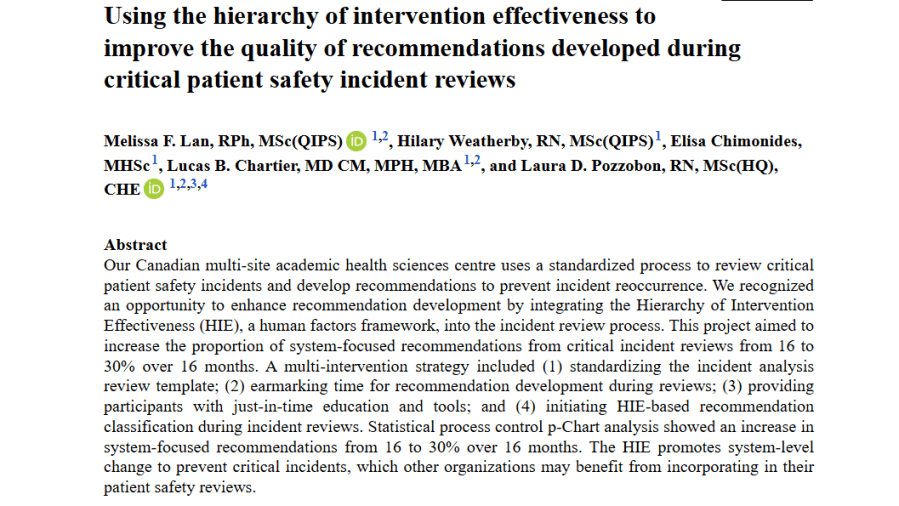
Using the hierarchy of intervention effectiveness to improve the quality of recommendations developed during critical patient safety incident reviews
This study evaluated the Hierarch of Intervention Effective (HIE) for improving patient safety incident recommendations. They were namely interested in increasing the proportion of system-focused recommendations. Data came from over 16 months. Extracts: Ref: Lan, M. F., Weatherby, H., Chimonides, E., Chartier, L. B., & Pozzobon, L. D. (2025, June). Using the hierarchy of intervention… Continue reading Using the hierarchy of intervention effectiveness to improve the quality of recommendations developed during critical patient safety incident reviews
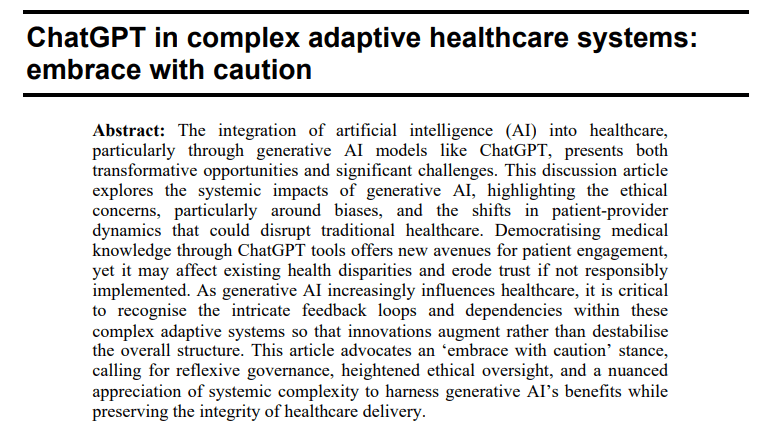
ChatGPT in complex adaptive healthcare systems: embrace with caution
This discussion paper explored the introduction of AI systems into healthcare. It covers A LOT of ground, so just a few extracts. Extracts: · “This article advocates an ‘embrace with caution’ stance, calling for reflexive governance, heightened ethical oversight, and a nuanced appreciation of systemic complexity to harness generative AI’s benefits while preserving the integrity of… Continue reading ChatGPT in complex adaptive healthcare systems: embrace with caution

