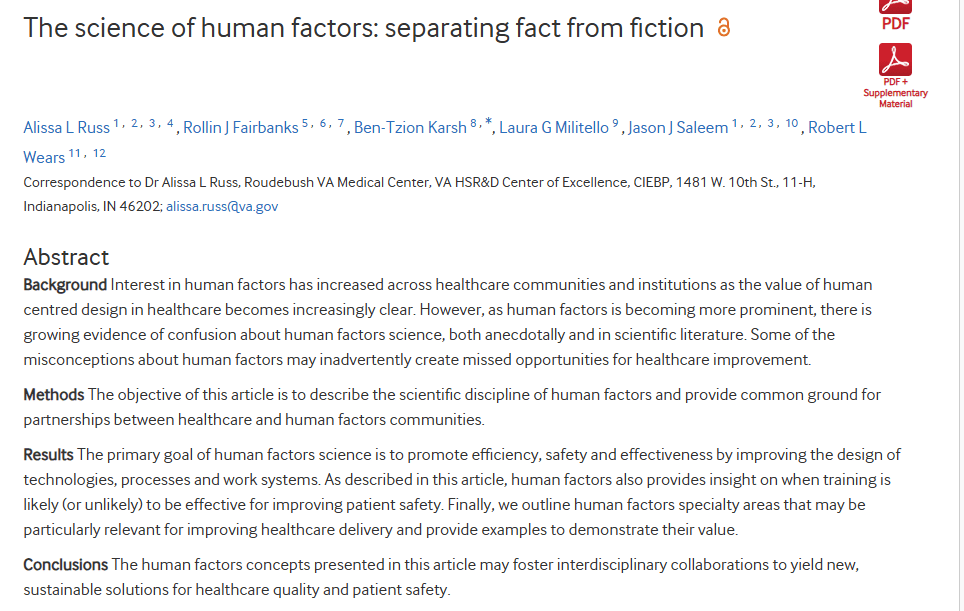
This brief read discussed some of the misconceptions about human factors for healthcare improvement.
It’s open access, so you can read the paper yourself.
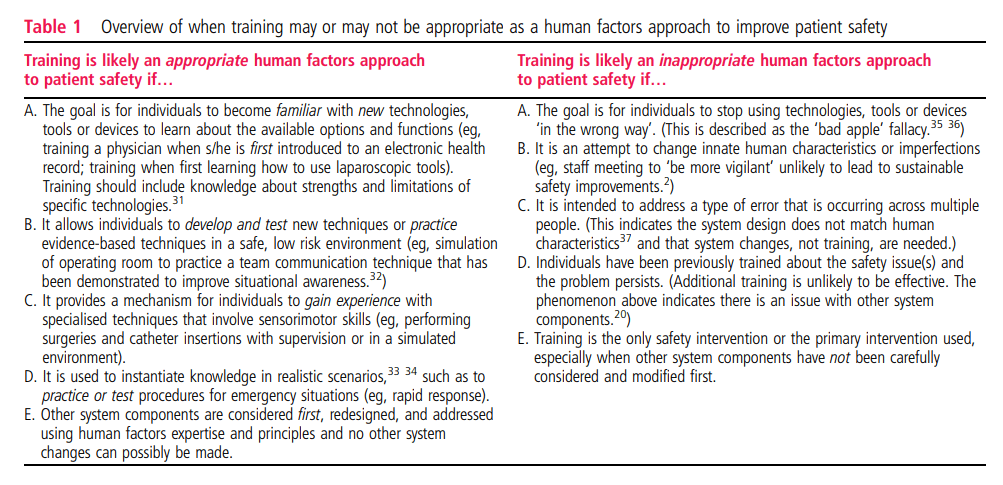
They discuss where training interventions are likely to be appropriate vs not appropriate.
More appropriate uses is:
· To help familiarise people with new tools or functions, which should include strengths and limitations
· To allow people to develop and test tools or practices in a safe, low risk environment
· Providing a mechanism to gain experience with specialised techniques and build knowledge in specific scenarios.
Not so appropriate uses is:
· To stop people from using tools etc. in the ‘wrong way’
· In an attempt to “change innate human characteristics or imperfections”, like deploring people to be more vigilant or careful
· To try and address “a type of error that is occurring across multiple people”, indicating system changes over training
· Training the same people on the same matters, when it wasn’t effective previously
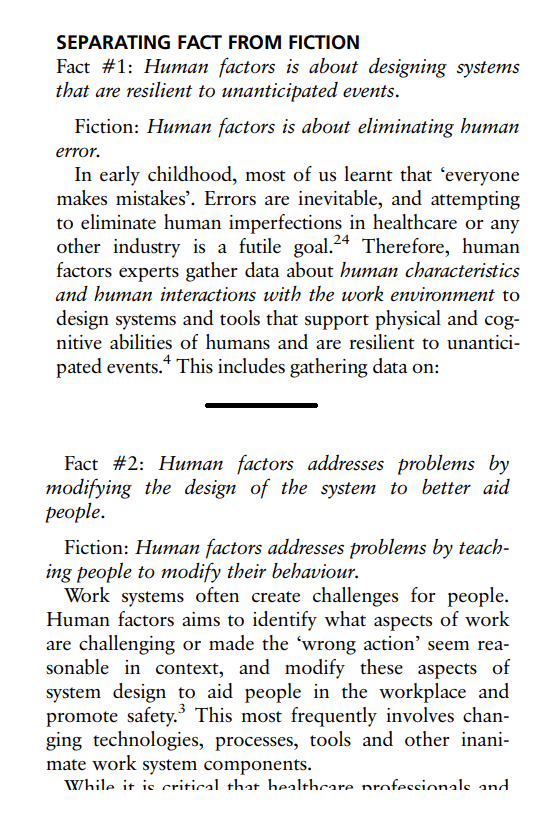
They also cover several facts and fictions around human factors, some being:
· Fiction #1: Human factors is about eliminating human error.
· Fact #1: Human factors is about designing systems that are resilient to unanticipated events.
· Fiction #2: Human factors addresses problems by teaching people to modify their behaviour.
· Fact #2: Human factors addresses problems by modifying the design of the system to better aid people.
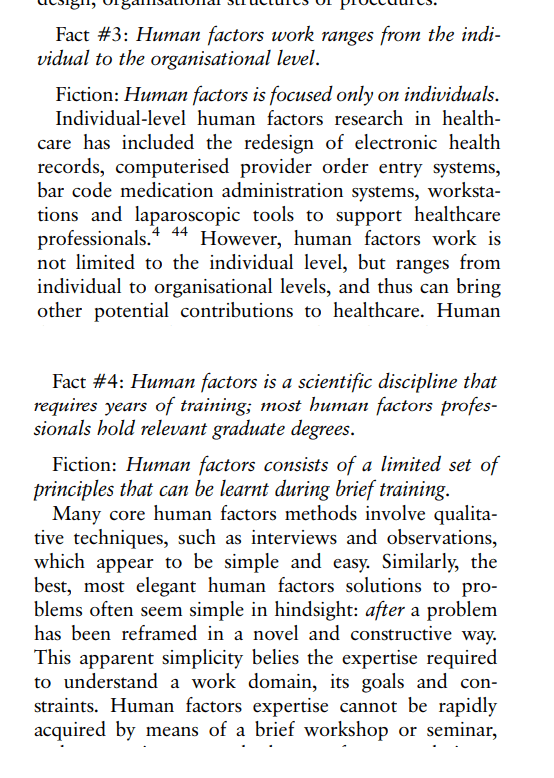
· Fiction #3: Human factors is focused only on individuals.
· Fact #3: Human factors work ranges from the individual to the organisational level.
· Fiction #4: Human factors consists of a limited set of principles that can be learnt during brief training.
· Fact #4: Human factors is a scientific discipline that requires years of training; most human factors professionals hold relevant graduate degrees.
Ref: Russ, A. L., Fairbanks, R. J., Karsh, B. T., Militello, L. G., Saleem, J. J., & Wears, R. L. (2013). The science of human factors: separating fact from fiction. BMJ quality & safety, 22(10), 802-808.
Study link: https://doi.org/10.1136/bmjqs-2012-001450

 SafetyInsights.org
One thought on “The science of human factors: separating fact from fiction”