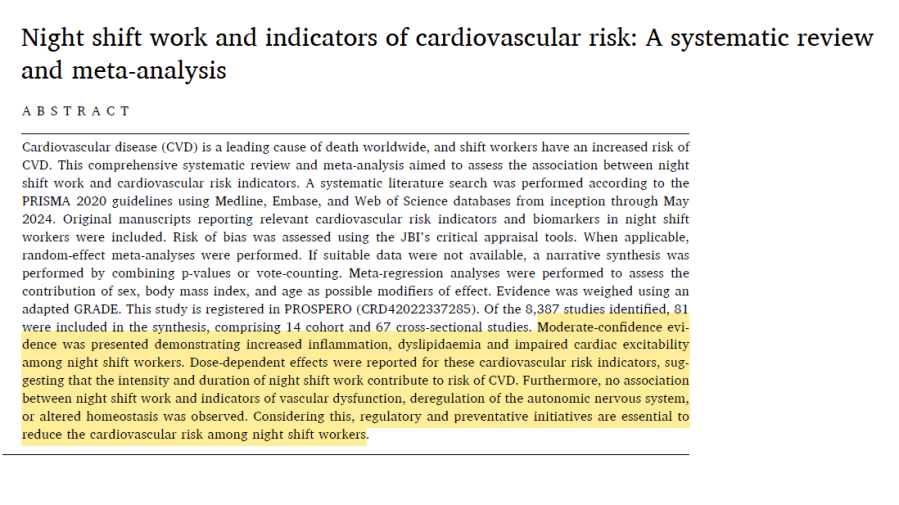
Night shift work linked to various indices of cardiovascular disease (CVD) risk in this systematic review and meta-analysis. 81 studies were evaluated. Extracts: · “Dose-dependent effects were reported for these cardiovascular risk indicators, suggesting that the intensity and duration of night shift work contribute to risk of CVD” · “This systematic review reports moderate-confidence evidence for inflammation,… Continue reading Night shift work and indicators of cardiovascular risk. A systematic review and meta-analysis
Year: 2025
Ineffective audits and systems and false safety: Maritime NZ legal case
Third post from the Maritime NZ case where the CEO was charged under a failure to exercise due diligence for a work fatality (Ports of Auckland Limited (POAL). Some extracts on audits (and systems in post 2 in comments): · “Any effective system should also incorporate regular review and audit processes” · “the prosecution submits that prior… Continue reading Ineffective audits and systems and false safety: Maritime NZ legal case

‘Organisational safety culture principles’: In Patient safety culture
Some extracts from Guldenmund’s interesting article ‘Organisational safety culture principles’: · Culture can be studied via different aggregated levels, with many authors relating it as “consisting of a core surrounded by one or more layers, not unlike the anatomy of an onion” · “Whereas the core is something (deeply) hidden, the culture projects itself gradually through and… Continue reading ‘Organisational safety culture principles’: In Patient safety culture

Management of safety rules and procedures
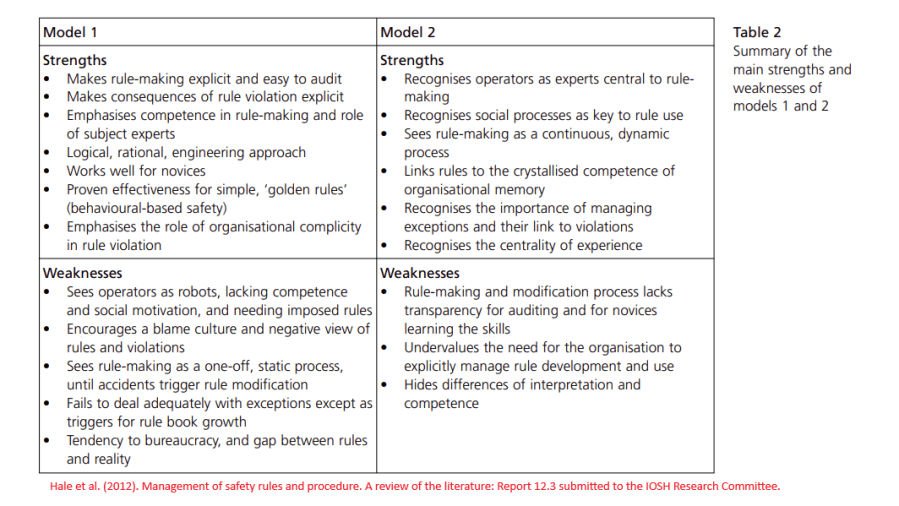
Really interesting report from Hale, Borys & Else about the nuances of rules, and contrasting model 1 / model 2. [* Check out this week’s compendium dedicated to Hale & Hopkins, link below] A few extracts: · A classic Dutch railways study showed that 3% of workers used rules often and 50% almost never, 47% found… Continue reading Management of safety rules and procedures

Exploring the relationship between major hazard, fatal and non-fatal accidents through outcomes and causes
This study from Linda Bellamy explored whether there is a relationship between major hazards, and fatal and non-fatal accidents. Analysis of 23k Dutch serious reportable accidents was analysed via the StoryBuilder software (largely based around bowties). [NB. As always, there’s certain limitations and nuances with relying on reported accidents, particularly around how they’re reported, how… Continue reading Exploring the relationship between major hazard, fatal and non-fatal accidents through outcomes and causes
Compendium: An ode to Andrew Hopkins & Andrew Hale
Two researchers & authors who have had a big impact on my practice and thinking are Andrew Hale and Andrew Hopkins. Thankfully, I was exposed to their work right at the start of my safety career. Why two Andrews? Why not three? I don’t know. Just two people who influenced my thinking around the same… Continue reading Compendium: An ode to Andrew Hopkins & Andrew Hale

Why safety performance indicators?
A response from Andrew Hale to Andrew Hopkins’ 2009 article about indicators (link in comments). [See tomorrow’s compendium dedicated to Hopkins & Hale] Extracts: · Hale starts with outlining why we need indicators, suggesting three obvious roles · Monitoring the level of safety in a system, which “answers the question: is the level of safety OK as… Continue reading Why safety performance indicators?

From the Boardroom to the Jobsite: Female Board Representation and Workplace Safety
This study explored the effects that female board representation (FBR) on workplace safety. Note: ‘safety’ in this study is based on reported incidents. So consider that caveat. Data included 266 firms and 1,442 firm-year observations. Background: · “having female directors on corporate boards can influence a firm’s financial performance (Post and Byron 2015), social responsibility… Continue reading From the Boardroom to the Jobsite: Female Board Representation and Workplace Safety
Four concepts for resilience and the implications for the future of resilience engineering
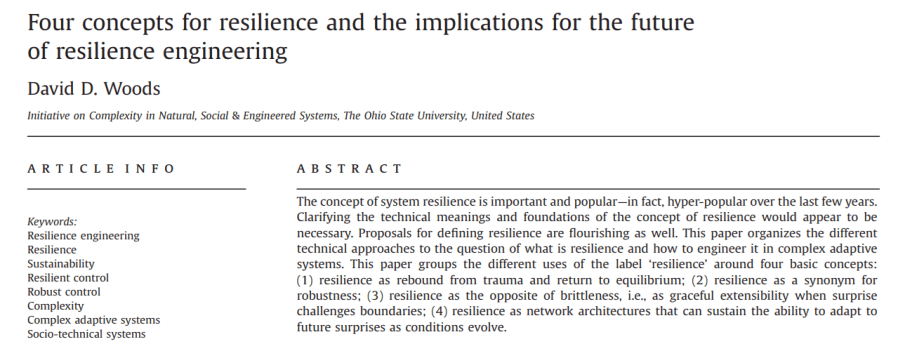
An interesting read from David Woods discussing four resilience concepts. Extracts:· While networks of interdependencies have created new value for stakeholders, it has “also created unanticipated side effects and sudden dramatic failures” · The first concept used to describe resilience is rebounding · Rebounding “begins with the question: why do some communities, groups, or individuals recover from traumatic… Continue reading Four concepts for resilience and the implications for the future of resilience engineering

Good and bad reasons: The Swiss cheese model and its critics
Really interesting historical and critical account of Reason’s work, particularly the Swiss Cheese metaphor (SCM). It was meant to be a mini-post with a few extracts, but, meh, couldn’t be bothered cutting it back. Still not a summary, and skipped HEAPS, so highly recommend reading the free open access article. Background: · Reason’s foray into… Continue reading Good and bad reasons: The Swiss cheese model and its critics
 SafetyInsights.org