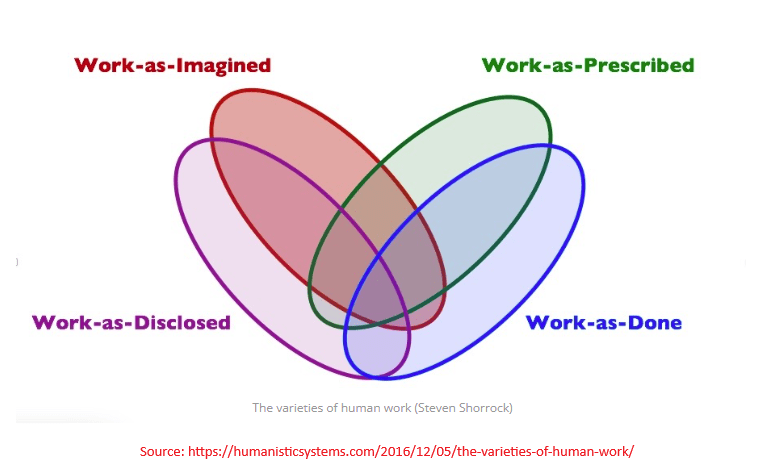
How do the models of how we think about work reveal and conceal features of the work? Today we explore varieties of human work: work-as-imagined, work-as-prescribed, work-as-disclosed, and work-as-done. Source: Shorrock, S. (2016, December 5). The varieties of human work. Humanistic Systems. https://humanisticsystems.com/2016/12/05/the-varieties-of-human-work/ Spotify: https://open.spotify.com/episode/6lbaKStF0rf1GHbGgh6oKI?si=sq2y93gHRQ2Mqee2hIchqA Shout me a coffee (one-off or monthly recurring)
Year: 2025
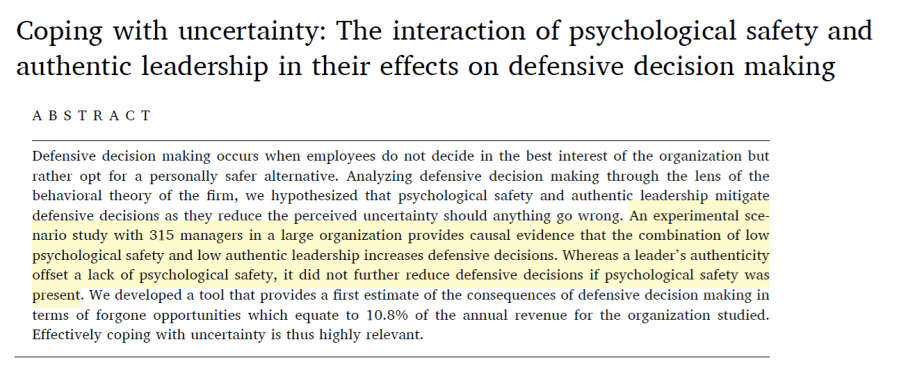
Coping with uncertainty: The interaction of psychological safety and authentic leadership in their effects on defensive decision making
Coping with uncertainty: The interaction of psychological safety and authentic leadership in their effects on defensive decision making This studied the relationship between defensive decision making and psychological safety and authentic leadership. 315 managers were involved in an experimental scenario. Extracts: · Defensive decision making occurs “when employees do not decide in the best interest of… Continue reading Coping with uncertainty: The interaction of psychological safety and authentic leadership in their effects on defensive decision making

Analysing coronial inquests into mining fatalities: A systems thinking approach
This applied a systems thinking incident approach to Queensland mining fatality coronial inquiries. Extracts: · “As predicted, the majority of contributory factors were identified at the level of frontline staff and other operational personnel” · “However, the Accimap analysis identified that these risks were influenced by systemic issues originating from higher levels, particularly the absence of clear… Continue reading Analysing coronial inquests into mining fatalities: A systems thinking approach

Safe As E53: Weak Controls. Repeat Deaths. The Brady review into mining fatalities
Imagine following a workplace fatality, that the weakest types of controls are implemented – administrative. This episode unpacks some findings from the Brady review of Qld mining fatalities and what lessons we can apply from weak controls and repeat deaths. Source: Brady, S. (2019). Review of all fatal accidents in Queensland mines and quarries from… Continue reading Safe As E53: Weak Controls. Repeat Deaths. The Brady review into mining fatalities
Minor injuries may have little to no connection with fatal injuries
Minor injuries may have little to no connection with fatal injuries. No great epiphany or diatribe here – just three readily accessible extracts highlighting that focusing on minor stuff may not give many insights into the stuff that kills. 1. “There is no discernible association between Total Recordable Incident Rate (TRIR) and fatalities” 2. “analysis… Continue reading Minor injuries may have little to no connection with fatal injuries
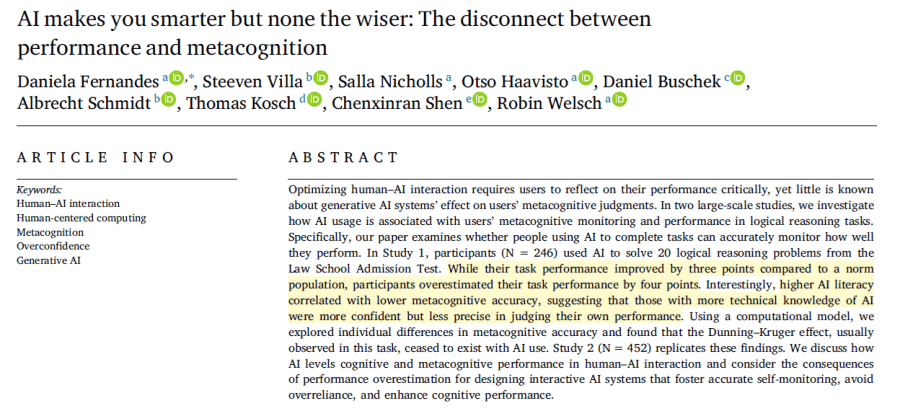
AI makes you smarter but none the wiser: The disconnect between performance and metacognition
Cool study which explored how AI affects a person’s metacognitive judgements. Thanks to Professor Erwin for sharing this. Tl;dr: · AI improved a user’s task performance – ‘AI makes you smarter’ · Despite improving performance, it resulted in large overestimation of a user’s abilities, e.g. they overestimated how well they performed; creating an illusion of knowledge –… Continue reading AI makes you smarter but none the wiser: The disconnect between performance and metacognition
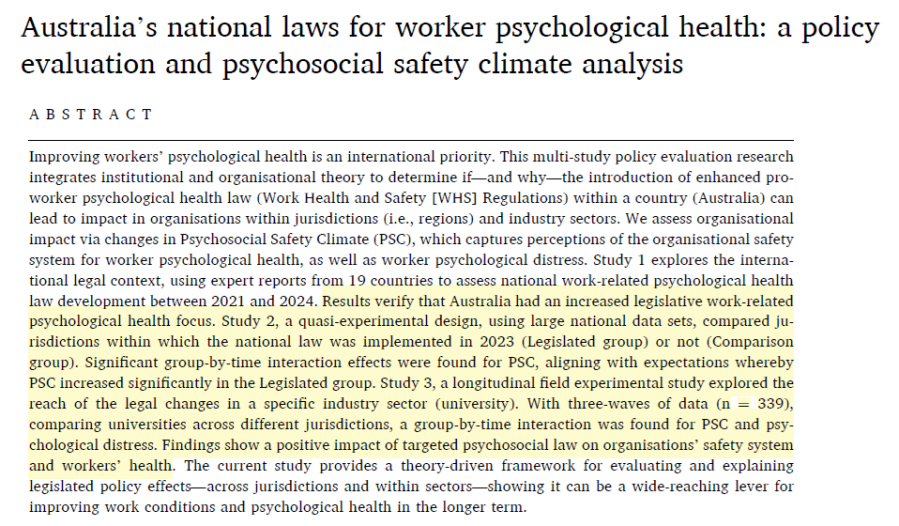
Australia’s national laws for worker psychological health: a policy evaluation and psychosocial safety climate analysis
This study explored changes in psychosocial safety climate (PSC) resulting from legislative changes in WHS psychosocial risk (among other things). Too much to cover, so a few extracts: · “Improving workers’ psychological health is an international priority” · “We assess organisational impact via changes in Psychosocial Safety Climate (PSC)… and worker psychological distress” · “Findings show a positive… Continue reading Australia’s national laws for worker psychological health: a policy evaluation and psychosocial safety climate analysis
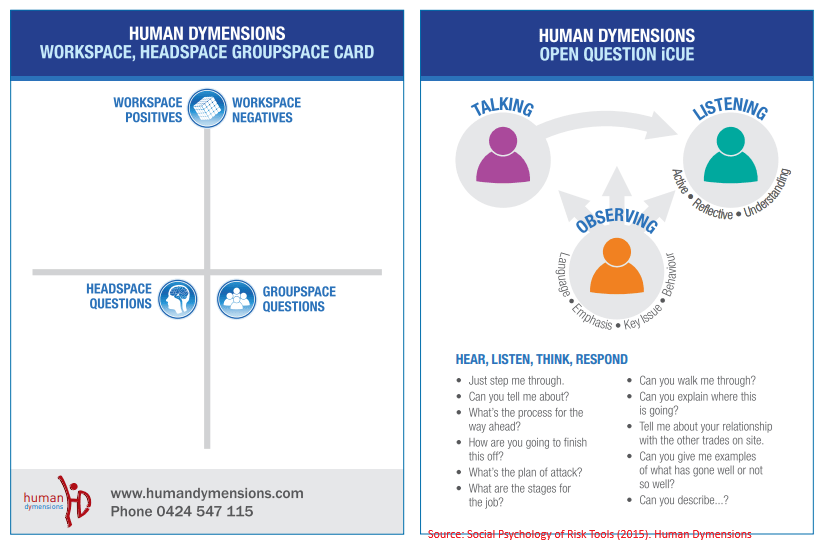
Safe As E52: Tapping into the semiotics of risk – workspace, headspace, groupspace
How can we move beyond simple workplace hazards towards tackling risk from psychological and cultural cues in the workplace? Today we unpack Rob Long’s Workspace / Headspace / Groupspace risk semiotic to help mature our thinking. Sources: Safety Engagement with Workspace, Headspace and Groupspace. Rob Long, 2021, SafetyRisk . net SOCIAL PSYCHOLOGY OF RISK TOOLS… Continue reading Safe As E52: Tapping into the semiotics of risk – workspace, headspace, groupspace
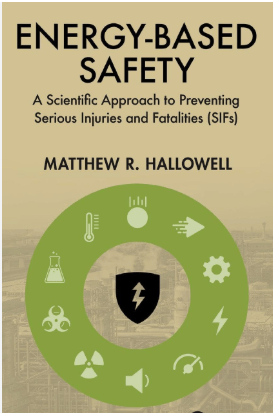
Direct Controls / Alternative Controls for managing high-energy hazards: Energy-Based Safety
More extracts from Energy Based Safety – now focusing on Direct Controls & Alternative Controls (AC/DC): · “Not everything casually labeled a “control” effectively manages the boundary between high-energy and people” · “To reduce confusion, we define “energy controls” as physical measures that actively reduce or remove hazardous energy” · “Many safety measures, such as policies, plans, and… Continue reading Direct Controls / Alternative Controls for managing high-energy hazards: Energy-Based Safety
When Not Following Procedures Is a Safer Way: A Study on Selective Intentional Non-Compliance
This Lund thesis from Daniel Ankersø & Søren Nielsen was cool – they interviewed 39 European commercial pilots exploring procedural departures. Some extracts: · They coin a new term – Selective Intentional Non-Compliance (SINC) · SINC is “A purposeful and deliberate deviation from policies or procedures when a flight crew’s judgement is, that deviating from a procedure… Continue reading When Not Following Procedures Is a Safer Way: A Study on Selective Intentional Non-Compliance
 SafetyInsights.org