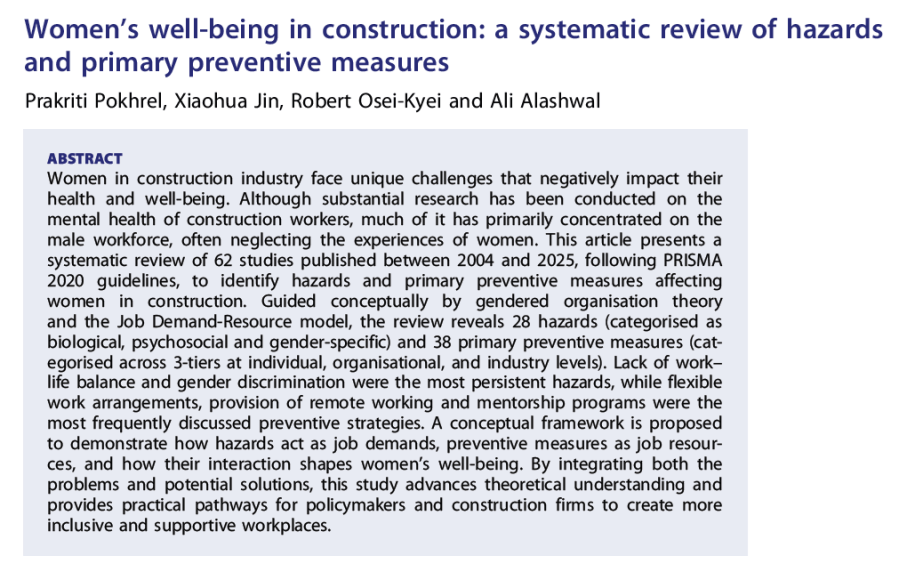
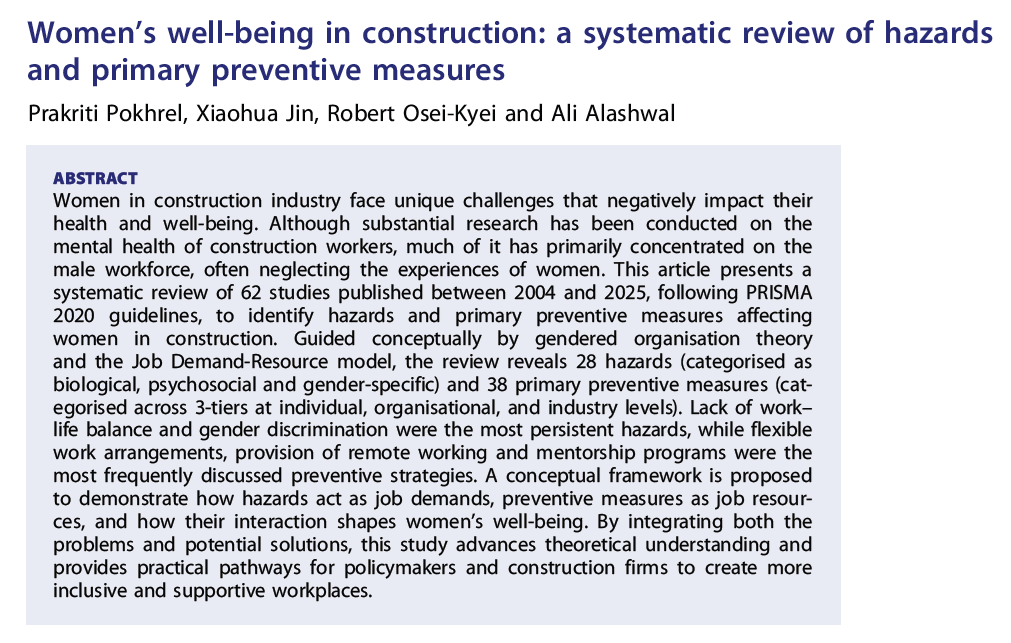
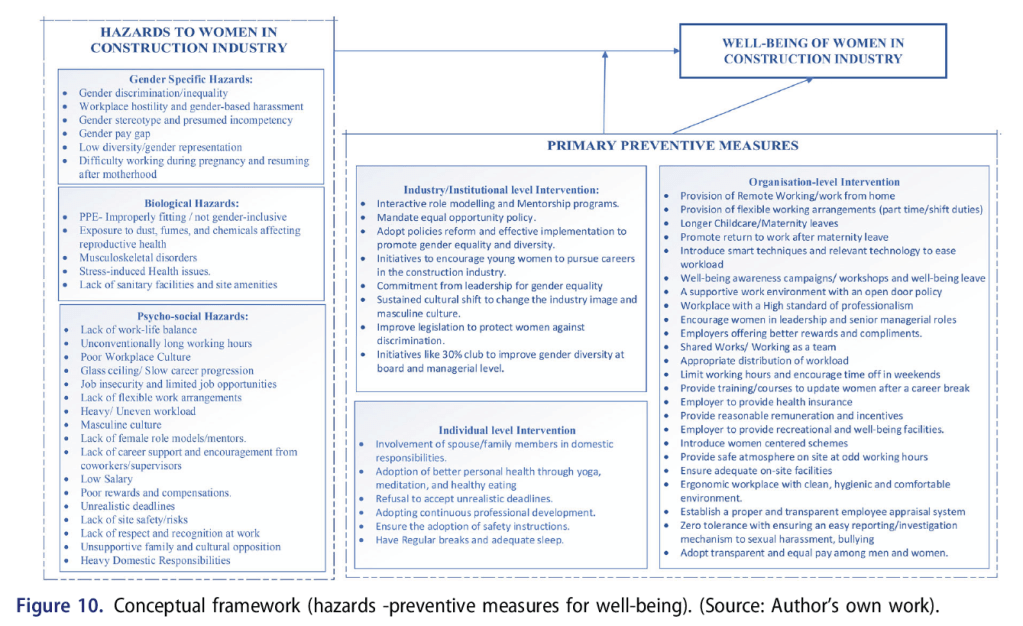
This systematic review unpacked 62 studies looking at women’s well-being in construction, and key hazards and prevention measures.
** Check out my YouTube channel: https://www.youtube.com/@safe_as_pod
Background:
· “construction industry is often shaped by a macho work culture marked by aggression, bullying, and job insecurity due to the nomadic and cyclical nature of projects”
· “women face not only the common hazards of construction work but also gender-specific risks, including discrimination, sexual harassment, stereotyping, presumed incompetence, and challenges around pregnancy and return to work”
· “Long, inflexible hours, heavy workloads, and limited shift flexibility strain women’s work-life balance”
· They face “discrimination and harassment in a male-dominated environment, and ergonomic concerns due to poorly fitting personal protective equipment (PPE). Female workers often face backlash for not conforming to the masculine norms of physical strength, becoming targets of mockery for their perceived physical inadequacy”
Findings:
· “Lack of work– life balance and gender discrimination were the most persistent hazards, while flexible work arrangements, provision of remote working and mentorship programs were the most frequently discussed preventive strategies”
· “the workspaces in the construction industry, which consists of sites and field-based work, mostly lack basic sanitary facilities like female-friendly toilets with bins”
· “improperly fitting PPE was the most cited biological hazard in the literature, followed by exposure to dust fumes and chemicals”
· “Social hazards arise from the disparities in power dynamics between genders, societal standards limiting women’s access to education and employment, narrow emphasis on women’s roles in reproduction, and the possibility or reality of experiencing various forms of inequality and violence”
· A range of preventative measures were discussed, emphasising “flexible scheduling, gender-equitable recruitment, and anti-harassment mechanisms, underscoring their perceived importance in addressing gendered challenges”
· The least discussed issues were “inadequate sanitary facilities, reproductive health risks, and ergonomic workplace design”
Study link: https://doi.org/10.1080/15623599.2026.2636001
Shout me a coffee: https://buymeacoffee.com/benhutchinson

 SafetyInsights.org