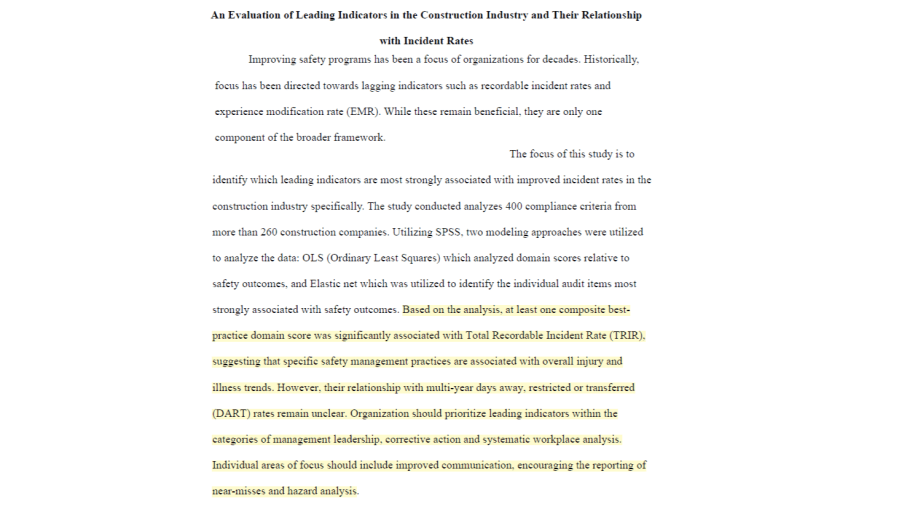
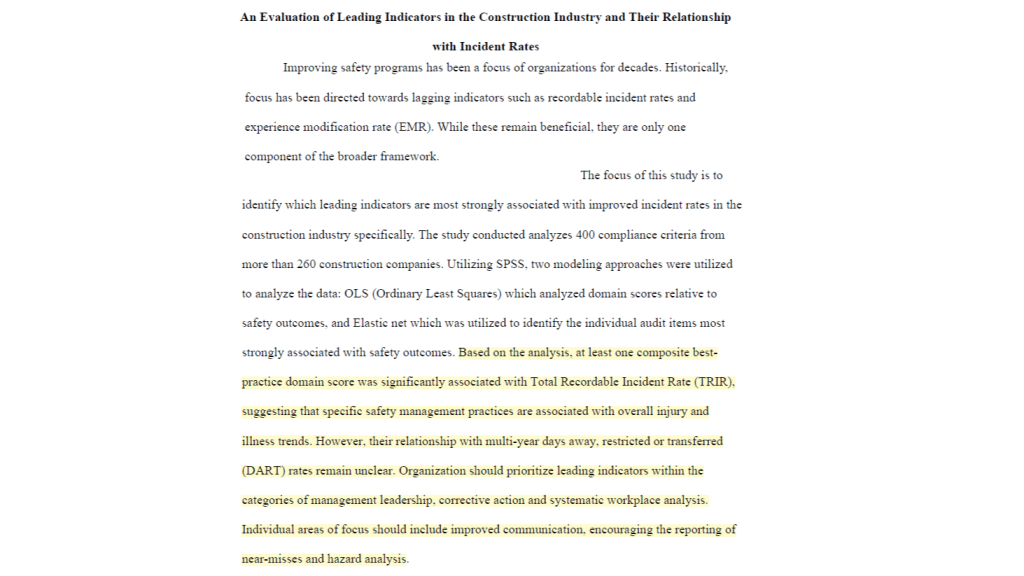
This Masters thesis from Kitti Miller Whalen evaluated the connection between safety initiatives, indictors and incident measures based on >260 construction companies.
Yes, another injury measure / correlational analysis – but meh, fight me.
PS. I’ve probably made more mistakes than usual in my haste describing the measures and methods, so caveat emptor as always.
PPS. Check out my YouTube: https://youtube.com/@safe_as_pod?si=iUaDPJynPemQRZhY
Background:
· “While lagging indicators such as incident rates remain the primary tool for measuring safety performance, their reactive nature limits their usefulness for identifying risk in real-time”
· Leading indicators can include pre-task planning, frequency/quality of training & audits, engagement and more
· They use DART, EMR-Experience, TRIR, and variations thereof as the lagging measures
· They also used data from ~400 safety program audits, assessing >300 compliance best practice criteria – under general themes like management leadership, workplace analysis, HAZID and control and training. They rolled these elements into composite scores and Workplace Analysis Best Practices was one of them. This was used as leading indicators
Findings:
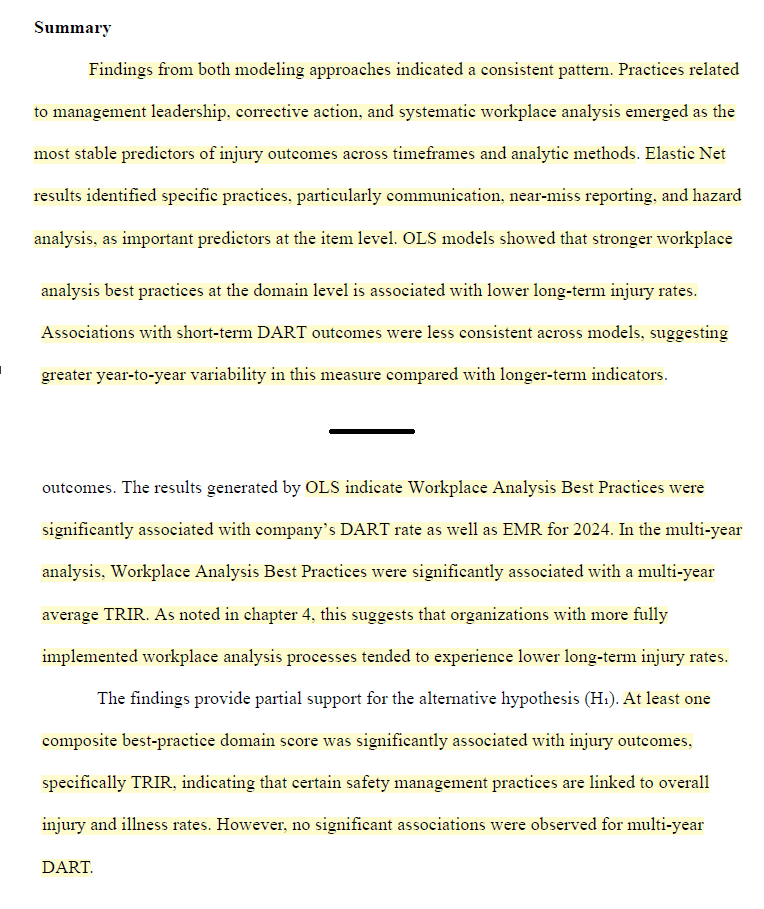
· Workplace Analysis Best Practices measure was “significantly associated with company’s DART rate as well as EMR for 2024”
· “In the multi-year analysis, Workplace Analysis Best Practices were significantly associated with a multi-year average TRIR”
· …suggesting that “organizations with more fully implemented workplace analysis processes tended to experience lower long-term injury rates”
· “At least one composite best-practice domain score was significantly associated with injury outcomes, specifically TRIR, indicating that certain safety management practices are linked to overall injury and illness rates”
· The “pattern suggests that practices emphasizing feedback loops, communication, and proactive risk identification were more consistently associated with reduced injury rates than procedural compliance items alone”
· Practices relating to management leadership, corrective action and systematic workplace analysis “emerged as the most stable predictors of injury outcomes across timeframes and analytic methods”
· They suggest that the consistent “presence of both analytical and leadership factors across both short- and long-term outcomes suggests that these elements may serve as structural components of successful safety management systems”
· “Throughout the literature, communication between employees and leadership, as well as communication between peers is frequently associated with lower incident rates”
· “Multiple studies have found that high rates of near miss reporting correlate with improved safety performance”
· “Based on the analysis, companies should prioritize leading indicators within the categories of management leadership, corrective action and systematic workplace analysis”
Shout a coffee: https://buymeacoffee.com/benhutchinson


