What are the links between **cabbages and major disasters?
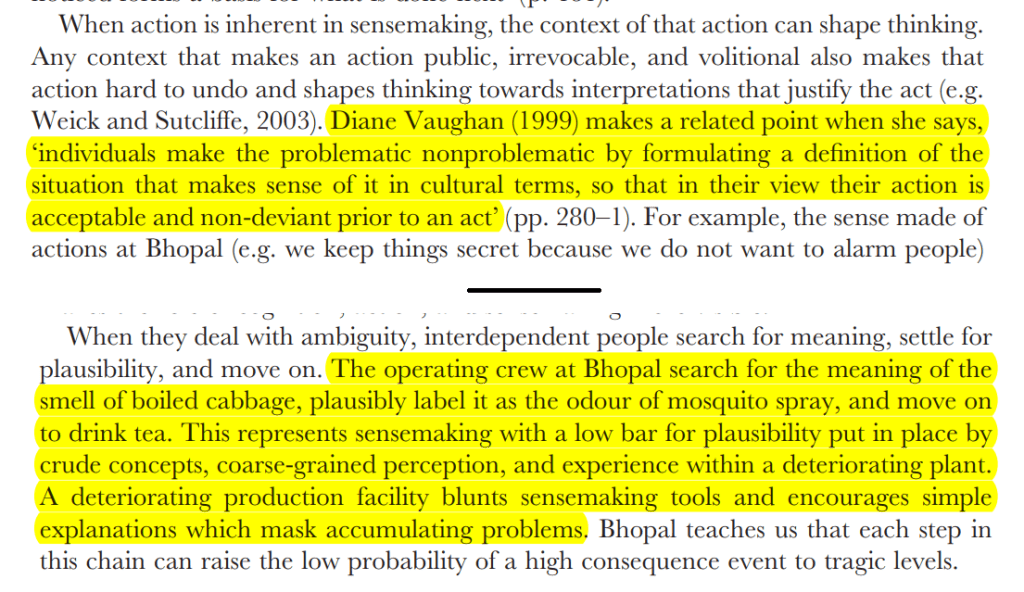
Well, on the night of the Bhopal gas leak disaster, operating crews smelled what seemed similar to boiled cabbage. They thought it was probably mosquito spray, and had their tea break.
For Weick (2010) – the Bhopal disaster informs how people make sense of things inside of a deteriorating system.
NB. Currently working on a 2-part Weick YouTube series – check out my channel.
PS. Check out my YouTube: https://youtube.com/@safe_as_pod?si=V2dbdmW–WbnhzA9
Shout a coffee: https://buymeacoffee.com/benhutchinson
Some interesting extracts:
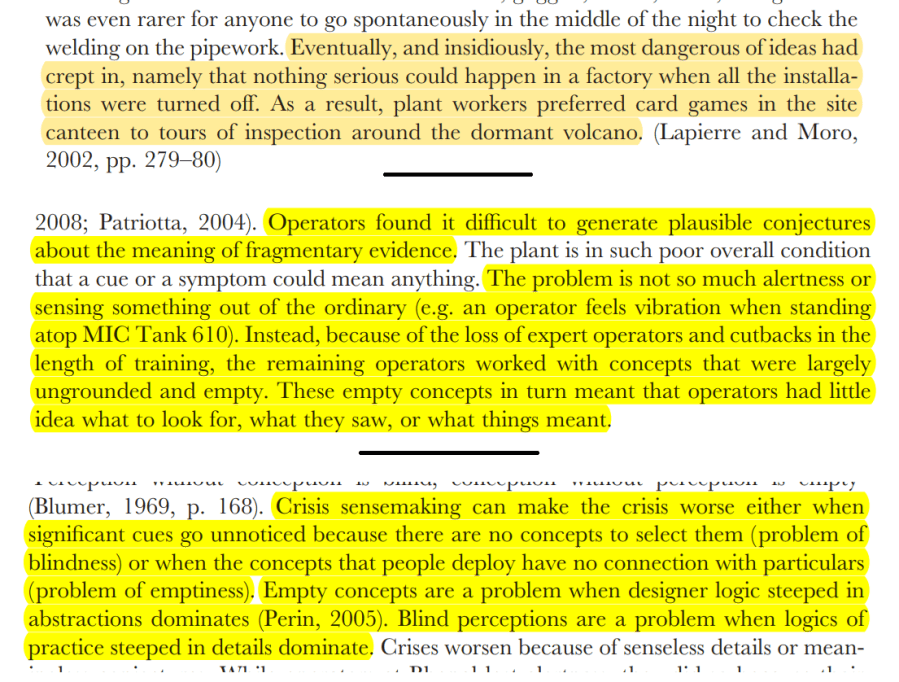
Plausibility: Weick says that “sensemaking with a low bar for plausibility” involves a bar set via “crude concepts, coarse-grained perception, and experience within a deteriorating plant”.
Further, “A deteriorating production facility blunts sensemaking tools and encourages simple explanations which mask accumulating problems”.
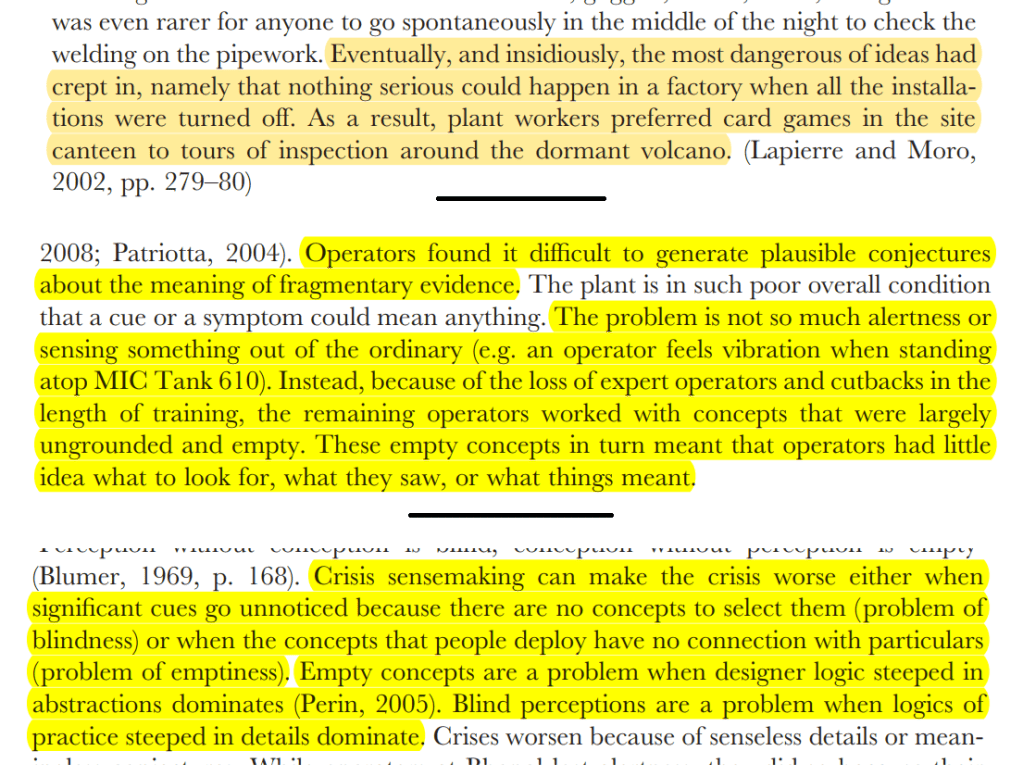
Empty concepts: Operators could feel vibration on top of Tank 610, but this wasn’t related to alertness. However, experienced operators had been downscaled, and training reduced, so people were “worked with concepts that were largely ungrounded and empty”.
As in, they had “little idea what to look for, what they saw, or what things meant”.
He discusses two failures:
· Blindness: e.g. important cues being unnoticed because there’s no concept that allows people to notice them.
· Emptiness: e.g. concepts people use that have no connection to what’s in front of them. He says that “Operators found it difficult to generate plausible conjectures about the meaning of fragmentary evidence”.
He says empty concepts take over when “designer logic steeped in abstractions dominates”.
He also unpacks HRO principles in failing systems:
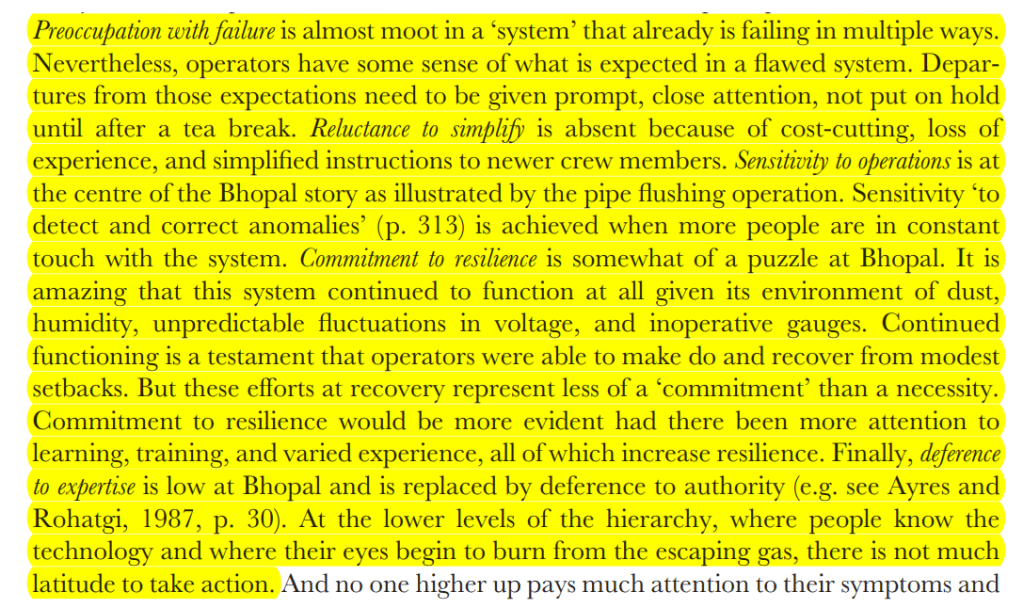
“Preoccupation with failure is almost moot in a ‘system’ that already is failing in multiple ways”.
People keep the plant running despite faulty equipment, dust, and gauge errors. Weick argues that this is “less of a ‘commitment’ than a necessity”.
And deference to expertise was replaced by deference to authority: the people whose eyes were burning from the gas had the least authority to act.
And while training often focuses on trying to get people to notice more, Weick suggests that noticing isn’t much use without having the concepts to make sense of what’s been noticed.
** In fairness: I wish we could have blamed Brussels sprout instead.
Ref: Weick, K.E. (2010). Reflections on Enacted Sensemaking in the Bhopal Disaster. Journal of Management Studies, 47(3).
#karlweick #weick #sensemaking #HRO #bhopal #safetyscience #managementscience


