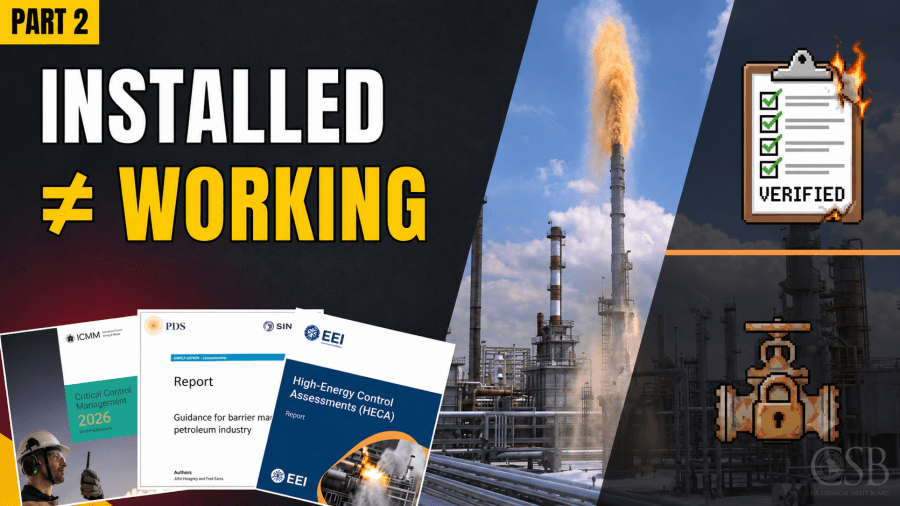
Is a control that’s present ‘close enough’ to a control that works?
I’d expect most would say ‘prob not’. This is a gap explored in Part 2 of my series on Critical Controls / Barrier frameworks.
Hopes and dreams and gumdrop smiles about a control in a plan or JSA is one thing, but that same control can still be absent from the work, improperly installed or degraded, or unable to fulfil its job when needed.
We love ‘perfect world’ planning; cynically referred to as ‘fantasy documents’ by Lee Clarke.
So what evidence gives us reasonable confidence the control will actually work when needed?
Some points I cover:
· Before verifying something, we should define what acceptable performance looks like: objectives, measurable criteria, and failure conditions. The ICMM’s guide calls this a performance specification
· Erosion factors are conditions that undermine a control’s effectiveness over time. But stating ‘workload’ or ‘inadequate competence’ or ‘human error’ on their own are probably too vague to be useful. Be as precise as necessary
· Support & assurance activities (eg maintenance, inspection, alarm testing) aren’t extra layers of protection. Hence, counting them as independent controls/barriers inflates your barrier list and introduces false assurance.
Key sources include the 2026 ICMM guide, Matthew Hallowell’s Energy-Based Safety, Rio Tinto’s bow tie refresh, and a few others.
Up next in Part 3 is human factors & realistic human performance expectations.
Please help share the video 🙏 …producing these freely are a time-consuming slog.

 SafetyInsights.org