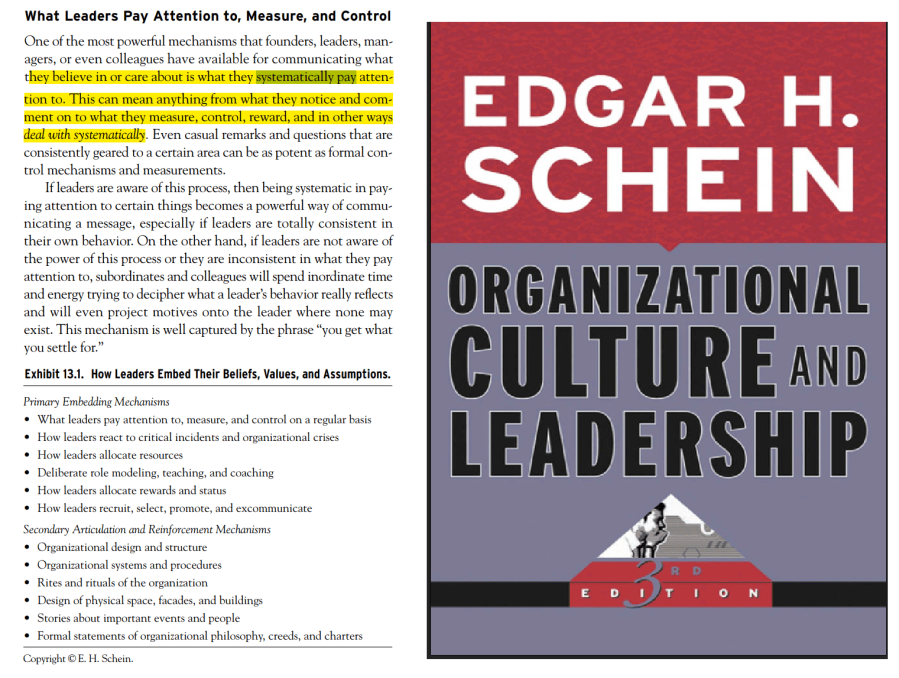
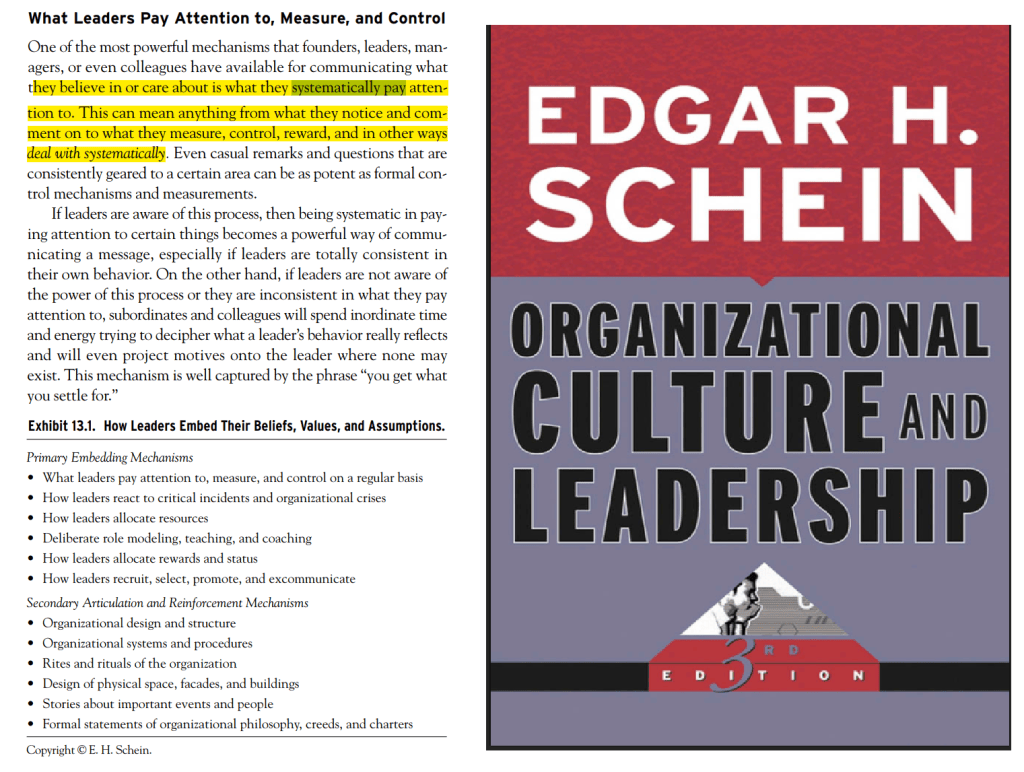
“[Leaders create cultures by] what they systematically pay attention to”.
So says Ed Schein (* well actually, that was Andrew Hopkins’ reframing of Schein).
Nevertheless, Schein noted how leaders, whether intentional or not, known or invisible to them, shape what is prioritised, discussed, measured, monitored etc. by what they focus on.
However, what they ** don’t ** focus on also matters.
Pidgeon and O’Leary (2000, Safety Science 34), quoting Weick observe:
“…an organization is of necessity defined not so much by what its members attend to but by what they choose to ignore”.
Drawing on Diane Vaughan’s analysis of the 1986 Challenger disaster:
“NASA’s culture ‘’provided a way of seeing that was simultaneously a way of not seeing’’.
Hence, those same “institutionalised assumptions and norms” that help sensitise us to major risks and prioritising decisions that enhance safety margins, also “have the capacity to simultaneously illuminate some hazards while shifting attention away from others”.
Interestingly, Scott Snook observed something similar in his Friendly Fire (2000) analysis and how drift insidiously creeps in through normal, mundane activities.
For instance, he notes that when an active & visible Brigadier General visited a unit and “made no correction, the message received was, “Everything is OK. Drive on.”
Hence, “Commanders’ visits validate the legitimacy of local practices making them powerful, if unwitting, accomplices to the crimes of practical drift”.
That it – no grand or deep philosophical message, just some quotes that I like. ‘nuff said.
#culture #psychology #workplacesafety #safetyscience


