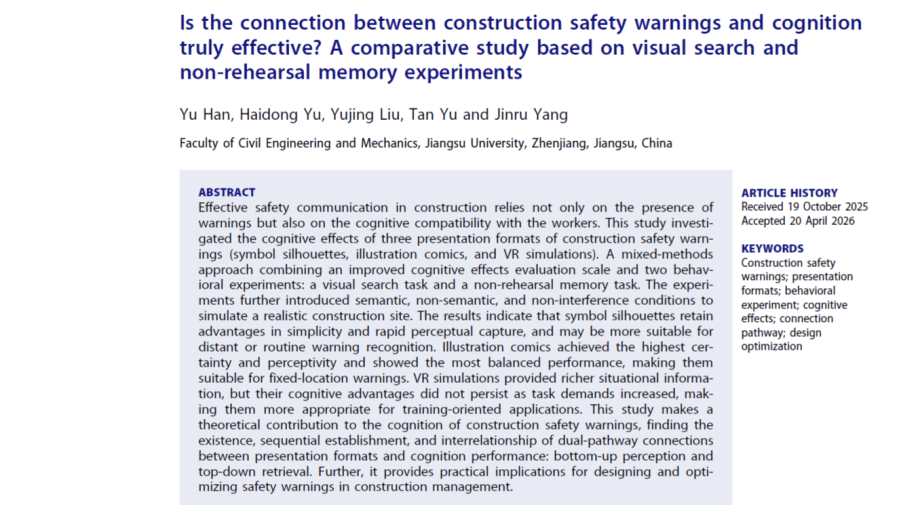
How do different warning signs influence worker cognition? This compared three types of construction safety warnings: symbol silhouettes, illustration comics and VR simulation (image 2). PS. Check out my YouTube: https://youtube.com/@safe_as_pod?si=iUaDPJynPemQRZhY Background: · There are currently “no specific professional standards for construction safety signs in the global construction industry”, and they rely on general safety… Continue reading Is the connection between construction safety warnings and cognition truly effective? A comparative study based on visual search and non-rehearsal memory experiments
Tag: cognition
Memory hacking: Gaslighting you into a false crime confession
Did you know that it’s quite easy to trick people into falsely remembering a crime that they never committed? This ep unpacks research showing how malleable and shapeable human memory is: rather than being a video recording, it’s a constantly reconstructed experience, influenced by a range of emotions and other factors. Please sub, like and… Continue reading Memory hacking: Gaslighting you into a false crime confession
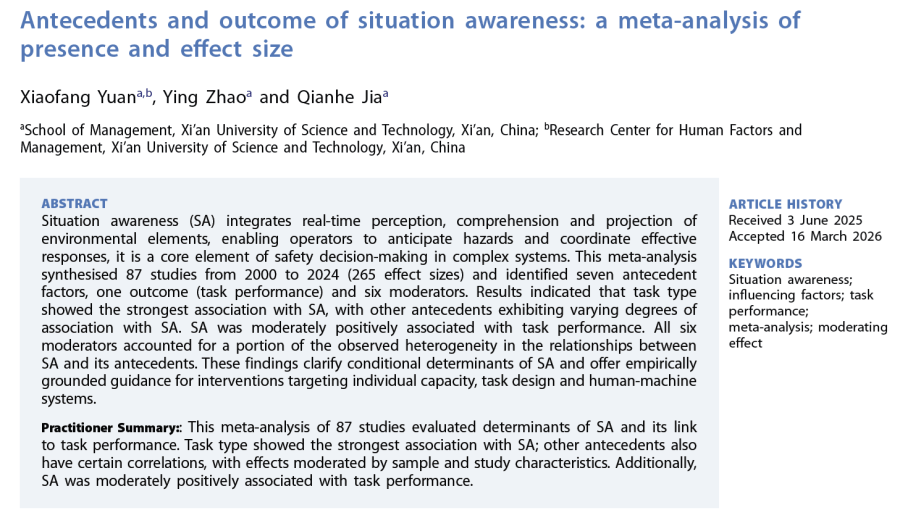
Antecedents and outcome of situation awareness: a meta-analysis of presence and effect size
Situational Awareness (SA), what is it good for? This meta-analysis unpacked 87 studies exploring the concept. WAY too much to cover. But, I’m recording a systematic analysis of this article for YouTube, which will also throw a mildly ill-tempered cat amongst the pigeons by injecting an article from Dekker, which is a little critical of… Continue reading Antecedents and outcome of situation awareness: a meta-analysis of presence and effect size

Residual risk and the psychology of lower order controls
This conference paper briefly discussed the follies of lower order controls in the context of human performance. Nicely, it took a really empathetic view of people and their limits in perception and attention: it’s not a bug that needs to be blamed or feared, but just a biological feature which needs to be considered. First… Continue reading Residual risk and the psychology of lower order controls

“I think, therefore I err”: An article about ‘good errors’, heuristics and intelligent systems
“Every intelligent system makes errors”, so said Gerd Gigerenzer. Here’s a couple of page extracts from a 2005 paper. Not sure if I’ll summarise it or not (it’s really interesting, but tough to capture in a summary…) The paper: · Challenges the rationalistic and normative ideal as cognition as purely a logical and rational one, ignoring… Continue reading “I think, therefore I err”: An article about ‘good errors’, heuristics and intelligent systems
Dual-Process Theories of Higher Cognition: type 1 and type 2 preferred over system 1 and system 2
I think it’s fair to say that Kahneman has been central in the general awareness of cognitive processing concepts, like System 1 / System 2. Dual processing concepts (but also tri-processing), have a long history, but also have their critics. Moreover, system 1 / system 2 isn’t currently the preferred nomenclature. If this topic interests… Continue reading Dual-Process Theories of Higher Cognition: type 1 and type 2 preferred over system 1 and system 2
 SafetyInsights.org