
Are BBS & HOP destined for conflict and silos, or can–should–they be integrated? This article from Williams & Roberts argues that they’re complimentary and proposes how we can go about this integration. Shout a coffee: https://buymeacoffee.com/benhutchinson
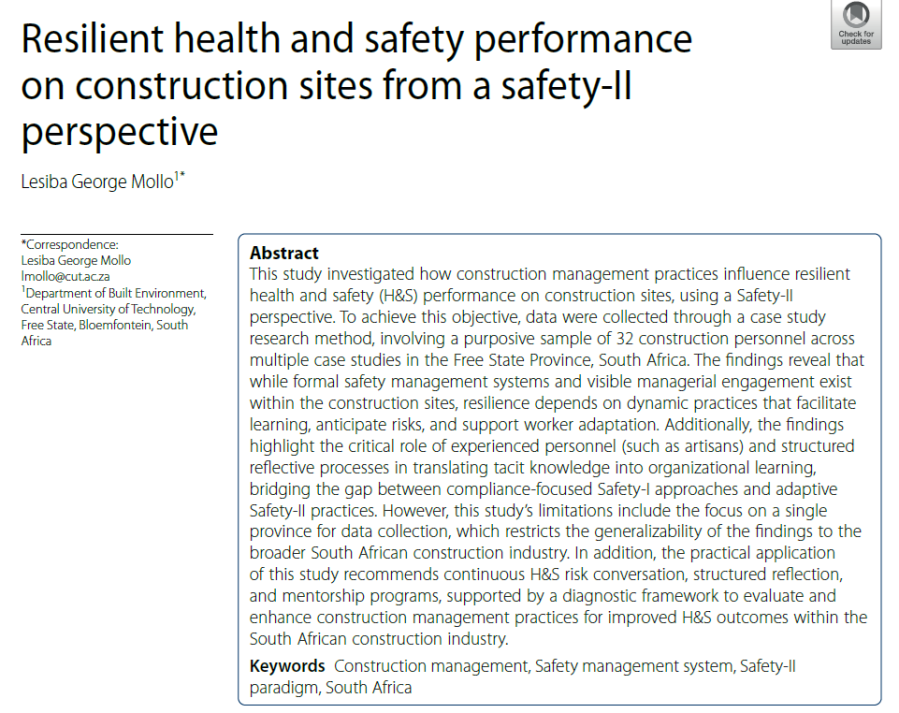
Resilient health and safety performance on construction sites from a safety-II perspective
“These findings .. emphasizes that resilience stems from dynamic, iterative practices that foster adaptive capacity” How do construction management practices influence resilient health and safety performance? Shared under an open access licence. PS. Check out my YouTube: https://youtube.com/@safe_as_pod?si=iUaDPJynPemQRZhY Extracts: · “Instead of implementing proactive interventions that address planning deficiencies, poor coordination, and organizational decision-making under dynamic… Continue reading Resilient health and safety performance on construction sites from a safety-II perspective
Safe As Interview: Emeritus Professor Michael Quinlan – Ten Pathways To Failure
Are major and fatal incidents a series of unfortunate factors, or due to interacting systemic failures? I sat down with Emeritus Professor Michael Quinlan, discussing his research into major accidents. He found that these disasters were rarely just simple mechanical failures, but linked to recurring pathways, like: a. Cost cutting & production pressureb. Gaps in… Continue reading Safe As Interview: Emeritus Professor Michael Quinlan – Ten Pathways To Failure
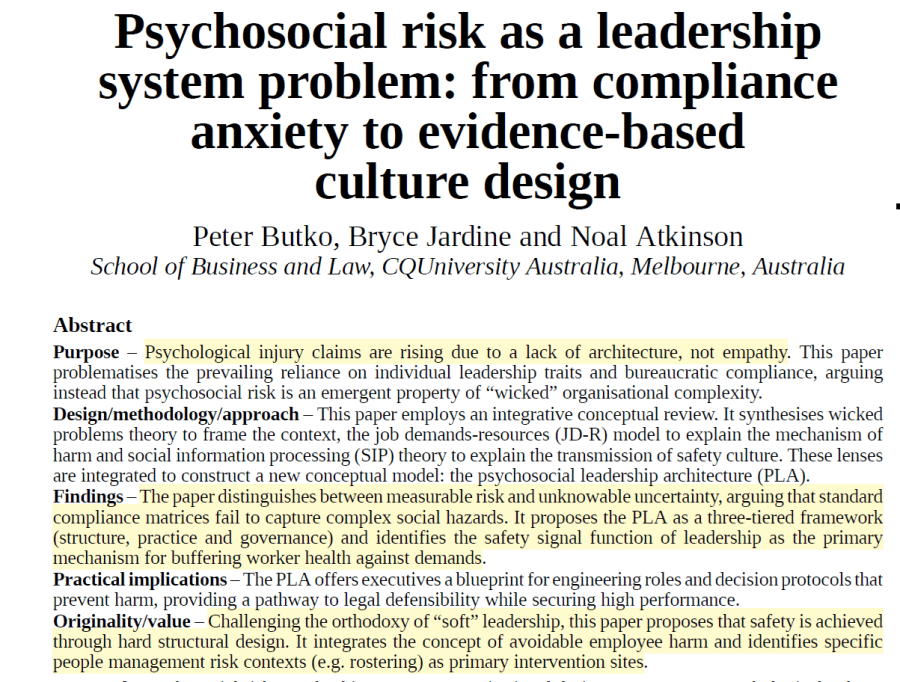
Psychosocial risk as a leadership system problem: from compliance anxiety to evidence-based culture design
“Psychological injury claims are rising due to a lack of architecture, not empathy” An interesting ‘integrative conceptual review’ of the traps of current compliance-driven approaches to psychosocial challenges, and a way forward. They argue that the current approach places “reliance on individual leadership traits and bureaucratic compliance” over recognising the emergent/wicked nature of psychosocial risk.… Continue reading Psychosocial risk as a leadership system problem: from compliance anxiety to evidence-based culture design
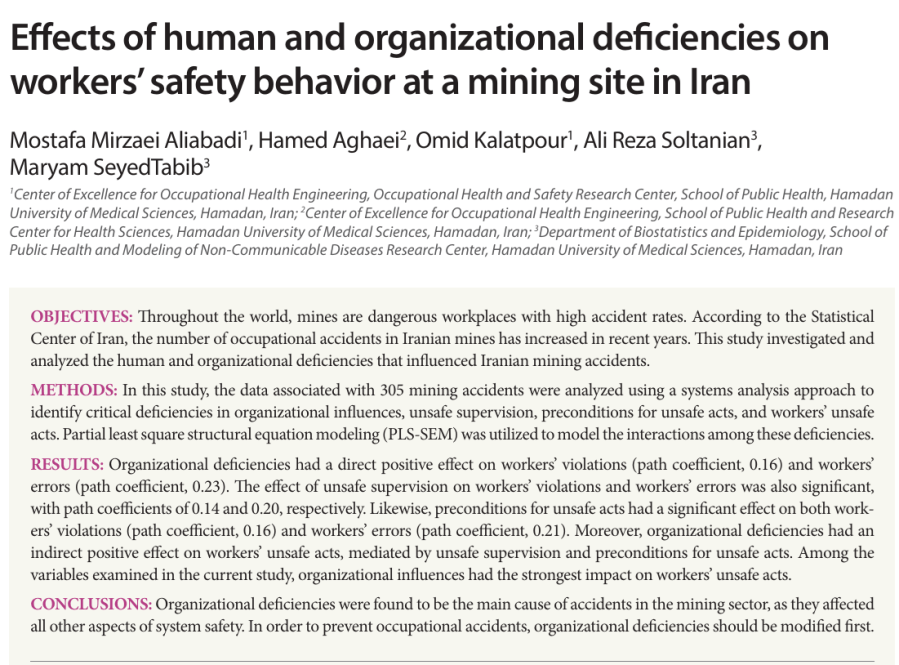
Effects of human and organizational deficiencies on workers’ safety behavior at a mining site in Iran
Not much to say here – just thought it may interest people. They found organisational factors to be the main contributors to mining accidents in Iran based on their data. As always, take claims like ‘main cause of accidents’ with a pinch of salt. They analysed 305 mining accidents using a systems analysis approach (so… Continue reading Effects of human and organizational deficiencies on workers’ safety behavior at a mining site in Iran
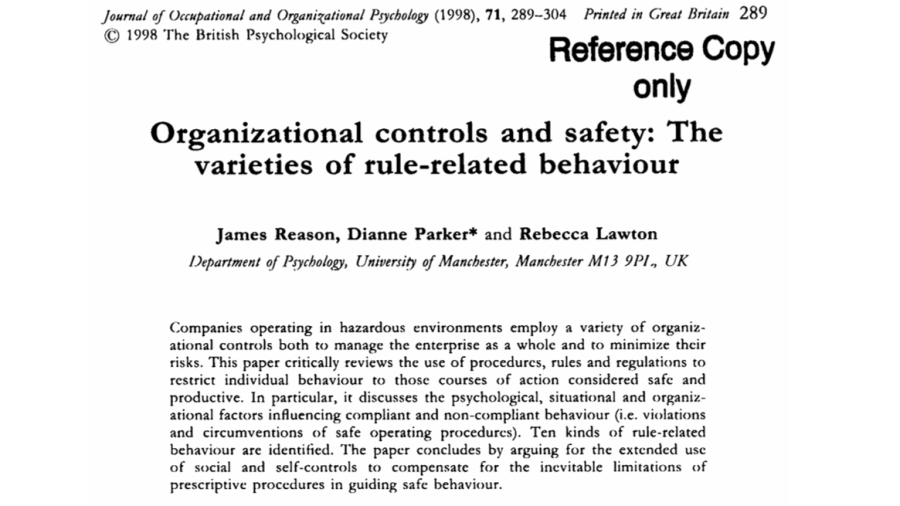
Organizational controls and safety: The varieties of rule-related behaviour
Some extracts from Reason’s 1998 article. PS. Check out my YouTube: https://youtube.com/@safe_as_pod?si=iUaDPJynPemQRZhY Extracts: · “In almost every organization, there is a tension between the natural variability of human behaviour and the needs of the system to ensure a high degree of predictability and regularity” · “The most obvious difficulty in the traditional pursuit of organizational safety is… Continue reading Organizational controls and safety: The varieties of rule-related behaviour
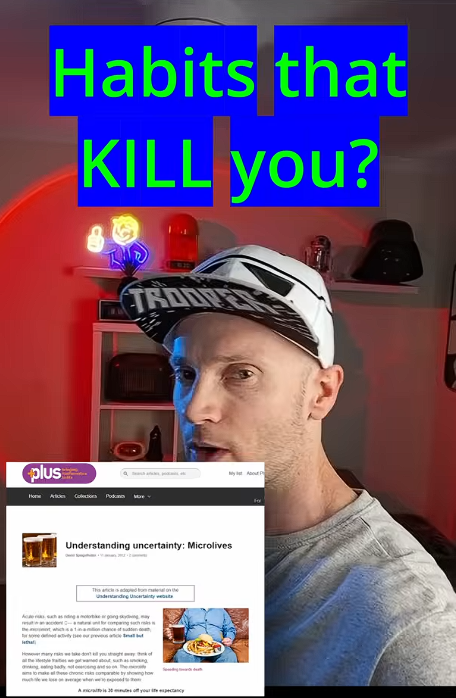
Microlives: How Your Habits Steal 30 Minutes of Life
How do your daily, routine habits steal your total life expectancy? Today we unpack the concept of ‘microlives’. The cost of 30 mins on or off your life expectancy, and how a range of different habits, from smoking, drinking, pollution, driving, weight gain, and more affect your microlives. Shout a coffee: https://buymeacoffee.com/benhutchinson
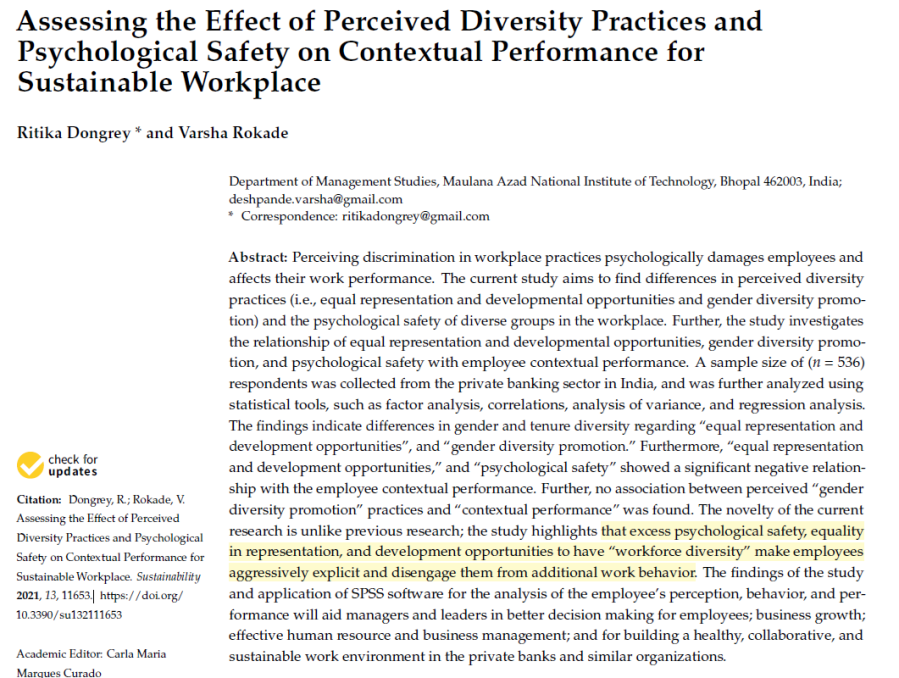
High Psychological Safety suggested to contribute to people being “aggressively expressive” and impacting work performance
I found this interesting – higher psychological safety was linked with people being “aggressively expressive” and may contribute to anti-organisational behaviour, among other factors. They investigated perceived diversity practices and representation and the links with psychological safety and gender diversity promotion in >500 private banking employees in India. PS. Check out my YouTube: https://youtube.com/@safe_as_pod?si=iUaDPJynPemQRZhY A… Continue reading High Psychological Safety suggested to contribute to people being “aggressively expressive” and impacting work performance
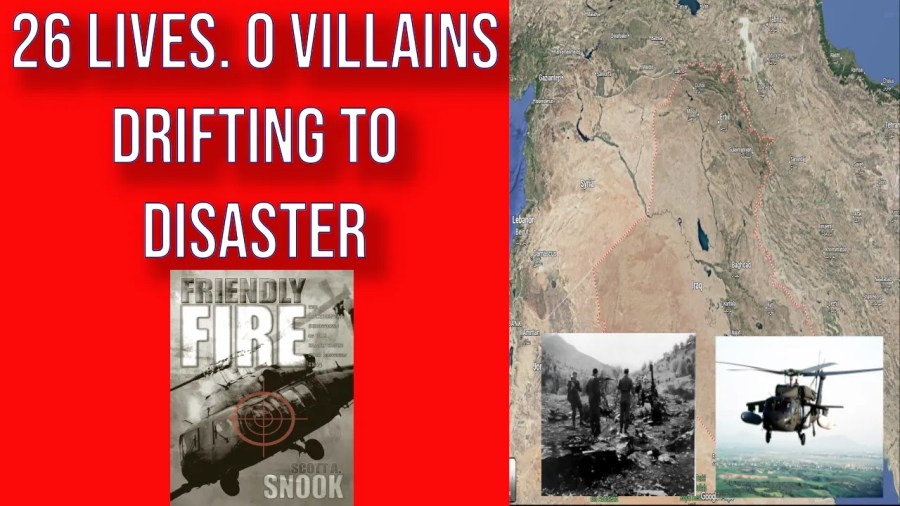
When Success Leads to Disaster: Practical Drift & the 1994 Black Hawk Friendly Fire Shootdown
In 1994, two US Air force F-15 fighters shot down two friendly US Army Black Hawk helicopters. This event shouldn’t have been possible: there were experts, radio communications, radar, AWACS and more. However, this isn’t a tragedy due to human error or a lack of safeguards, it happened in spite of the safeguards. This episode… Continue reading When Success Leads to Disaster: Practical Drift & the 1994 Black Hawk Friendly Fire Shootdown
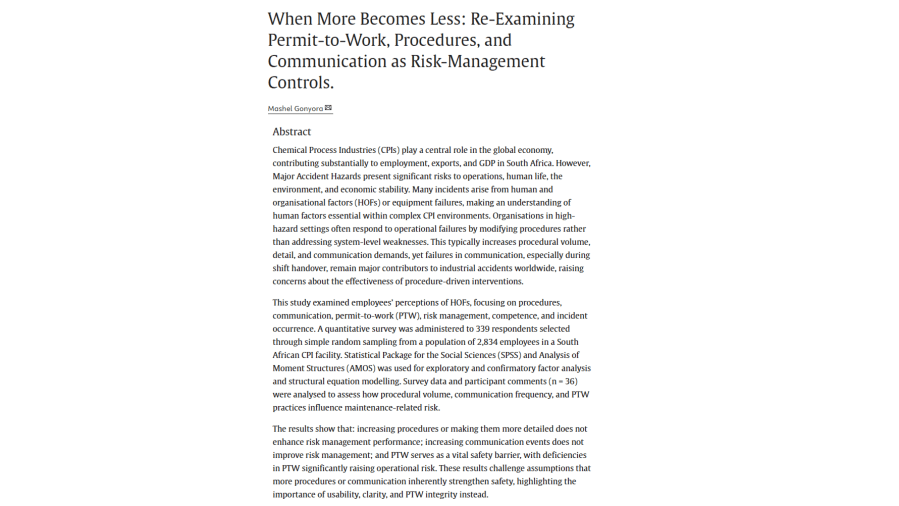
When More Becomes Less: Re-Examining Permit-to-Work, Procedures, and Communication as Risk-Management Control
This study evaluated employee perceptions of Human & Organizational Factors (HOF), procedures, PTW and more. 339 respondents from a South African chemical processing facility. I liked this quote: “Management creates more procedures” while providing “less supervision and support” PS. This article was…overwhelming. PPS. Check out my YouTube: https://youtube.com/@safe_as_pod?si=iUaDPJynPemQRZhY Extracts: · “More procedures and more detailed procedures… Continue reading When More Becomes Less: Re-Examining Permit-to-Work, Procedures, and Communication as Risk-Management Control

