
Who would you trust more for medical advice – your doctor or an AI chatbot? I think most people would say their doctor. Interesting, some new research has found AI LLMs to outperform doctors on a range of recall knowledge tests – and sometimes quite significantly so. Though, of course, this is largely based on… Continue reading Your Doctor vs AI Chatbot – who do you trust more for medical advice?
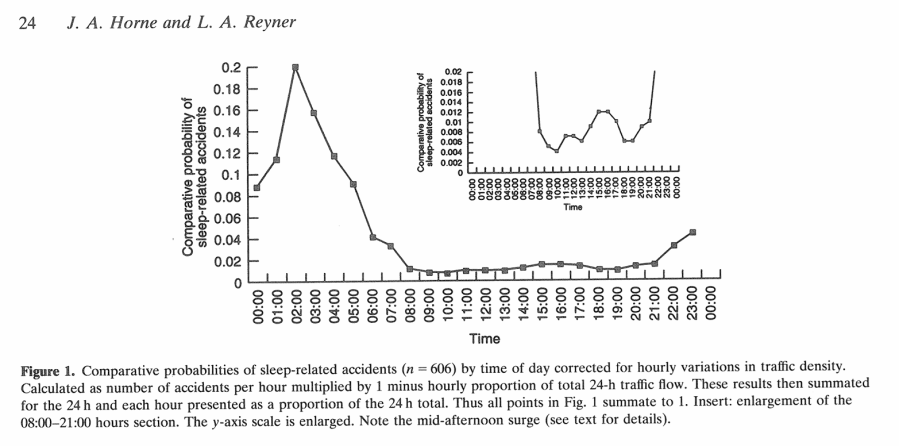
Chance of sleep-related crash at different times of the day – 50x higher chance of falling asleep at 2am vs 10am
What is your chance of having a sleep-related vehicle crash per time of day? This older article (Horne & Reyner, 1995, J Sleep Res, 4(2)) shows the probabilities of vehicle crashes (controlled for traffic density, which is important). Clear time-of-day effects peaks are visible – particularly accidents around 2 – 6 am, and 3-4 pm.… Continue reading Chance of sleep-related crash at different times of the day – 50x higher chance of falling asleep at 2am vs 10am
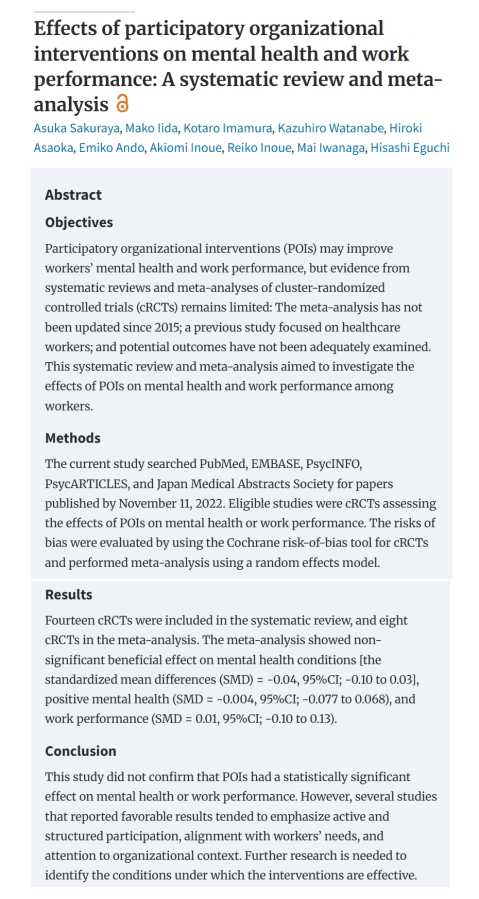
Effects of participatory organizational interventions on mental health and work performance: A systematic review and meta-analysis
Are Participatory Organizational Interventions (POIs) to improve working conditions effective at improving workers’ mental health and work performance? This systematic review & meta-analysis explored just 14 studies that met inclusion to find out. Evaluated outcome measures were negative mental health (burnout, depression, anxiety), positive mental health (job satisfaction, well-being, work engagement) & work performance (work… Continue reading Effects of participatory organizational interventions on mental health and work performance: A systematic review and meta-analysis
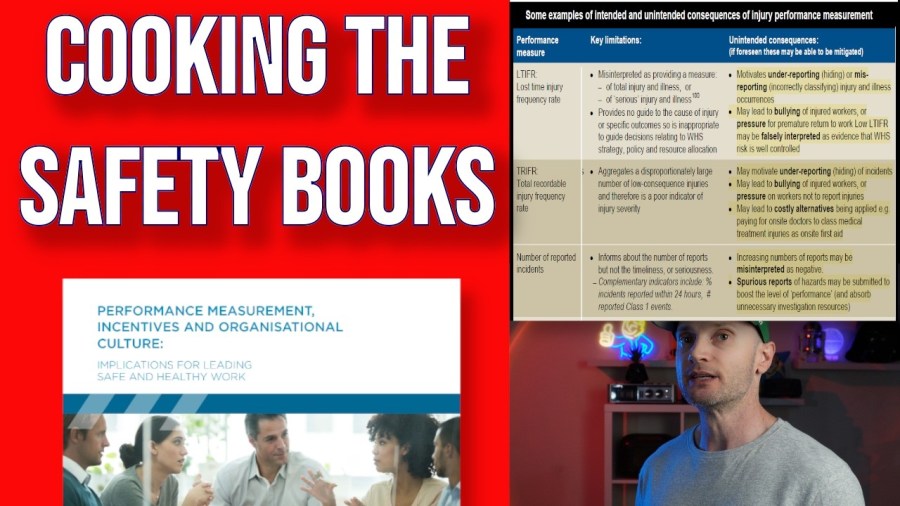
The pitfalls of safety reporting metrics and ‘safewashing’ our way to disaster
Can our safety reporting and indicators mask signals that organisations are drifting to major failure? This episode unpacks two reports from Sharron O’Neill and colleagues looking at the pitfalls of safety reporting measures. We also explore weaknesses in annual safety reports – particularly how reports may be ‘safewashing’. Shout a coffee: https://buymeacoffee.com/benhutchinson
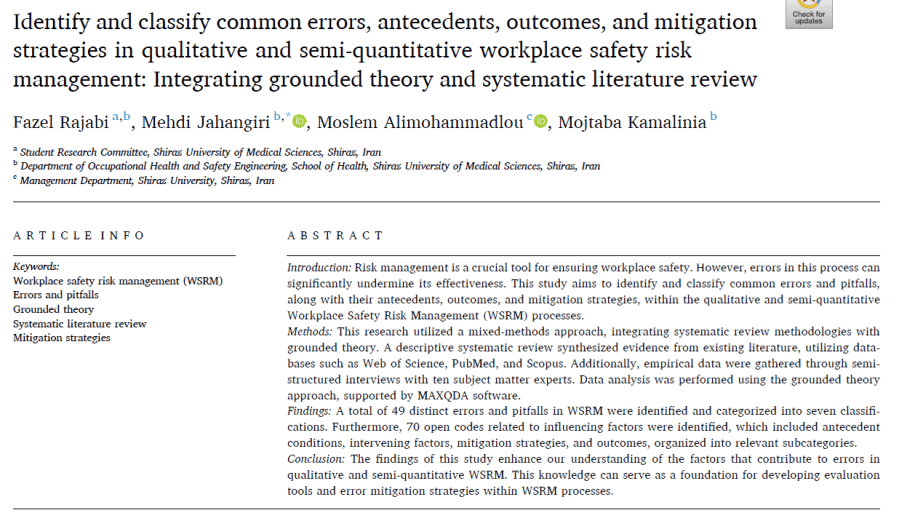
Identify and classify common errors, antecedents, outcomes, and mitigation strategies in qualitative and semi-quantitative workplace safety risk management
This mouthful of a title looked at some common errors, pitfalls and antecedents associated with workplace safety risk management (WSRM) processes via lit review. PS. Check out my YouTube channel: https://www.youtube.com/@safe_as_pod Extracts: · They identified 49 errors and pitfalls in WSRM, categorised into seven classifications · These errors and pitfalls included “Conducting risk assessments solely for documentation… Continue reading Identify and classify common errors, antecedents, outcomes, and mitigation strategies in qualitative and semi-quantitative workplace safety risk management
ISO certification = More Fatalities?
Safety Management System Certification, like ISO 45001 and 18001 are common worldwide. Organizations invest considerable time and resources into gaining and maintaining certification. So, are there any measurable links or improvements in safety incident performance for organizations that seek ISO certification? Let’s unpack 2 studies to find out. Shout me a coffee: https://buymeacoffee.com/benhutchinsonSafe As LinkedIn… Continue reading ISO certification = More Fatalities?
Focus – Don’t Fiddle (The Obscenity of the LTFR)
Is focusing on LTIFR and TRIFR a case of fiddling on the trivial, over the use of effective practices and measures? One key influence in my career was the late Geoff McDonald. I’ve covered his work before, and here’s another from 1995 arguing how use of injury frequency rates is obscene – a loathsome or… Continue reading Focus – Don’t Fiddle (The Obscenity of the LTFR)

Why your leader’s apology failed and what the research says
What happens when a leader messes up, and says sorry? This explores different types of leader apologies, and how they’re not all made equal. It found the sincere apologies drove the largest changes in forgiveness and trust – more than just saying sorry, or taking responsibility to fix the issue. It appears that sincerity equals,… Continue reading Why your leader’s apology failed and what the research says
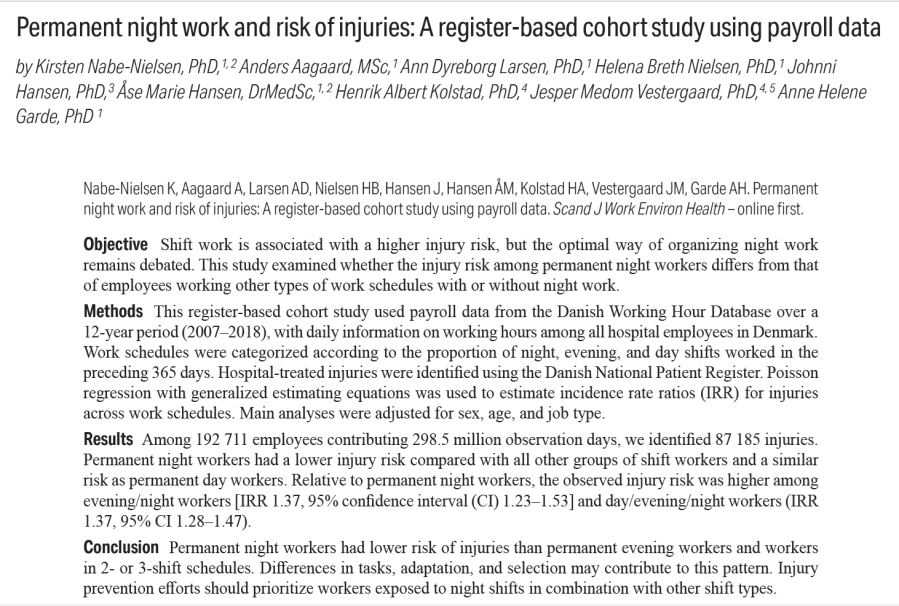
Do permanent night workers have a higher risk of workplace injury?
Do permanent night workers have a higher risk of workplace injury? This Danish study used hospital records over a 12 year period, involving >192k employees and >87k injuries. PS. Check out my YouTube channel: https://www.youtube.com/@safe_as_pod Background: · They say “Night work affects 24% of the workforce in the EU (1) and is associated with adverse health… Continue reading Do permanent night workers have a higher risk of workplace injury?
Dr Dom Cooper interview pt 1: BBS, HOP, SIFs
Part 1 of my interview with Dom Cooper. We discuss several topics around BBS / behavioural safety, limitations of Safety-II / HOP, and the elimination of SIFs. I can actually say ‘due to popular request’, since Dom was the second most requested person I interview from viewer feedback. Drop a comment or question directly on… Continue reading Dr Dom Cooper interview pt 1: BBS, HOP, SIFs

