This systematic review unpacked 22 studies to understand the effects of organisational mental health interventions on healthcare workers’ mental health and wellbeing. Shared under an Open Access licence. PS. Check out my YouTube channel: https://www.youtube.com/@safe_as_pod Extracts: · Interventions included flexible and better designed schedules, redesigned work processes and competency training, team-building and civility initiatives, participatory workplace-change… Continue reading The effects of different types of organisational workplace mental health interventions on mental health and wellbeing in healthcare workers: a systematic review
Making better decisions and injecting hold-points for debiasing
How can we improve big decisions in organisations, and inject hold-points for debiasing? This video frantically covers an article from Daniel Kahneman and colleagues on just this very topic. #decisionmaking #bias #judgements
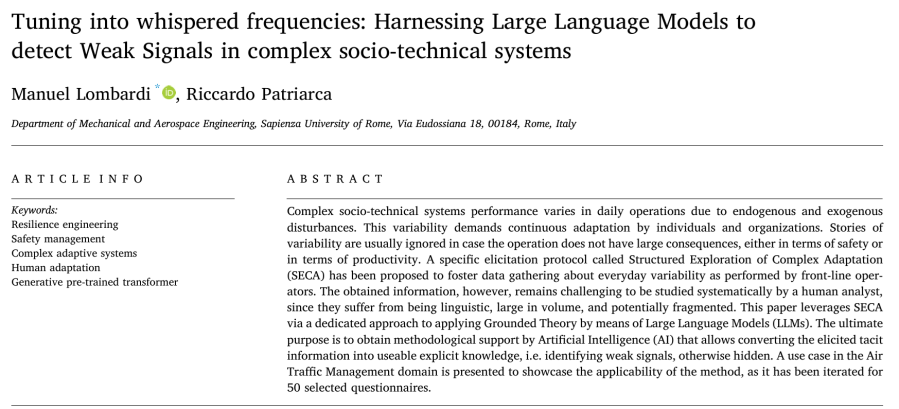
Tuning into whispered frequencies: Harnessing Large Language Models to detect Weak Signals in complex socio-technical systems
This study evaluated whether LLMs can support a scaled and systematic analysis of surveyed data about worker adaptive practices, to foster weak signal ID. E.g. can LLMs help identify weak signals from large-scale data. In this case, textual data describing frontline personnel adaptive behaviours during everyday operations. This was obtained via survey. PS. Check out… Continue reading Tuning into whispered frequencies: Harnessing Large Language Models to detect Weak Signals in complex socio-technical systems
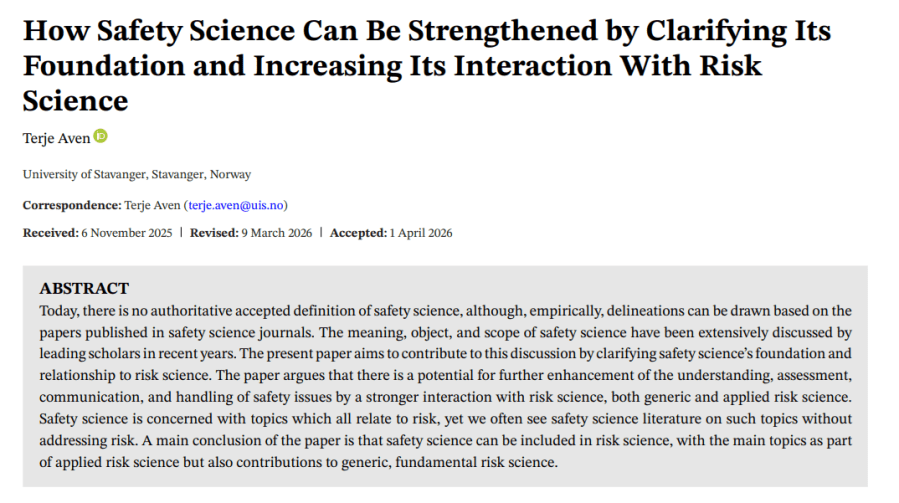
How Safety Science Can Be Strengthened by Clarifying Its Foundation and Increasing Its Interaction With Risk Science
This article from Terje Aven discusses some limitations within the Safety Science (SS) field, and argues for its better interaction, or even its subsummation within Risk Science. Not a summary per se – but several extracts posted below. PS. Check out my YouTube: https://www.youtube.com/@safe_as_pod Extracts: · There is currently “no authoritative accepted definition of safety… Continue reading How Safety Science Can Be Strengthened by Clarifying Its Foundation and Increasing Its Interaction With Risk Science
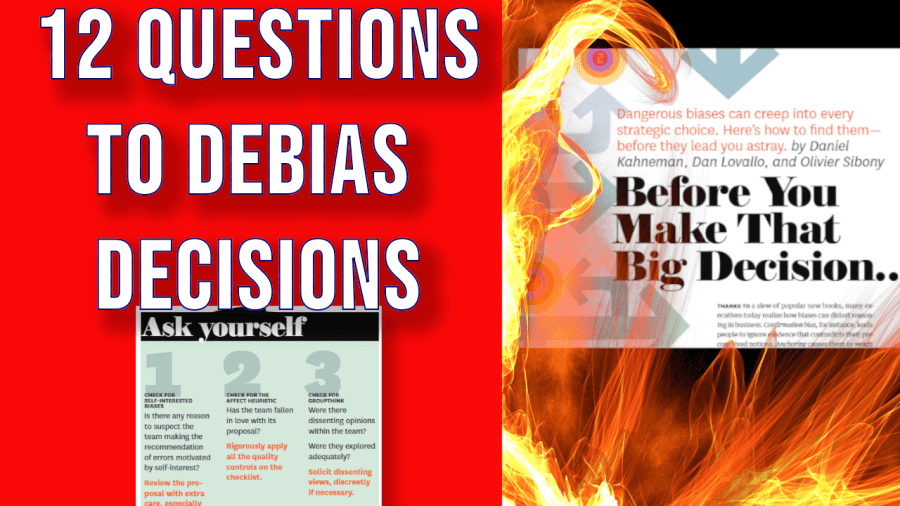
Why do leaders make terrible decisions? 12 questions to debias decisions
Our mental shortcuts (heuristics) serve us well. They help us navigate a complex, ambiguous world normally safely and efficiently. But in modern organisations, they can sometimes lead us astray – via biases. In this context, biases are systematic distortions away from an expected decision or judgement. This article from Daniel Kahneman and colleagues, unpack some… Continue reading Why do leaders make terrible decisions? 12 questions to debias decisions
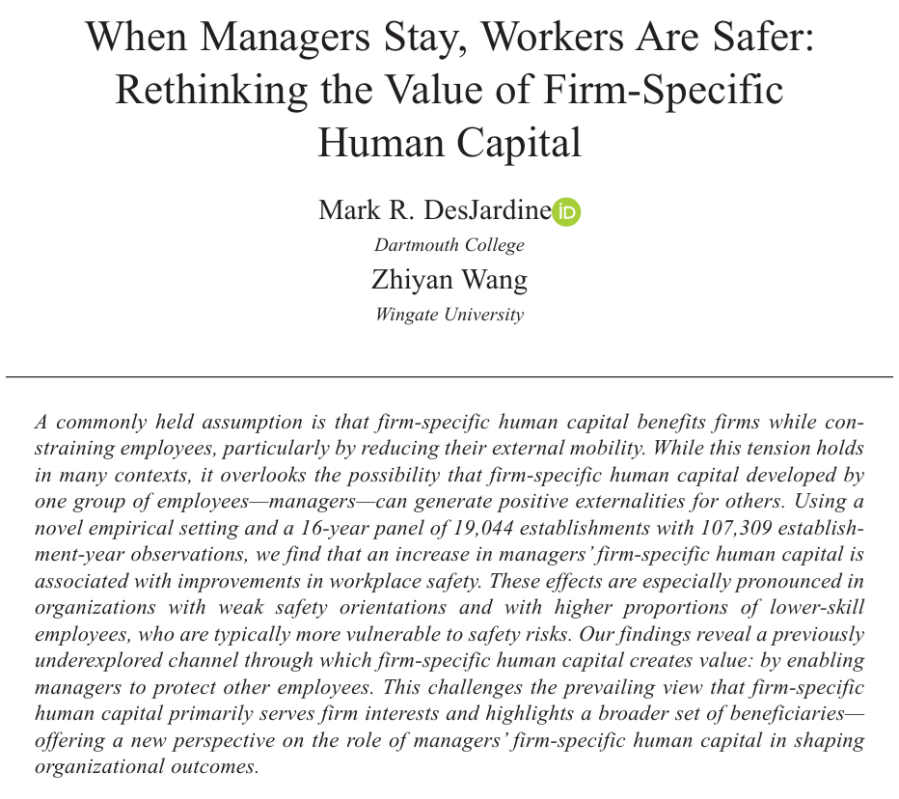
When Managers Stay, Workers Are Safer: Rethinking the Value of Firm-Specific Human Capital
Does increasing manager retention and/or firm-specific capital improve reported incident data? This study analysed 16 years of data from >19k US firms. Note the various limitations, including human capital was evaluated indirectly via tenure, which was informed via some US law that aimed to limit managers changing companies, due to sharing company secrets. PS. Check… Continue reading When Managers Stay, Workers Are Safer: Rethinking the Value of Firm-Specific Human Capital
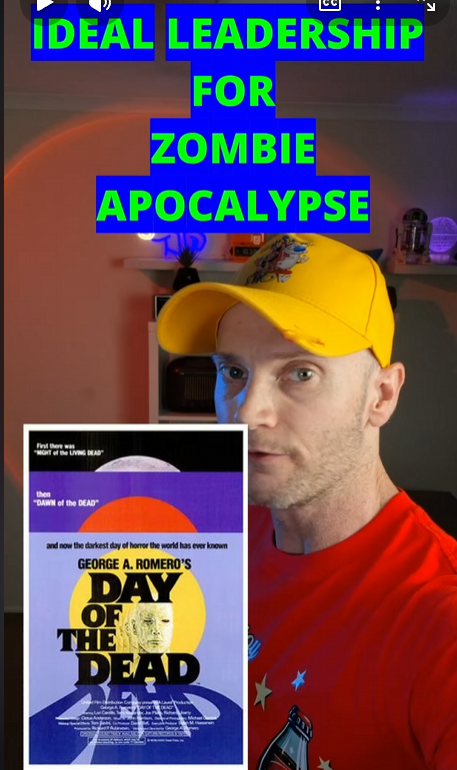
Day of the Dead: Leadership for zombie apocalypses
What can zombie apocalypses teach us about ideal leadership? Quite a lot, it seems. This ep explores a study that used Day of the Dead to unpack leadership under stress. Check it out, and if you find it useful, then please share my channel with your network, and subscribe, like, and leave a comment on… Continue reading Day of the Dead: Leadership for zombie apocalypses
The role of spatial distance to hazards in risk perception: A systematic literature review
The role of spatial distance to hazards in risk perception: A systematic literature review Not sure who this will interest – but it reviewed the evidence on how the spatial proximity to hazards alters risk perception. 54 studies met inclusion. Shared under open access licence. PS. Check out my YouTube: https://www.youtube.com/@safe_as_pod Extracts:
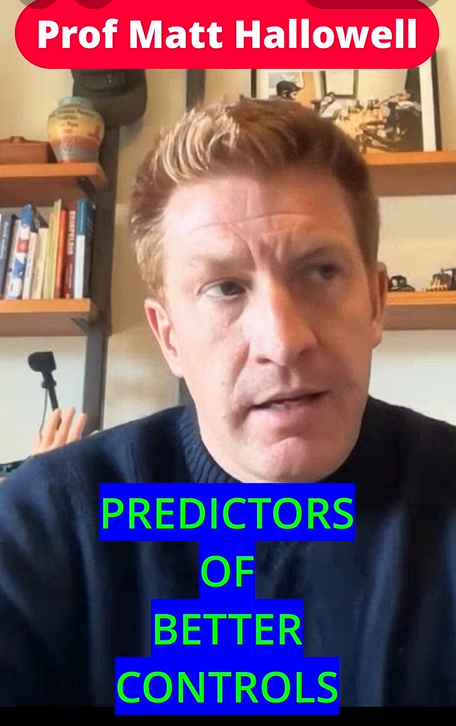
Matt Hallowell: Predictors of more effective risk controls
What are some predictors on the use of higher-order risk controls in the field? Here Matthew Hallowell discusses research which unpacked this question. Link in comments – and links to his full interviews. If you find these videos useful then would appreciate a sub & repost! Full interview:pt1: https://youtu.be/-2cKTn8zvtApt2: https://youtu.be/LurUv4BD5xM

