Safe As week in review: E22: Zombie leadership … being “dead ideas [about leadership] that still walk amongst us”. Zombie leadership is covered by several axioms: images 1 and 2. These dead ideas, being already dead can “absorb all kinds of damage and keep lumbering on towards their targets”; that is, difficult to slay. Zombie… Continue reading Safe As week in review – 22, 23, 24: Zombie leaders, Safety-II debriefs, and causal illusions of leadership styles
Tag: books

Call Me A Jerk: Persuading AI to Comply with Objectionable Requests
Can LLMs be persuaded to act like d*cks? A really interesting study from Meincke et al. found human persuasion techniques also worked on LLMs. They tested how “classic persuasion principles like authority, commitment, and unity can dramatically increase an AI’s likelihood to comply with requests they are designed to refuse”. I’m drawing from their study… Continue reading Call Me A Jerk: Persuading AI to Comply with Objectionable Requests

Safe AF ep #3: Learning Teams vs Root Cause Analyses (+ transcript)
Safe AF pod ep #3 now live! How well can Learning Teams function against more traditional Root Cause Analysis techniques? What things do they focus on, what fixes result from the learning activities? Does one focus more on blame and individuals? Today we explore a paper by Robbins et al., 2021, comparing Learning Teams vs… Continue reading Safe AF ep #3: Learning Teams vs Root Cause Analyses (+ transcript)
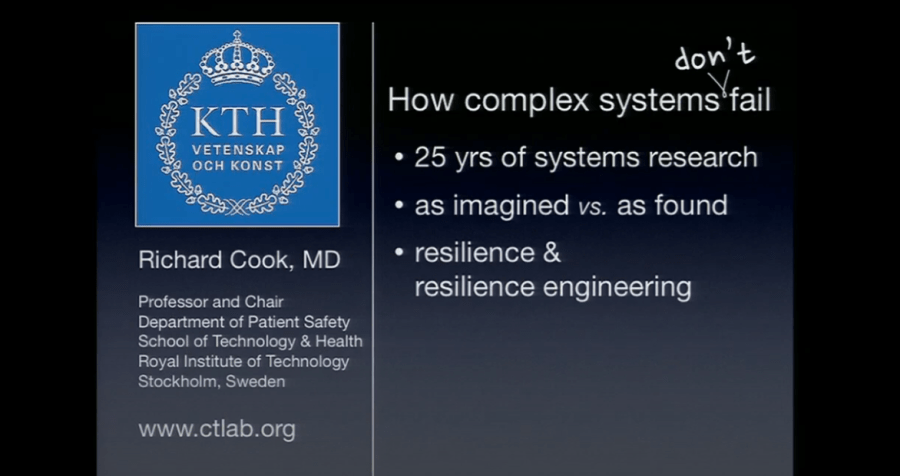
How complex systems (don’t) fail: YT video from late Richard Cook
A banger YT presentation from the late, great Richard Cook. He discusses ‘how complex systems fail’. Video link below. Some extracts: · “The surprise is not that there are so many accidents … The surprise is that there are so few” · “The normal world is not well-behaved … Even so, a lot of operational settings achieve… Continue reading How complex systems (don’t) fail: YT video from late Richard Cook

Deming’s system of profound knowledge: 14 points for system improvement
Another from Deming while I’m on the theme. Not much needs to be said – I think it does a lot of talking itself. Deming promoted: · Ceasing the dependence of trying to inspect-in quality · Aim for continuous learning, testing and improvement (e.g. plan, do, STUDY, act) · He was critical of zero defect approaches, arguing them… Continue reading Deming’s system of profound knowledge: 14 points for system improvement

On Some Statistical Aids Toward Economic Production
A banger from Deming in 1975, talking about applying statistical control to manufacturing and production variability. He says that much of this paper is based on “principles taught in Japan since 1950”. Don’t let the topic fool you – you’ll find a lot of similarities and overlaps with principles of HF/E, work design, New View… Continue reading On Some Statistical Aids Toward Economic Production

ChatGPT for analysing investigations
I think this is one of the better uses of LLMs regarding investigations – they trained their model to evaluate accident reports and extract key details from the reports. They found: · It could extract key information from unstructured data and “significantly reduce the manual effort involved in accident investigation report analysis and enhance the overall… Continue reading ChatGPT for analysing investigations
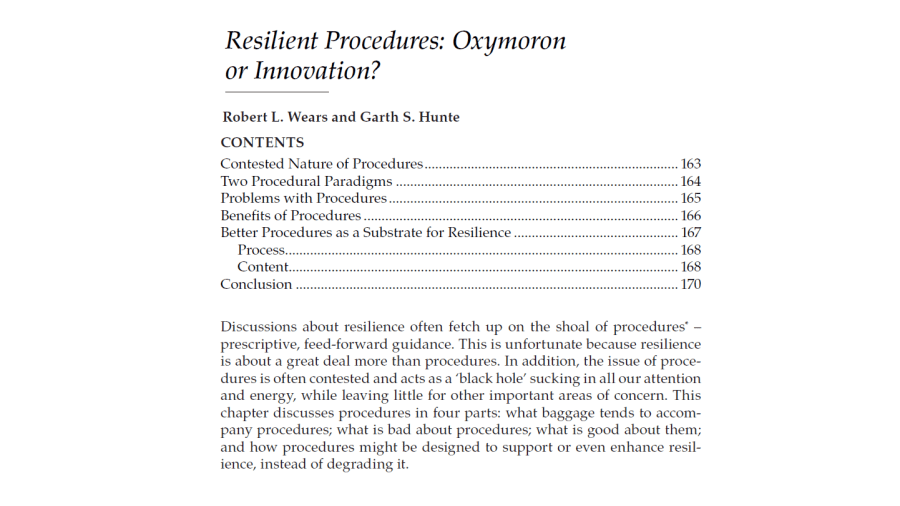
Resilient Procedures: Oxymoron or Innovation?
An interesting chapter from the late Bob Wears around ‘resilient procedures’. I’ve skipped heaps. They specifically explore: · what baggage tends to accompany procedures · what is bad about procedures · what is good about them · how procedures might be designed to support or even enhance resilience, instead of degrading it. Procedures are said… Continue reading Resilient Procedures: Oxymoron or Innovation?
 SafetyInsights.org