
This Master’s thesis from Andrew Barrett explored group learning practices, like learning teams, for safety improvement. Specifically, he studied the following question via institutional ethnographic interviews: · how are organisations in Australia adopting group learning practices for safety improvement? Way too much to cover – so check out the thesis. Some background extracts: · “Safety… Continue reading The rise of learning teams: How organisations in Australia are adopting group learning practices for safety improvement
Tag: technology
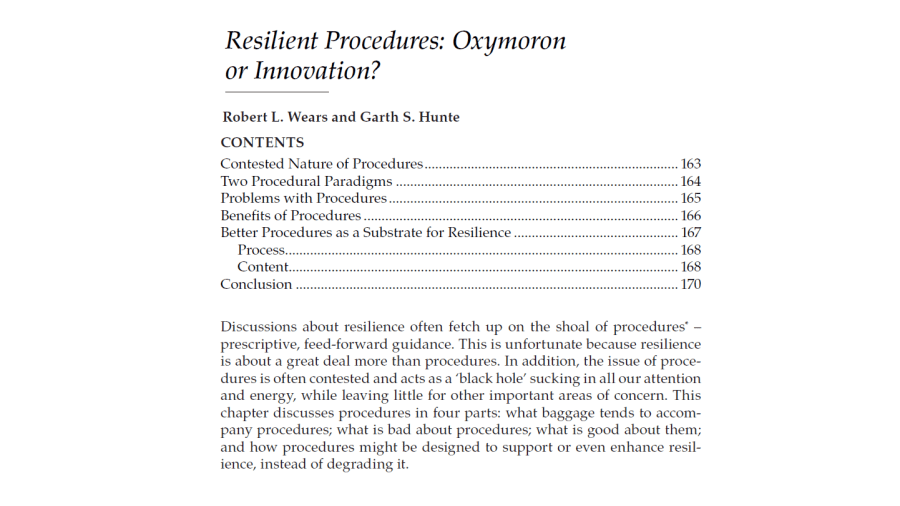
Resilient Procedures: Oxymoron or Innovation?
An interesting chapter from the late Bob Wears around ‘resilient procedures’. I’ve skipped heaps. They specifically explore: · what baggage tends to accompany procedures · what is bad about procedures · what is good about them · how procedures might be designed to support or even enhance resilience, instead of degrading it. Procedures are said… Continue reading Resilient Procedures: Oxymoron or Innovation?

Human factor analysis of cockpit work incidents in high-speed workboats: the mystery hidden between the lines
This study unpacked what investigators look at and how they construct causes in high-speed workboats. It employed a Safety-II / HOP / HF perspective. Tl;dr: human factors are poorly evaluated and largely seen as individual-level factors. Some extracts: · “Although the analysis focused on negative observations, it also identified HFs that supported the activity” · “Many pivotal… Continue reading Human factor analysis of cockpit work incidents in high-speed workboats: the mystery hidden between the lines
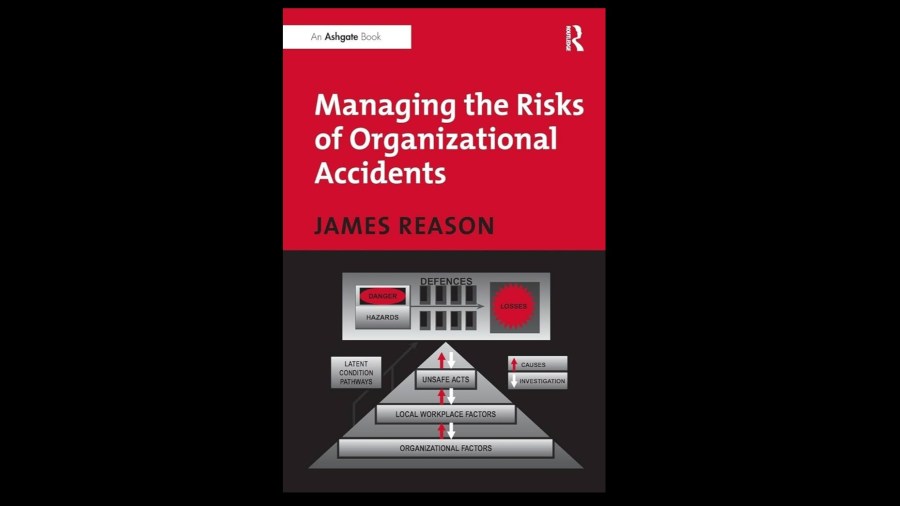
The mixed blessing of risk defences and redundancy: James Reason
A few random extracts from James Reason’s timelessly awesome Managing the Risks of Organizational accidents. (Note: This isn’t an endorsement of the somewhat linearity of defences-in-depth, since we have evidence that emergent behaviour can playout in reality and with equifinality etc) There’s hundreds of things I could extract (and maybe will in time), but here’s… Continue reading The mixed blessing of risk defences and redundancy: James Reason

“I think, therefore I err”: An article about ‘good errors’, heuristics and intelligent systems
“Every intelligent system makes errors”, so said Gerd Gigerenzer. Here’s a couple of page extracts from a 2005 paper. Not sure if I’ll summarise it or not (it’s really interesting, but tough to capture in a summary…) The paper: · Challenges the rationalistic and normative ideal as cognition as purely a logical and rational one, ignoring… Continue reading “I think, therefore I err”: An article about ‘good errors’, heuristics and intelligent systems

Automation’s lacklustre effects on fatal accidents & cheap migrant labour hampering adoption of engineering controls
REALLY interesting findings from Associate Professor Masahiro Yoshida. It suggests that automation over a historical context didn’t really drive down workplace injuries since it tended to be employed in already mature industries. And, ready access to cheap migrant workforces may hinder broader industrial risk reduction due to a negative correlation with automation investment. And the… Continue reading Automation’s lacklustre effects on fatal accidents & cheap migrant labour hampering adoption of engineering controls
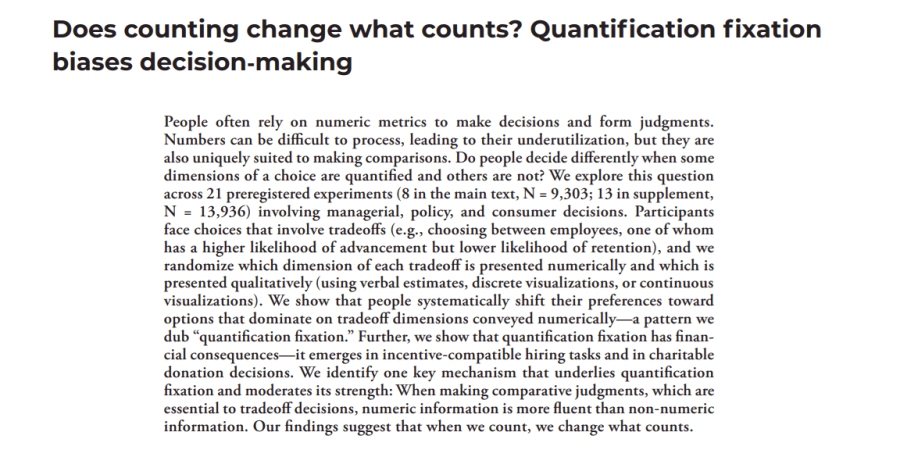
Does counting change what counts? Quantification fixation biases decision-making
Saw this posted on LinkedIn (forget who shared it) and found it really interesting. This study, across 21 experiments and 23k participants in managerial, policy and consumer contexts, studied how numbers and quantification distorts decision-making Context: · Quantification is spreading and has reached into almost every personal and professional area · New-borns are given Apgar… Continue reading Does counting change what counts? Quantification fixation biases decision-making
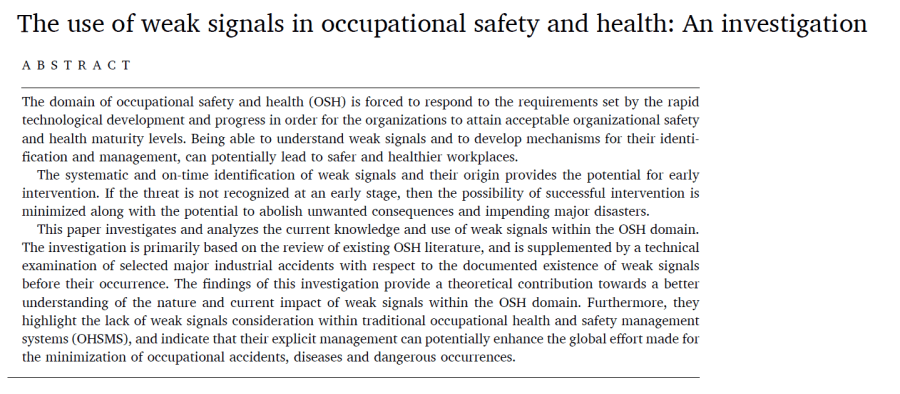
The use of weak signals in occupational safety and health: An investigation
This study explored current knowledge and use of weak signals in safety. Thanks to Clive Lloyd for sharing this a couple weeks back. As you’d expect, this sort of topic, based on accidents, is pretty replete with hindsight and outcome knowledge but is interesting nevertheless. Extracts: · They have been defined as an “…imprecise early indication… Continue reading The use of weak signals in occupational safety and health: An investigation
Hollnagel on “Human error”: error as cause, process or outcome
Not much to say – some extracts from a 2007 chapter from Erik Hollnagel, unpacking whether we really need “human error”? I knocked the summary up last night and will probably post in the next couple of weeks. Oh man, I need to give up on chapters…what a slog. He argues: · Human error “is not… Continue reading Hollnagel on “Human error”: error as cause, process or outcome
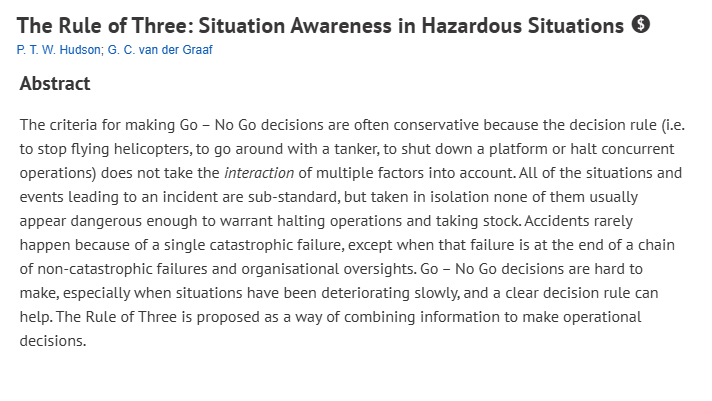
The rule of three: Situation awareness in hazardous situations
“The rule of three provides a mechanism that converts the risk continuum into a dichotomy for the purposes of decision-making. It does not, however, ignore the expertise of operators … Put another way, the rule of three structures expert decision-making; it does not replace it”
 SafetyInsights.org