
Do people respond to risk assessments or how risky they feel the work to be? This study surveyed 120 construction workers to understand their rational & emotional responses to risk. PS. Check out my YouTube and recent Critical Control / barrier vid: https://youtu.be/Ly1mEn_KCLQ?si=yG3yRVOM0r2eyyKI Shout a coffee: https://buymeacoffee.com/benhutchinson Yes – it’s one of those ‘unsafe behaviour’… Continue reading Do we see how they perceive risk? An integrated analysis of risk perception and its effect on workplace safety behavior
Tag: risk
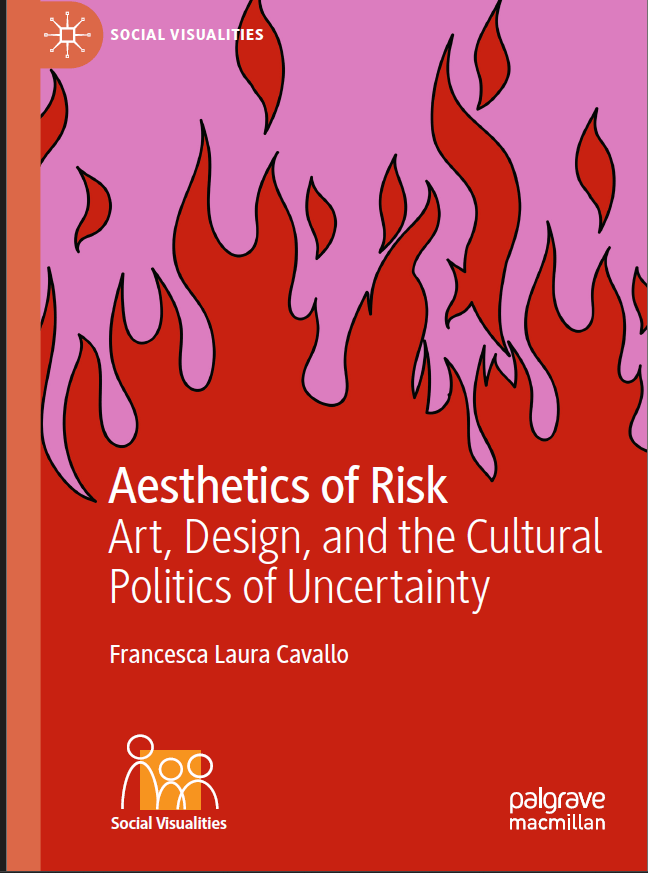
“There is no such thing as risk in reality” – it’s constructed by humans, but it shapes & constricts social life
Is risk discovered or simply constructed, visualised and governed? A cool read from Cavallo’s ‘Aesthetics of Risk’, which asks us to look beyond hazards towards the future and production of risk. Extracts from just a couple of chapters. Can post more if people are interested. PS. Check out my YouTube and recent Critical Control /… Continue reading “There is no such thing as risk in reality” – it’s constructed by humans, but it shapes & constricts social life
Sensemaking, bureaucracy and weak signals (full PDF article)
Can adherence to process mask weak signals of risk? A cool read examining how ‘soft’ info influences safety in rationalistic firms (a prison in this case) that prioritise ‘hard’ info. Shared under an open access licence. PS. Check out my YouTube: https://youtube.com/@safe_as_pod?si=iUaDPJynPemQRZhY Shout a coffee: https://buymeacoffee.com/benhutchinson Extracts: · “Soft information is informal, tacit and often qualitative”,… Continue reading Sensemaking, bureaucracy and weak signals (full PDF article)
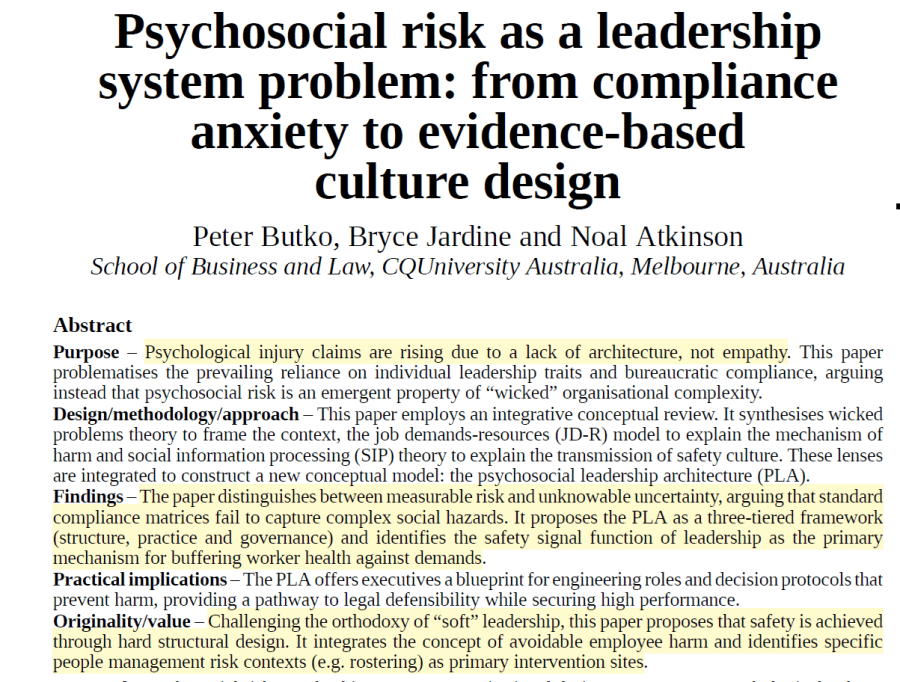
Psychosocial risk as a leadership system problem: from compliance anxiety to evidence-based culture design
“Psychological injury claims are rising due to a lack of architecture, not empathy” An interesting ‘integrative conceptual review’ of the traps of current compliance-driven approaches to psychosocial challenges, and a way forward. They argue that the current approach places “reliance on individual leadership traits and bureaucratic compliance” over recognising the emergent/wicked nature of psychosocial risk.… Continue reading Psychosocial risk as a leadership system problem: from compliance anxiety to evidence-based culture design
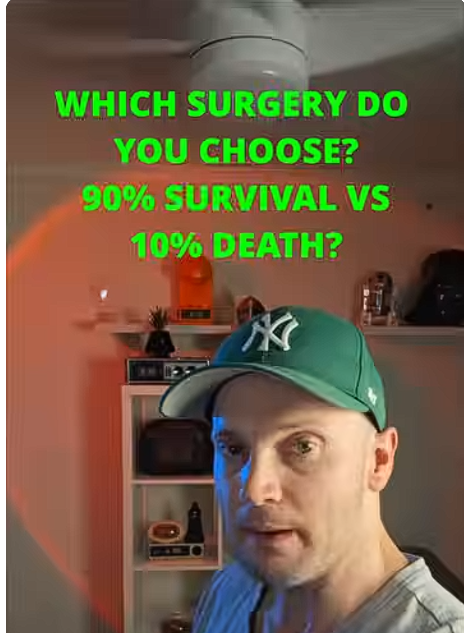
Framing and communicating risk – 90% survive vs 10% die
When choosing milk, do you prefer 5% fat or 95% fat free? What if a doctor presented the risk from surgery as 90 % survive, versus 10% die? Same risk, different framing. Whether people accept the surgery shouldn’t matter on how that identical risk is presented, right? It turns out, how information and risks are… Continue reading Framing and communicating risk – 90% survive vs 10% die
Is ‘safety’ the presence of capacities?
What is your definition of ‘safety’? For some, safety is defined as the presence of capacities. Here, Drew Rae discusses his thoughts, and scientific logics, of this definition. #safety #hse #risk #science #safetyscience #safetyii
SafeWork prosecution and the legal definition of risk, reasonably practicable, and what ought reasonably to have been known
This prosecution judgement related to a serious injury, after heavy stone slabs tipped off a truck tray onto a worker. Some extracts I found interesting: · “state of knowledge applied to the definition of practicable is objective. It is that possessed by persons generally who are engaged in the relevant field of activity and not the… Continue reading SafeWork prosecution and the legal definition of risk, reasonably practicable, and what ought reasonably to have been known
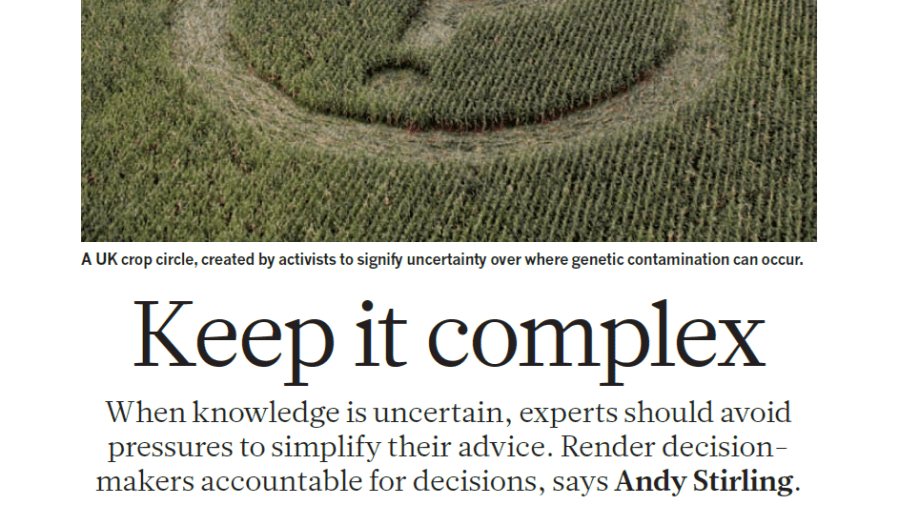
‘Keep It Complex’: perspectives on risk, uncertainty and ambiguity
When uncertainty and ignorance is abound on risk, should we ‘keep it simple’? Or keep it complex by debating multiple perspectives and embracing uncertainty and ambiguity? Extracts: · “When knowledge is uncertain, experts should avoid pressures to simplify their advice. Render decision-makers accountable for decisions” · “Expert advice is often thought most useful to policy when it… Continue reading ‘Keep It Complex’: perspectives on risk, uncertainty and ambiguity
Safe As podcast e18: When emotion leads risk – risk as feelings and not just numbers
Risk in safety is often framed in matrices as likelihood x consequences. It holds an allure of (semi)objectivity – the numbers are the numbers. But what is the role of emotion and feelings within our risk judgements? Today’s article argues that what we ‘feel’ about risk precedes and influences what we ‘think’ about risk. This… Continue reading Safe As podcast e18: When emotion leads risk – risk as feelings and not just numbers

Evaluating the Impact of Hazard Information on Fieldworkers’ Safety Risk Perception
This study investigated how 181 fieldworkers rate the severity and frequency of safety incidents for five construction work scenarios. The scenarios introduced new hazards into the scenarios, assessing how workers responded, if at all. Background: · Safety risk perception (SRP) is estimated using the participants’ perception of the safety hazards severity and frequency of occurrence… Continue reading Evaluating the Impact of Hazard Information on Fieldworkers’ Safety Risk Perception

