
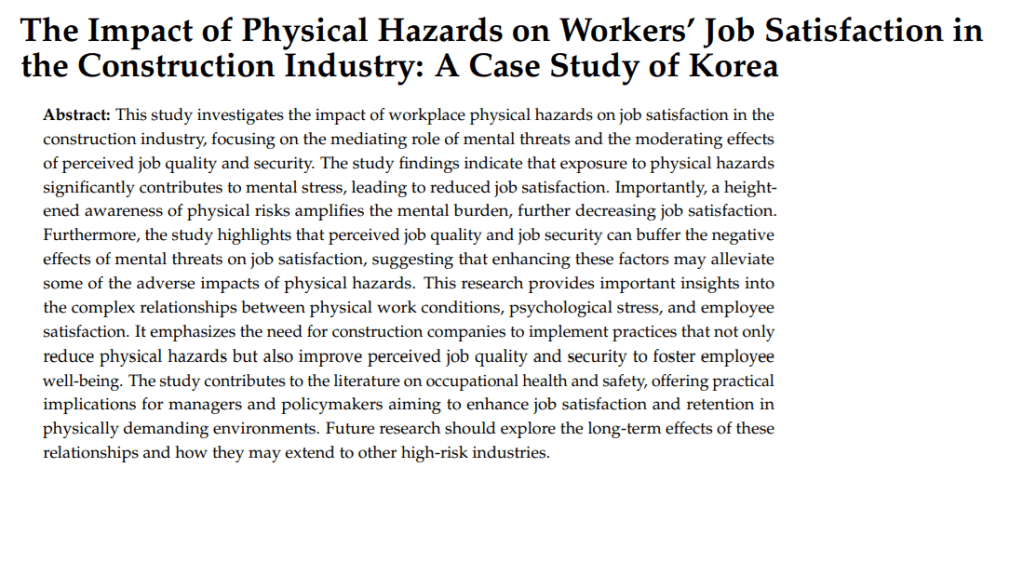
This explored the effects of physical hazard exposures on worker job satisfaction.
Survey from >2k Korean construction workers.
Background:
· “physical hazards such as noise, vibration, and exposure to hazardous substances also contribute to job stress” and behavioural changes
· “Continuous exposure to such risks can result in cumulative mental and physical strain, increasing job-related stress, and decreased job satisfaction”
· “Compared to other industries, physical hazards are more prevalent in construction, amplifying their impact on workers’ health and job performance outcomes”
· “physical hazards are a significant contributor to adverse mental health outcomes, such as anxiety and stress, which compromise job performance and elevate the likelihood of unsafe behaviors”

Their findings:
· “the study highlights that perceived job quality and job security can buffer the negative effects of mental threats on job satisfaction, suggesting that enhancing these factors may alleviate some of the adverse impacts of physical hazard”
· “the significant positive relationship between workplace physical hazards and mental threats (H1) underscores the psychological impact of physical working conditions”
· They found that “the presence of physical hazards can induce chronic mental stress, even in the absence of actual accidents”
· “Such persistent stress may have long-term consequences, including impaired mental health, increased burnout, and decreased productivity”
· Hence, “addressing this psychological dimension is essential for safeguarding worker well-being”
· “the negative direct effect of workplace physical hazards on job satisfaction (H2) highlights the dual impact of these hazards. Beyond immediate safety risks, physical hazards can erode job satisfaction over time”
· “alleviating the mental stress associated with physical hazards can enhance job satisfaction, even in settings where completely eliminating hazards is not feasible”
· “Our findings suggest that human resource practices such as equitable compensation, career development opportunities, and transparent communication regarding safety measures can help alleviate the psychological stress associated with physical hazards”
· “We also emphasize the need for targeted organizational interventions. For instance, by fostering a supportive work culture in which employees feel valued and secure, organizations can significantly improve job satisfaction, even in contexts where physical risks cannot be entirely eliminated”
· “clear communication about an organization’s commitment to safety and security can reduce workers’ perceptions of risk and psychological threats”

Ref: Seo, H. J., Hyun, E. J., & Yoon, Y. G. (2024). The Impact of Physical Hazards on Workers’ Job Satisfaction in the Construction Industry: A Case Study of Korea. Behavioral Sciences, 14(12), 1197.

Study link: https://www.mdpi.com/2076-328X/14/12/1197
LinkedIn post: https://www.linkedin.com/posts/benhutchinson2_this-explored-the-effects-of-physical-hazard-activity-7291200327523938304-wTWc?utm_source=share&utm_medium=member_desktop

 SafetyInsights.org