
Another on SIF prevention.
This (interim) report (another from the recent compendium – see comments for link) covers the findings from a few activities, including two SIF workshops about ID, implementing and monitoring critical controls for SIF hazards, and the role of human and org factors.
Too much to cover, so a few extracts:
· “the causal factors for SIFs are different from those for more frequent, minor injuries”
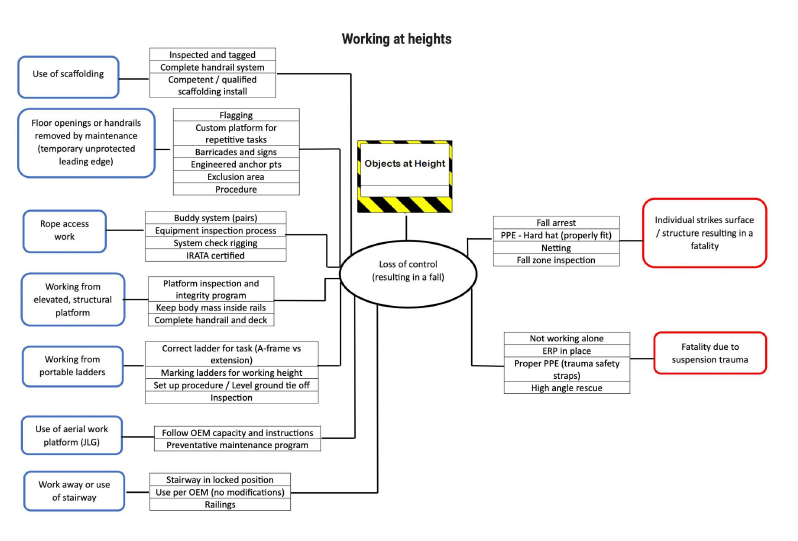
· “SIFs are more likely for work with heights, electrical exposures, confined spaces, struck-by and caught in/between hazards, and hazardous materials”
· “Highly hazardous work is often nonroutine and infrequently performed; there are one fifth the observations for high versus low consequence tasks”
· But “even routine activities can cause SIFs if there are no/ineffective/bypassed controls (Brady, 2019), poor/risky standard operating procedures (SOPs), or deviation/drift from procedures over time”
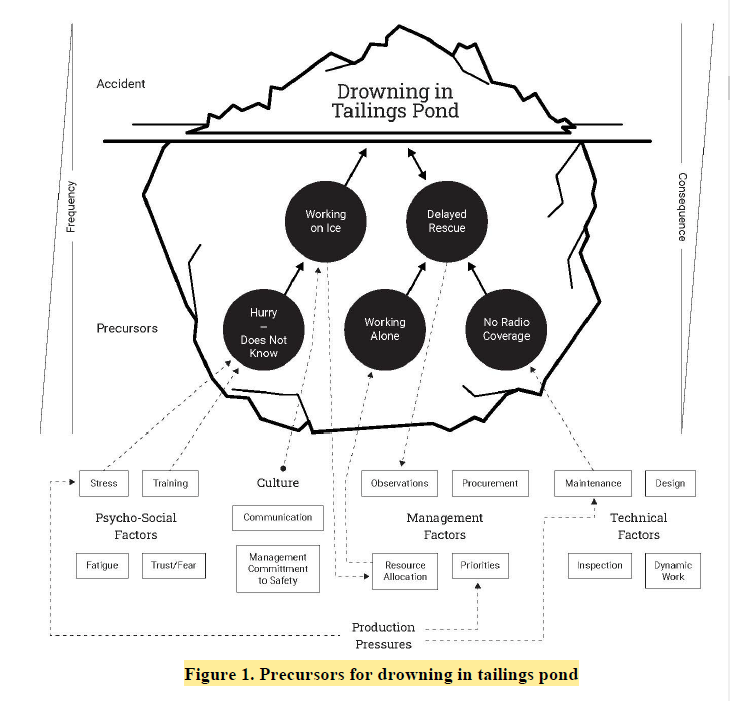
· “The precursors tend to be human and organizational (psycho-social, culture, management) (Lefsrud et al., 2022), that are less visible”
· “These factors are also more difficult to audit and have complex non-linear interactions, as identified from machine learning”
· “Thus, the creation, use, and analysis of precursors and critical controls can be even more difficult to identify and apply”
· Participants reported that there should be more focus on STCKY (stuff that can kill you) rather than “minor slips, trips, and falls. Many hazard analyses are too generic and subject to worker biases”
· Instead, emphasis “should be on performance-enhancing hazards, not low-level ones”
· “There was also discussion about the challenges of failing lucky and failing safe, and challenges of employees not reporting the presence of hazards”
· “Encouraging informal hazard discussions and learning opportunities is also challenging”
· While hazard hunts may be helpful, especially for onboarding green recruits, “hazard hunts only allow for the identification of visible hazards, and therefore hazard hunts often focus on low energy hazards like ‘housekeeping”
· Participants discussed the value of the energy wheel as a tool to visualise risks and hazards
· There’s a gap with understanding the effectiveness of corrective actions, and there should be more focus on consequences of hazards
· Participants discussed the problems of safety incentives and how it may “encourage non-reporting”; some suggested “maybe safety should not be incentivized at all”
· Most of the groups would prefer to replace TRIR with some leading indicator “because leading indicators (predictors) give a better sense of ‘who is walking through your door”
· Participants felt that some Behaviour Based approaches were “tied to corporate scorecard and incident recordables”
· They felt it’s more ideal to connect goals and activities to risks, but “Real pressure from senior management to ‘make it green’ presents a problem and the culture is not wanting to reveal problems.”
· They felt there was a general lack of knowledge of HOF and “Organizations do not capture or account for these factors”
· After reviewing bowties, people reflected on there being too many controls and not enough focus on the few critical controls
· This quote was really cool “Frontline workforce holds valuable knowledge not in safety manuals”
· “Left side of the bowtie is easier to prevent; the right side is harder, planning for failure.
· “Critical steps book: Immediate and irreversible consequences define critical steps … Focus on frontline workforce and critical steps, where’s the energy, and what consequences come with the next thing you’ll do”


 SafetyInsights.org