The problem with workarounds is that they work, so says Amy Edmondson.
And some of the strongest evidence that a barrier/control is weak, can be found by exploring normal, daily work, which can reveal workarounds.
In Part 3 of my Critical Control / Barrier series, I explore human factors & human performance within barrier systems.
This episode unpacks how people commonly compensate for missing info, rundown equipment, impractical procedures, goal conflicts, and changing conditions.
Our systems are normally relatively safe and effective because of people, not in spite of them. While workarounds help keep work flowing, they also mask the underlying risks.
Moreover, such adaptations often remain invisible because organisations more frequently investigate failures, not the larger body of ‘invisible’ successful, daily work.
Part 3 also explores how workarounds solve immediate issues, but potentially shift risk elsewhere, creating new dependencies and hiding signals that the system needs improvement.
We should move beyond asking ‘Why didn’t they follow the procedure’, to ‘What problem was the adaptation solving, and did it preserve or weaken the barrier?’
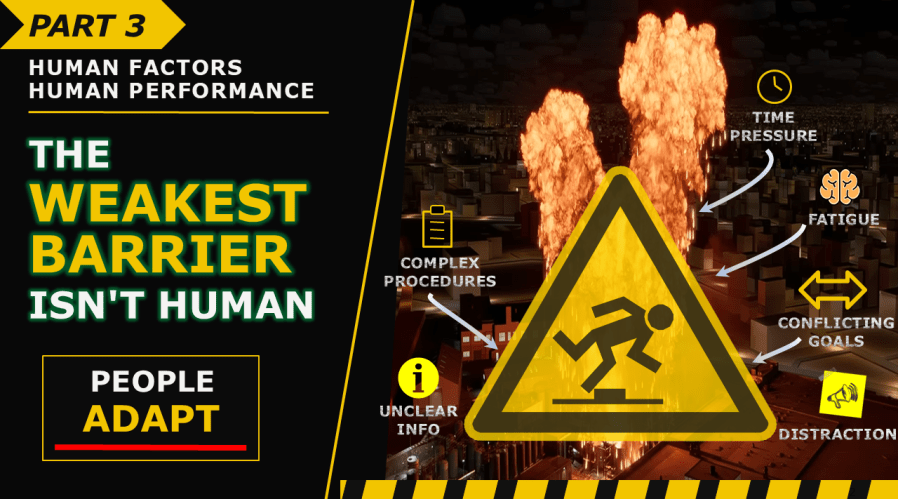
The problem with workarounds is that they work: CCM Part 3 YT video


