Is the Hierarchy of Control (HoC) effective?
Seems kinda strange asking this question at this stage of the race – given how embedded HoC is across legislation, codes, industry guides & more.
But interestingly, there seems to be limited rigorous published evidence supporting the HoC (at least that I can find…)
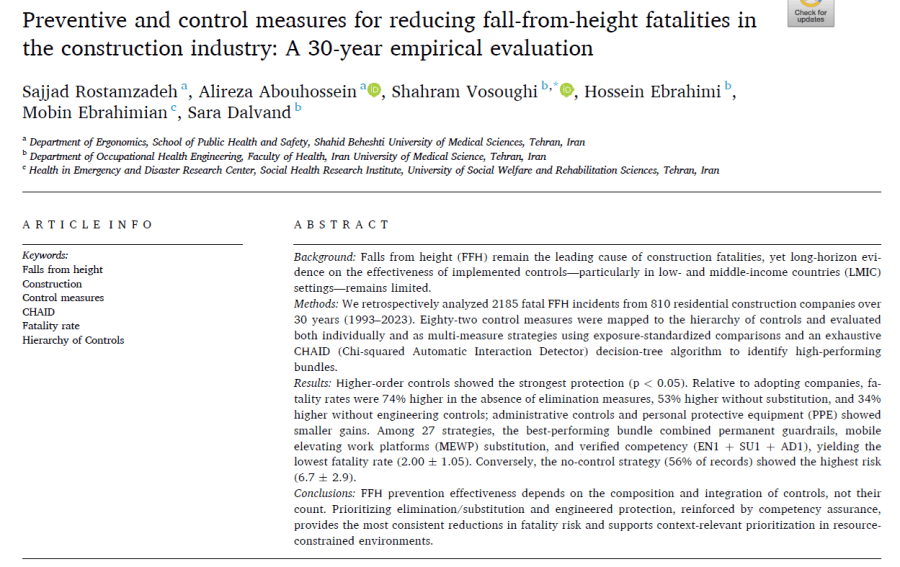
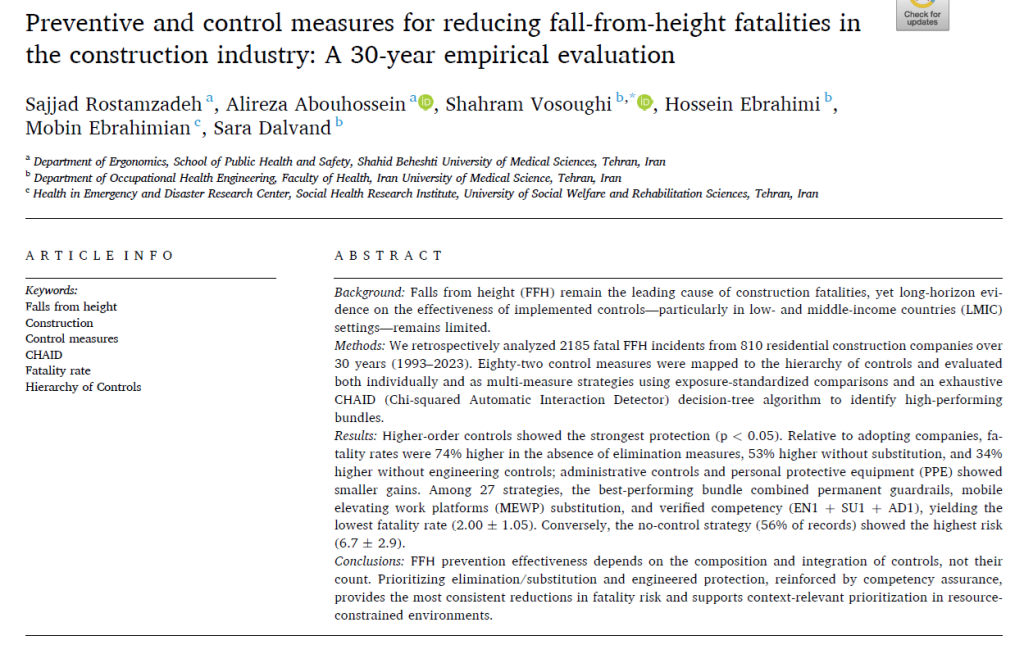
Here’s a freshly published study which did evaluate the role of the HoC in reducing harm based on >2k fall from height (FFH) construction incidents.
PS. Check out my YouTube and recent Critical Control / barrier vid: https://youtu.be/Ly1mEn_KCLQ?si=yG3yRVOM0r2eyyKI
Shout a coffee: https://buymeacoffee.com/benhutchinson
Not covering all findings – just the main HoC stuff:
· “A consistent pattern emerges: non-implementation of controls is associated with fatality rates above the overall mean (3.51), while implementation of controls is associated with clear reductions”
· Hence “FFH prevention effectiveness depends not only on the number of implemented measures but also on the strategic design, composition, and integration of those measures within day-to-day work organization”
· “Viewed through a systems lens, these empirical patterns highlight how prevention emerges from layered defenses rather than isolated measures”
· The findings highlight how barrier effectiveness “depends not only on the presence of higher-order controls, but also on how controls are combined across system levels”
· “Elimination measures yielded the highest effectiveness”, substitution also performed strongly, whereas “Engineering controls demonstrated moderate-to-high effectiveness”
· “Despite their high effectiveness, Elimination measures were among the least adopted”
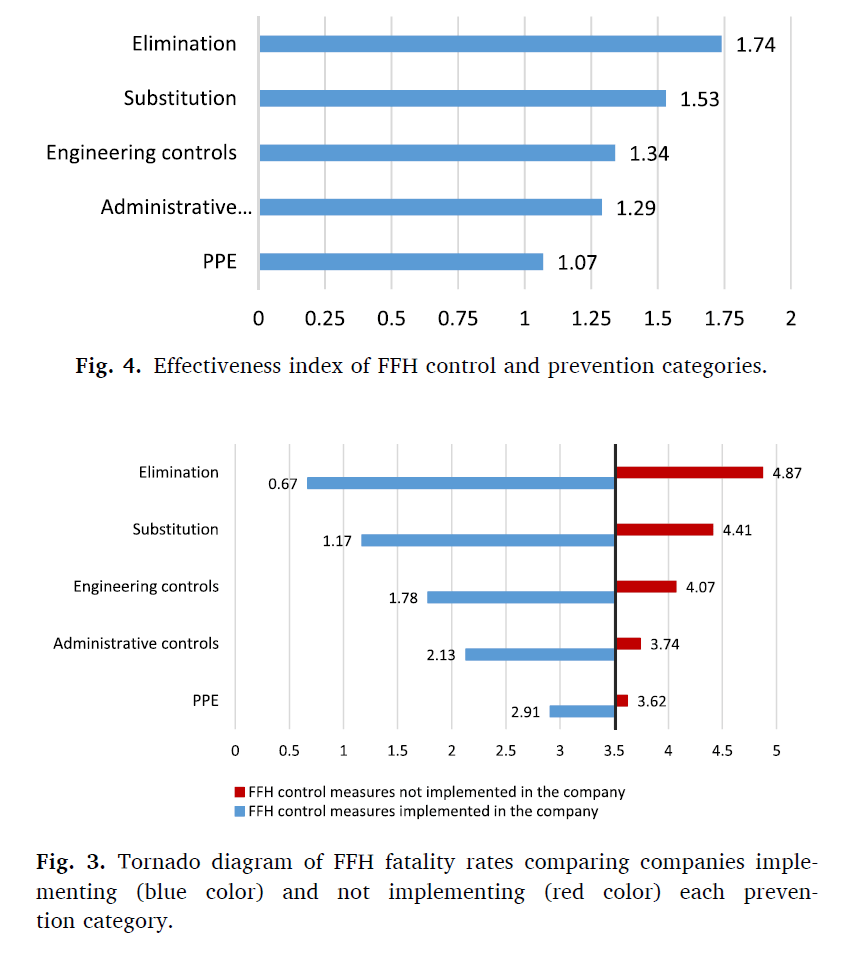
· “Administrative controls provided supportive yet comparatively smaller benefits”, and “PPE measures offered only modest improvements”
· The most protective barrier pathways “consistently combined engineering controls (EN1), substitution with MEWPs (SU1), and verified worker training and competency”
· “Strategies containing only four measures exhibited substantial variation in performance (9.23 → 5.02), confirming that composition—not quantity—determines effectiveness”
· “The “no-control” configuration remained the most prevalent (56% of all records), yet it showed one of the highest fatality rates”
· “Importantly, the most effective Elimination measures … were absent from all 12 high-frequency strategies, indicating systematic underuse of top-tier preventive actions in real-world practice”
· “The lowest fatality rates were associated with pathways integrating Engineering, Substitution, Administrative controls”
· “The poorest outcomes were observed in nodes lacking substantive controls”
In all, to Jack’s complete lack of surprise: controls save lives, and harm reduction is related to the HoC levels.
(* And yes – like anything, it likely also has some unintended byproducts)


