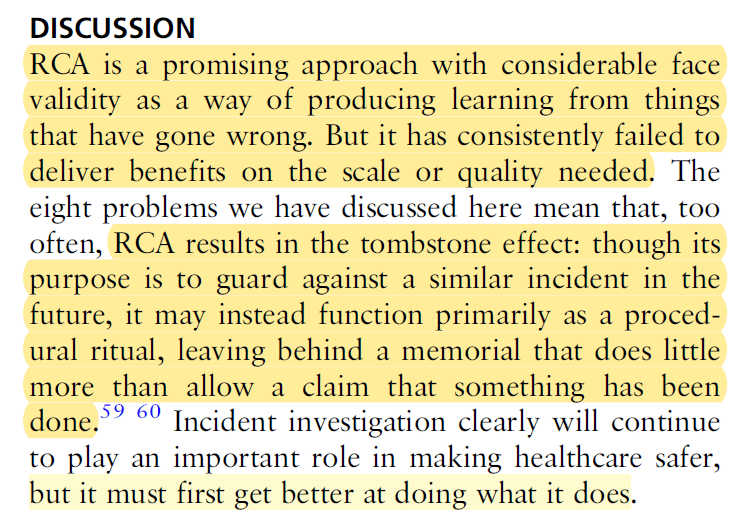
Are your investigations improving control systems or reducing risk, or mostly procedural rituals ‘because we have to do them’?
I’m finalising my penultimate PhD study draft (resubmitting based on peer review), and was reminded of this phenomena that I referenced: the tombstone effect.
They suggest that too often, incident investigations can fall into the trap of the tombstone effect: functioning as a procedural ritual that creates a paper trail more than driving sustained systemic improvement.
They say that while investigations are still important, we need to stop considering the investigation report as the endpoint. Learning & improvement are the key activities more than the safety artefact.
Does anybody agree or violently object? Is your investigation process effective/ineffective, and why?
PS. Check out my YouTube and recent Critical Control / barrier vid: https://youtu.be/Ly1mEn_KCLQ?si=yG3yRVOM0r2eyyKI
Shout a coffee: https://buymeacoffee.com/benhutchinson
Source: Peerally, M. F., Carr, S., Waring, J., & Dixon-Woods, M. (2017). The problem with root cause analysis. BMJ quality & safety, 26(5), 417-422.

 SafetyInsights.org