Was Ed Schein right when he said that organisational culture(s) shapes behaviour?
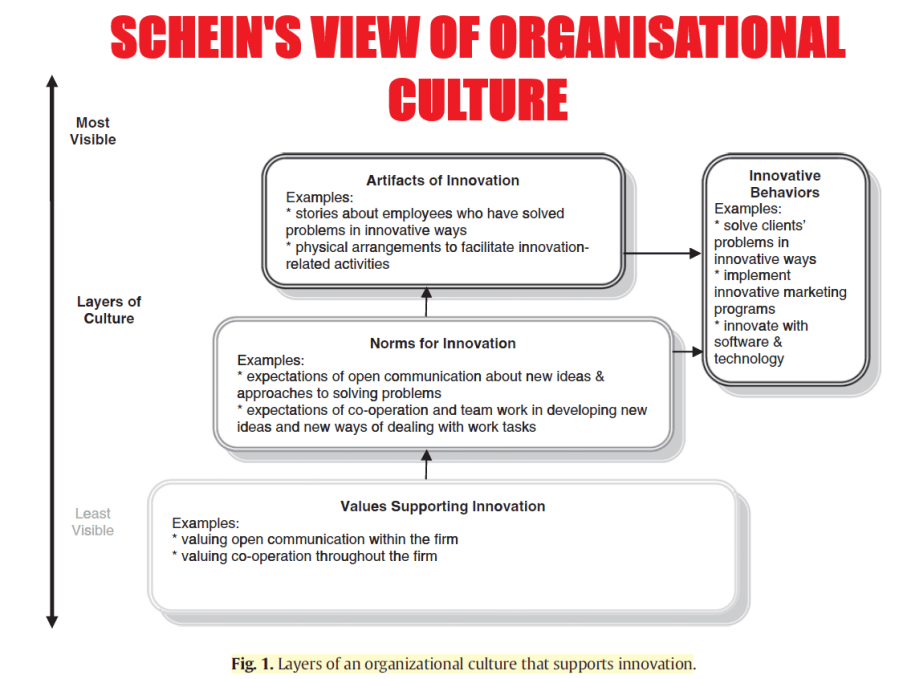
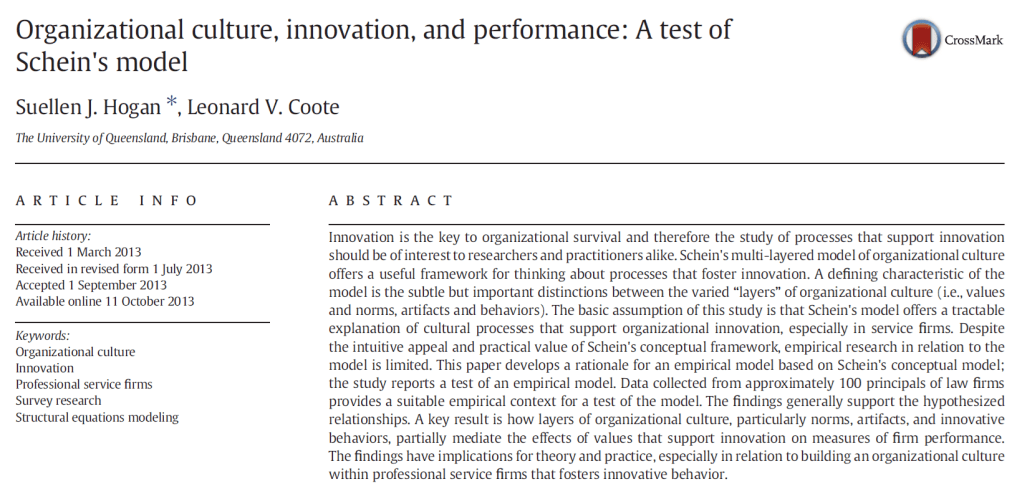
This study empirically tests Schein’s multi-layered org culture framework on the links b.t. innovation & performance.
100 law firm principals were surveyed.
PS. Check out my YouTube: https://youtube.com/@safe_as_pod?si=V2dbdmW–WbnhzA9
Shout a coffee: https://buymeacoffee.com/benhutchinson
Extracts:
· The “concept of organizational culture originates in cultural anthropology and is popular within the organizational behavior, management, and marketing”
· Org culture “refers to the values and beliefs that provide norms of expected behaviors that employees might follow”, where Schein considers it “as a social force that is largely invisible yet very powerful”
· On Schein’s layered approach, “values communicated by senior management assist the innovation process by embedding expected behaviors within an organization’s culture”, which they provide a mechanism for management to influence
· “Values and norms can in turn manifest in artifacts (e.g., organizational rituals, language and stories, and physical configurations) and lead to desired behaviors such as innovation”
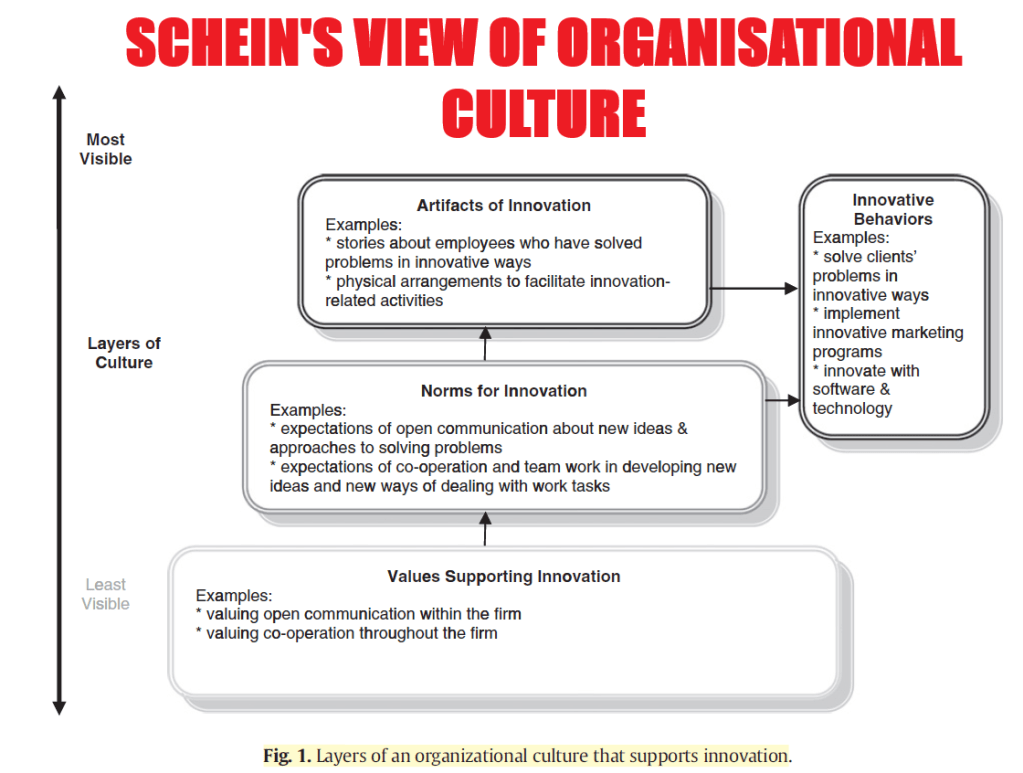
· They found that “distinct layers of organizational culture (partially)mediate the effects of values that support innovation on firm performance”
· “values supporting innovation alone do not lead to increased performance”, rather, “the process from values to performance outcomes is in part dependent on norms for innovation, artifacts of innovation, and innovative behaviors”
· “evidence supports a strong positive relationship between innovative behaviors and firm performance”
· “norms, or explicit expectations of behaviors for innovation, appear in stories, the physical architecture, rituals and language supporting innovative behaviors”
· “Empirical support for a direct link between artifacts of innovation and innovative behaviors is mixed”
· They found that willingness to experiment & challenge the status quo was probably the most powerful factor studied, e.g. “Risk-taking is consistently the most important of the eight values/norms studied here”
· “Where management expect employees to generate new ideas and to try out new ways of doing things, organizational artifacts that communicate and facilitate these expectations are important to eliciting such behaviors”
· “leadership behaviors such as showing respect for employees (e.g., considering their input into decisions that affect them) and showing an appreciation of employees (e.g., recognizing the contribution of employees towards organizational goals) are crucial”
· “embedding values and norms in organizational artifacts would assist higher levels of innovation”
· “Artifacts can be a powerful mechanism for communicating and endorsing values that support innovation”
Limitations as always – overwhelmingly male law sample from Australia, and more.
Study link: https://doi.org/10.1016/j.jbusres.2013.09.007
#culture #schein #innovation #organizationalculture #psychology


In my experience as a former manager in health care I found it useful to focus on behavior and actions in processes that shape development and innovation for patient safety. That ultimately transformed the culture to support safe care. We did not talk so much about values. We acted them out.
LikeLike