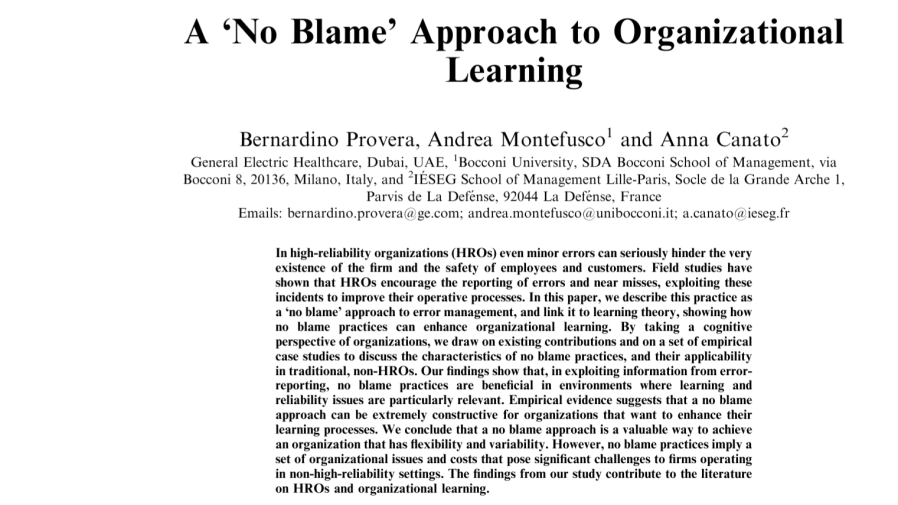
This paper studied a ‘no blame’ approach from a HRO lens, using case studies from a few different industries. In part, they wanted to see how HRO principles translated into non-HRO industries. [** Be good if we could move beyond the ‘no blame’ language to other more suitable, less-absolute terms, e.g. restorative justice and the… Continue reading A ‘No Blame’ Approach to Organizational Learning
My appearance on Psyche Health and Safety Podcast
For those interested, Jason, Joelle and I talk psychosocial risks and evidence. Links: Youtube: Safe As – with Ben Hutchinson – YouTube Apple pod: Psych Health and Safety Podcast – Podcast – Apple Podcasts Spotify: https://open.spotify.com/show/3l9QSuMw1tJLQQAP6FEwqS?si=46ff35e9e34b4904
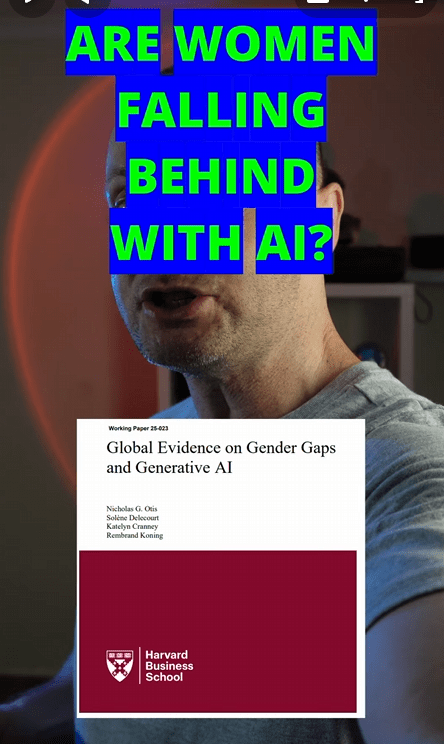
The AI gender gap
Did you know that there’s a gender gap in the use of AI LLMs at work? Women are less likely to use AI than men, and have more concerns about its ethical use. The study in this ep covers 18 studies, over 140,000 participants across nearly all regions, sectors and occupations.
Influence of justice culture on learning from incidents in construction project-based organizations: a chain mediating model
This study investigated the interaction mechanism of psychological safety and voice behaviour in a justice culture context. Specifically they explored how construction project-based organisations (CPOs) can realise learning from incidents by improving psychological perception and encouraging voice. 273 CPOs in China were studied. Background: · Learning from incidents is often said to be an important… Continue reading Influence of justice culture on learning from incidents in construction project-based organizations: a chain mediating model
Next week on Safe As: The awesome Dr Matt Hallowell talking SIFS, injury measures and more
TRIFR, SIFS and high-energy hazards, oh my. The awesome Dr Matthew Hallowell is on Safe As Q&A – NEXT WEEK. In part 1 we discuss whether there is or isn’t a link between minor potential and SIFs, better uses of injury measures, controls and error, better indicators, predictors of higher-order controls, designing-out SIFs, new view,… Continue reading Next week on Safe As: The awesome Dr Matt Hallowell talking SIFS, injury measures and more

Dirty sexy money = happiness?
Does dirty, sexy, money buy happiness? Unsurprisingly – yes, but only up to a threshold. Unsurprisingly – yes, but only up to a threshold. But, the authors suggest focusing on buying experiences rather than things.
How Do High-Risk Small Business Frontline Workers Learn from Everyday Work to Increase Risk Awareness and Prevent Workplace Accidents?
An interesting Master’s thesis from Tony Willis, exploring high-risk work in small businesses, and how they learn and adapt to risk and avoid workplace accidents – particularly from a Safety-II lens. 11 interviews undertaken with owner-managers and employees. Way too much to cover. Extracts: · “Small business possesses unique characteristics not found within larger organisations,… Continue reading How Do High-Risk Small Business Frontline Workers Learn from Everyday Work to Increase Risk Awareness and Prevent Workplace Accidents?
Dr Fred Sherratt part 2: zero harm ideology, safety observation reporting, safety culture and more
If you find these videos interesting, then please consider subscribing, sharing with your network or leaving a comment on YouTube (trying to get more engagement over there).

