What can we learn about how AI changes work based on >180k GitHub users? Turns out, quite a lot. AI induces people to shift task allocation towards their core work and away from non-core, project management activities. #ai #chatgpt #github #work #llm #artificialintelligence
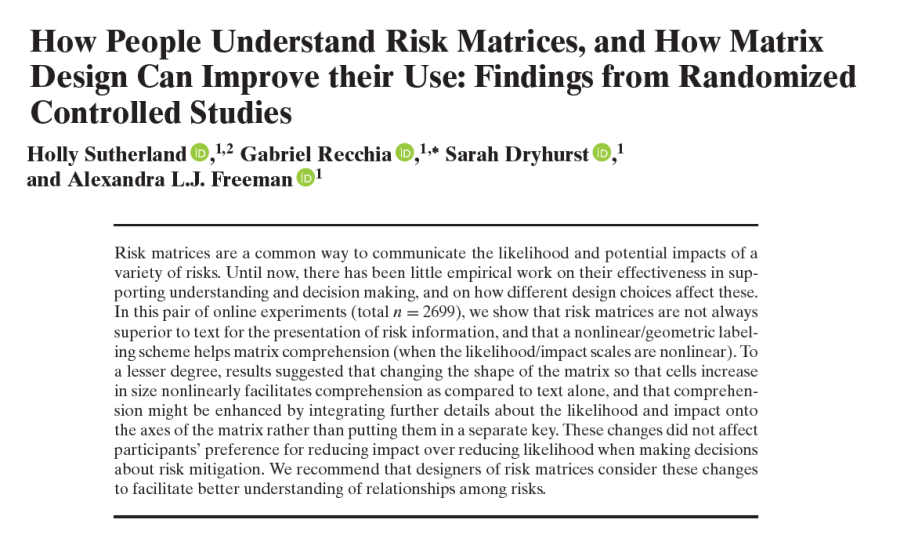
How People Understand Risk Matrices, and How Matrix Design Can Improve their Use: Findings from Randomized Controlled Studies
How can we make risk matrices marginally more interpretable? This study ran two experiments by changing the structure. I’ve skipped heaps due to laziness. PS. Check out my YouTube channel: https://www.youtube.com/@safe_as_pod Extracts: · They discuss the use of logarithmically increasing RM categories, which allows a comparison between risks that span several orders of magnitude · But, even… Continue reading How People Understand Risk Matrices, and How Matrix Design Can Improve their Use: Findings from Randomized Controlled Studies
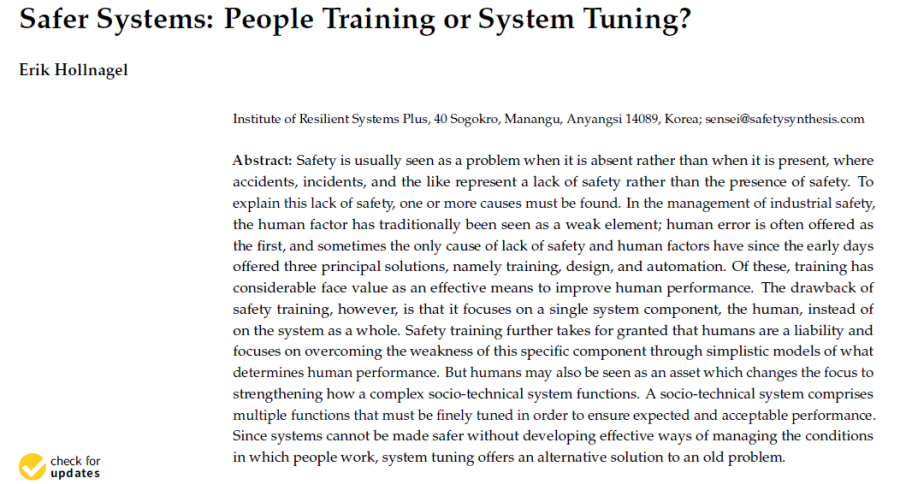
Safer Systems: People Training or System Tuning?
Hollnagel discusses the role of training in complex systems. Shared under open access licence. PS. Check out my YouTube channel: Safe As: A thrifty analysis of safety, AI and risk – YouTube Extracts:· “Safety is usually seen as a problem when it is absent rather than when it is present, where accidents, incidents, and the like… Continue reading Safer Systems: People Training or System Tuning?
Does using AI make us smarter, or just more confident?
Does using AI make us smarter, or just more confident? This ep covers a recent study on how generative AI affects our “metacognition” – our ability to judge our own performance. Researchers tracked hundreds of people solving logical reasoning problems with and without AI.
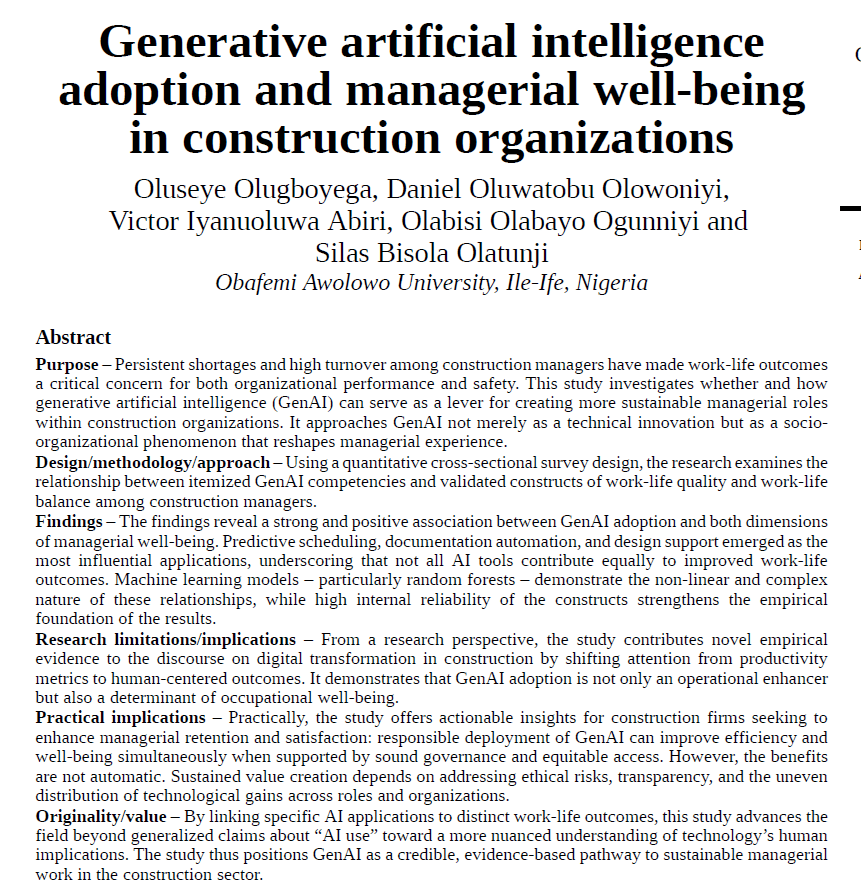
Generative artificial intelligence adoption and managerial well-being in construction organizations
Can GenAI improve workplace well-being and work-life balance? Perhaps. This survey study of 261 construction industry managerial professionals in Nigeria provided insights. PS. Check out my YouTube channel – link in comments. Findings: · “findings reveal a strong and positive association between GenAI adoption and both dimensions of managerial well-being” · “Predictive scheduling, documentation automation, and design… Continue reading Generative artificial intelligence adoption and managerial well-being in construction organizations
Micromorts and your chance of death from everyday tasks
What are the risks of death from the everyday, and sometimes not so everyday, things that we do? How does the risk of death from driving compare to skydiving, or swimming and shark attacks? How many bananas will result in death? Let’s find out. This ep discusses ‘micromorts’, which are units of risk indicating a… Continue reading Micromorts and your chance of death from everyday tasks
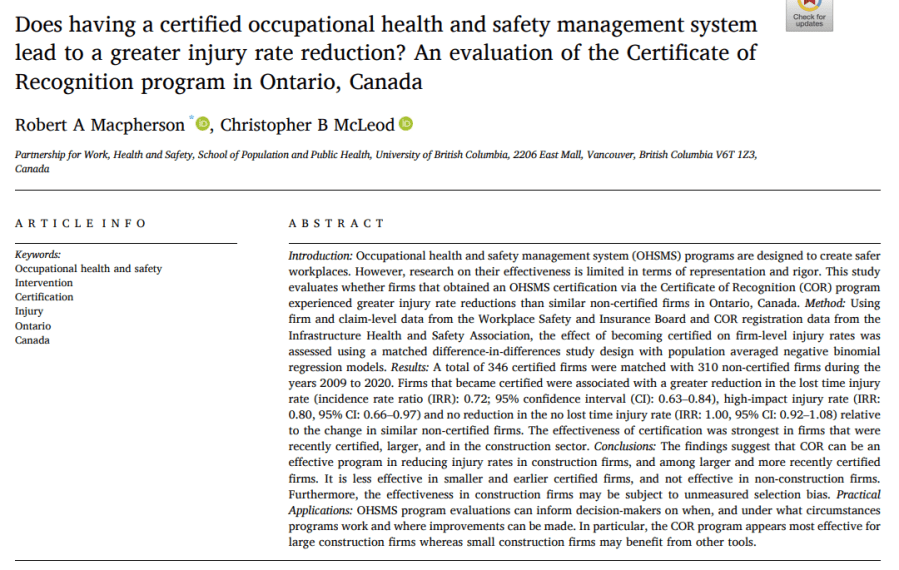
Does having a certified occupational health and safety management system lead to a greater injury rate reduction? An evaluation of the Certificate of Recognition program in Ontario, Canada
Does OHS system certification impact incident measures at the industry level? Here’s another study which explored these links – this time using the Canadian Certificate of Recognition (COR) program. 346 certified firms were matched with 310 non-certified over 2009-2020. Full PDF shared under an Open Access licence. Findings:· “Firms that became certified were associated with a… Continue reading Does having a certified occupational health and safety management system lead to a greater injury rate reduction? An evaluation of the Certificate of Recognition program in Ontario, Canada
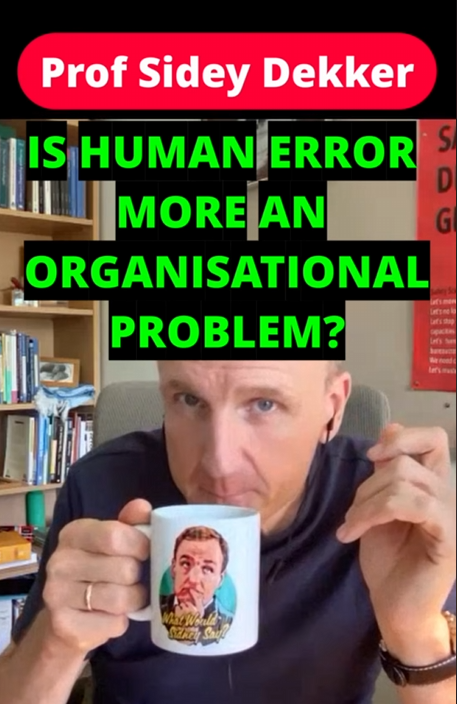
Sidney Dekker: is ‘human error’ more of an organisational issue?
Sidney Dekker discusses whether ‘human error’ can be more of an organisational issue: how it designs and resources work, use of incentives, pressures and more.