Can accountability and learning co-exist with compassion in safety-critical industries? For Sidney Dekker, accountability is only possible with some compassion
Is coffee the elixir of life?
Is coffee the elixir of life and the path to immortality? Well, probably not, but scientifically it’s still awesome. PS. Always limitations with these sorts of epidemiological studies.

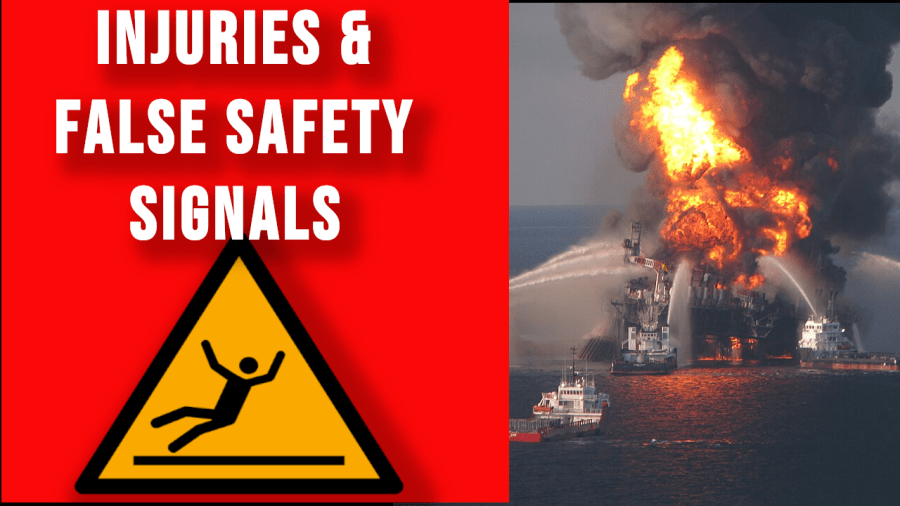
The illusion of safety indicators in the mining industry
Are minor and severe/fatal incidents related? Another study tested the links based on private and public mining data. ** Check out my YouTube channel: https://www.youtube.com/@Safe_As_Pod Extracts: · “the number of days without accidents does not reflect the true safety of the environment” · “The data generate markedly distinct trend lines between the accident frequency rates and the… Continue reading The illusion of safety indicators in the mining industry
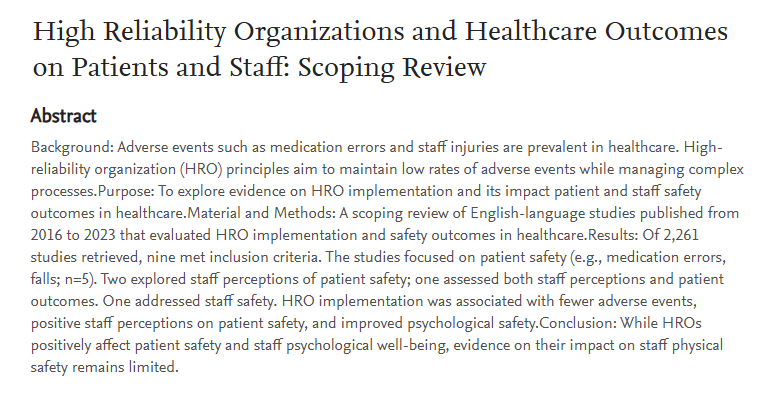
High Reliability Organizations and Healthcare Outcomes on Patients and Staff: Scoping Review
Do HRO (High Reliability Organisation) principles improve healthcare patient & staff outcomes? This scoping study evaluated 9 studies. (Note – still under peer review, so use with caution). Extracts: · “HRO implementation was associated with fewer adverse events, positive staff perceptions on patient safety, and improved psychological safety” · Studies used a mixture of quantitative and qualitative… Continue reading High Reliability Organizations and Healthcare Outcomes on Patients and Staff: Scoping Review
Did we ‘train’ AI LLMs to hallucinate?
Did we ‘train’ AI LLMs to hallucinate? This study from OpenAI argues that hallucinations “need not be mysterious—they originate simply as errors in binary classification”. And, interestingly, hallucinations, persist, in part because the models “are optimized to be good test-takers, and guessing when uncertain improves test performance”. That is, they’re rewarded in training for guessing… Continue reading Did we ‘train’ AI LLMs to hallucinate?
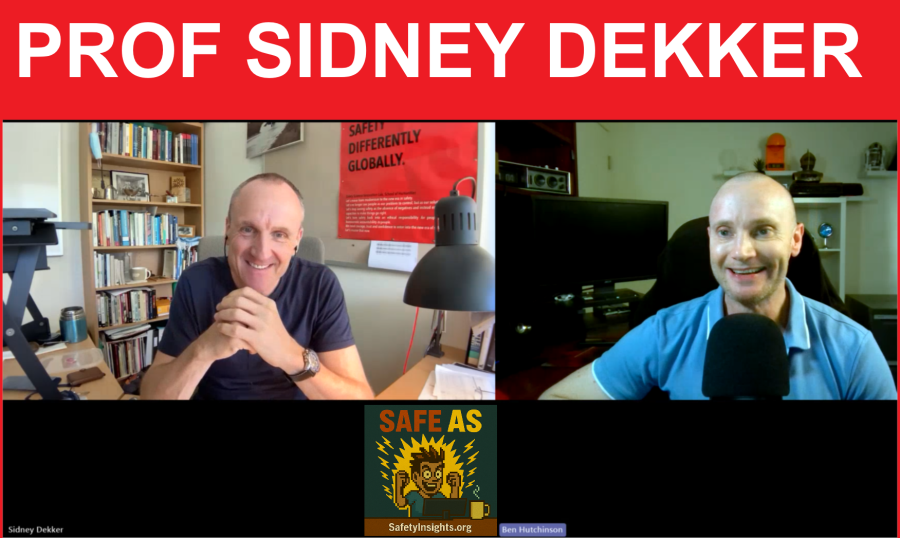
Part 1 interview with Sidney Dekker now live – check it out
Part 1 interview with Sidney Dekker is now live. We talk zero harm, behavioural safety, restorative culture and more. PS. You don’t see it on the screen – but there’s a timer running. Part 2 released sometime soon. If you find it interesting, then please hit like and leave a comment directly on YouTube, and… Continue reading Part 1 interview with Sidney Dekker now live – check it out
Interview with Prof Sid Dekker – next week on the new Safe As Q&A segment
For the first time, I’m branching into interviews. First up Professor Sidney Dekker. We talk zero harm, behavioural safety, restorative culture and more. Have more big names lined up, so please subscribe to my YT! Really appreciate any and all support. I call it Safe As Q&A, and it’s a rapid fire question format, where… Continue reading Interview with Prof Sid Dekker – next week on the new Safe As Q&A segment
Interview with Drew Rae on the Circus of Safety: On TRIFR/LTIFR, statistical significance, the folly of measuring things and more
Criminal that this interview with Drew Rae on the The Circus of Safety of Safety doesn’t have more hits. Link: https://youtu.be/PA_K-XrfWHo?si=Lhcf2g7RXGELOkP5 If you work in ‘safety’, or similar fields, it’s worth the 39:55 of your life. Some transcript extracts: · Use of recordables can mask judgements “recordable and how much that term hides what we’re actually… Continue reading Interview with Drew Rae on the Circus of Safety: On TRIFR/LTIFR, statistical significance, the folly of measuring things and more
Is working from home / remote work ‘enough’ to reduce burnout?
What’s the link between working from home and burnout? It depends…of course, but this research suggests we need to at least consider:1. Flex-time (flexibility around when we work)2. Flex-place (flexibility around where we work) Appreciate if you could show some love to my channel by liking, commenting and subscribing directly on YT – getting smashed… Continue reading Is working from home / remote work ‘enough’ to reduce burnout?

