This explored the links between psychosocial risk and psychological safety on worker well-being. Survey responses from >800 workers in Malaysian were obtained. Usefully, it’s another study that slightly challenges the claim that you ‘can’t have too much psychological safety’. We need far more targeted evidence to make that claim. Extracts: · “our results revealed a significant… Continue reading The Critical Role of Psychological Risk and Safety in Eliciting Worker Well-Being
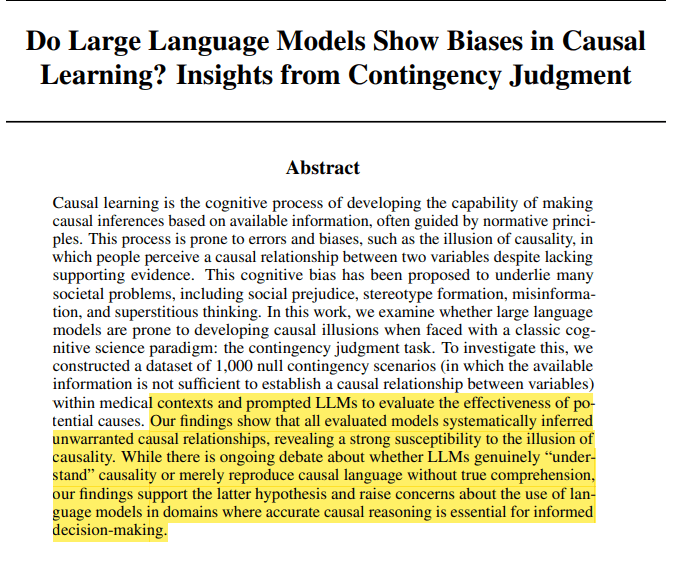
Do Large Language Models Show Biases in Causal Learning? Insights from Contingency Judgment
This study found that LLMs inferred causality when no causal relationship existed in medical drug scenarios (‘illusion of causality’). They created 1000 medical drug scenarios, using scenarios which had either real causal relations between real drugs and real conditions, with made-up drugs or conditions, e.g. “Drizzlemorn disorder”. A causal illusion is something like “I take a… Continue reading Do Large Language Models Show Biases in Causal Learning? Insights from Contingency Judgment
Safe As E50: Ed Schein’s Humble Inquiry – “The Gentle Art of Asking Instead of Telling” (quickisode)
This quickisode unpacks Ed Schein’s concept of Humble Inquiry – said to be the “gentle art of asking instead of telling”. Source: Schein, E. H. (2013). Humble inquiry: The gentle art of asking instead of telling. Berrett-Koehler Publishers. Spotify: https://open.spotify.com/episode/3VqPVyzc01SvWx2PL7mPhO?si=YGeB9fBxQjSmdGo_MmFbpg Shout me a coffee (one-off or monthly recurring)
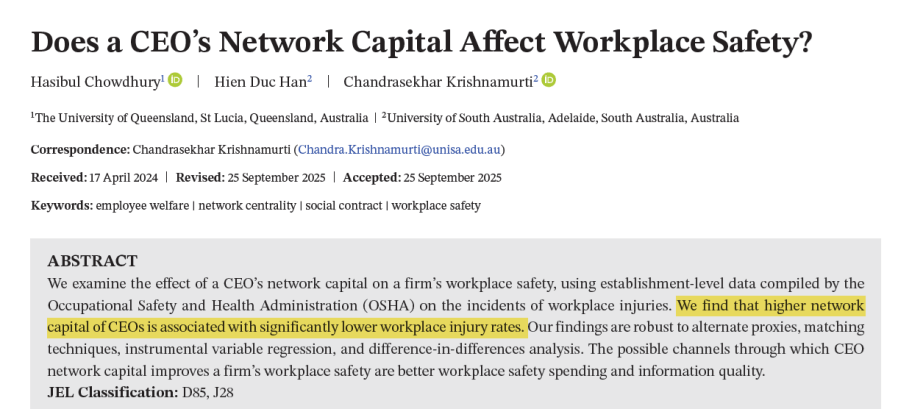
Does a CEO’s Network Capital Affect Workplace Safety?
This study explored whether CEOs with strong professional networks influences the reported OSHA injuries. They anaylsed a CEO’s network capital (how connected they are across companies and boards), OSHA recordables at the establishment level, and controlled for heaps of stuff including company size, finances, CEO traits, risks. 993 public firms from 2002 to 2011 were… Continue reading Does a CEO’s Network Capital Affect Workplace Safety?
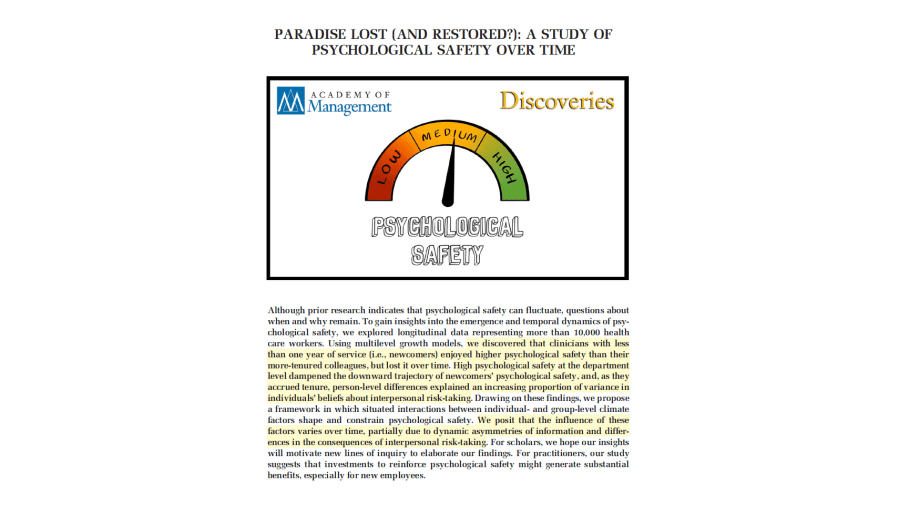
PARADISE LOST (AND RESTORED?): A STUDY OF PSYCHOLOGICAL SAFETY OVER TIME
This study, including Amy Edmondson, studied psychological safety over time, based on a sample >10,000 US healthcare workers. Background: Findings: Shout me a coffee (one-off or monthly recurring) Ref: Bransby, D. P., Kerrissey, M., & Edmondson, A. C. (2023). Paradise Lost (and Restored?): A Study of Psychological Safety over Time. Academy of Management Discoveries.
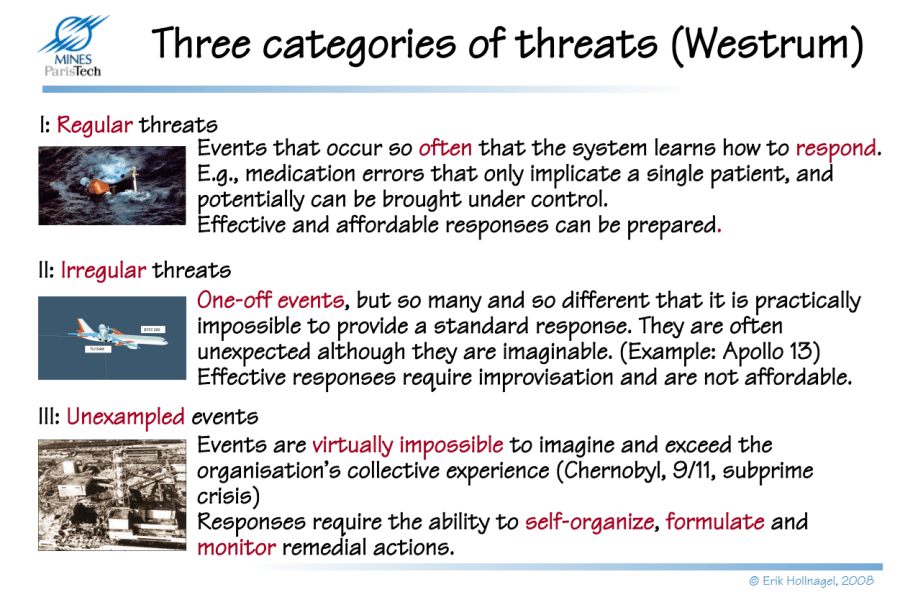
Westrum’s Regular, Irregular & Unexampled risks (via Hollnagel)
Not much to say here – I like, and have used for many years, this distinction from Westrum on regular, irregular and unexampled threats. Has corollaries with other frames, like Rumsfeld’s known unknowns and others. Extract taken from one of Hollnagel’s presentations (hope he doesn’t mind…) – but Hollnagel, as always, can explain things far… Continue reading Westrum’s Regular, Irregular & Unexampled risks (via Hollnagel)
Safe As E49: CEO-speak and the road to major disasters
What does the leadership language used by CEOs tell us about the priority and beliefs around safety and risk? This episode unpacks a study exploring the BP CEO’s speeches prior to the BP Deepwater Horizon disaster. Source: Amernic, J., & Craig, R. (2017). CEO speeches and safety culture: British Petroleum before the Deepwater Horizon disaster. Critical… Continue reading Safe As E49: CEO-speak and the road to major disasters
Better ways to think about procedures and performance: From IOGP Learning From Normal Work
Some extracts from the IOGP document ‘Learning from Normal Work’. These extracts focus on a different approach to thinking about procedures and performance: · “Research on procedural non-compliance [4] shows there are two ways of thinking about the role of procedures in achieving safety, Approach 1 and Approach 2” · “These approaches refer to how leaders think… Continue reading Better ways to think about procedures and performance: From IOGP Learning From Normal Work
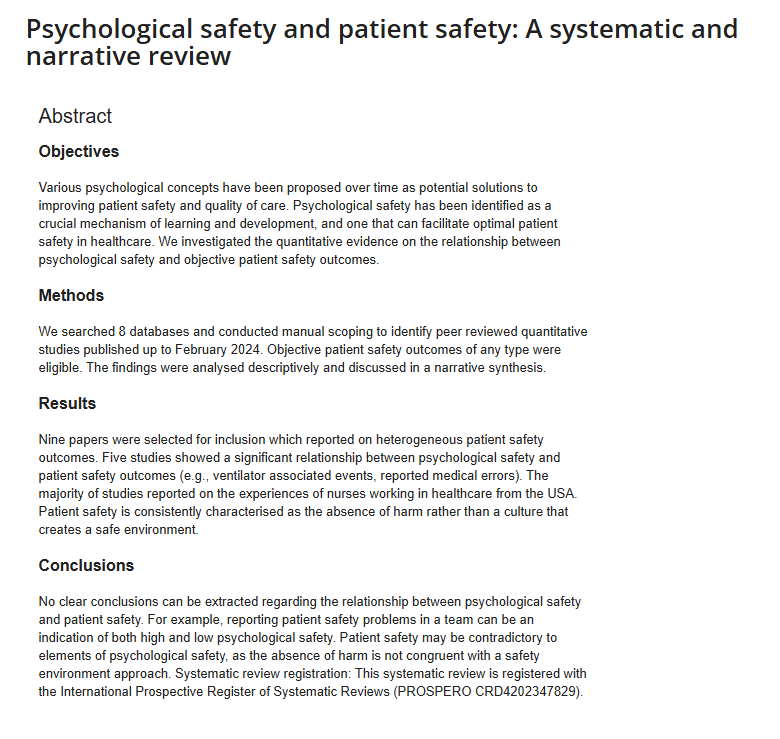
Psychological safety and patient safety: A systematic and narrative review
This explored the links between psychological safety and objective patient safety outcomes: · “No clear conclusions can be extracted regarding the relationship between psychological safety and patient safety” · “The evidence linking psychological and patient safety is equivocal” · “Overall, there is relatively little hard data to link PS and patient safety outcomes” · “Only nine studies fit the… Continue reading Psychological safety and patient safety: A systematic and narrative review
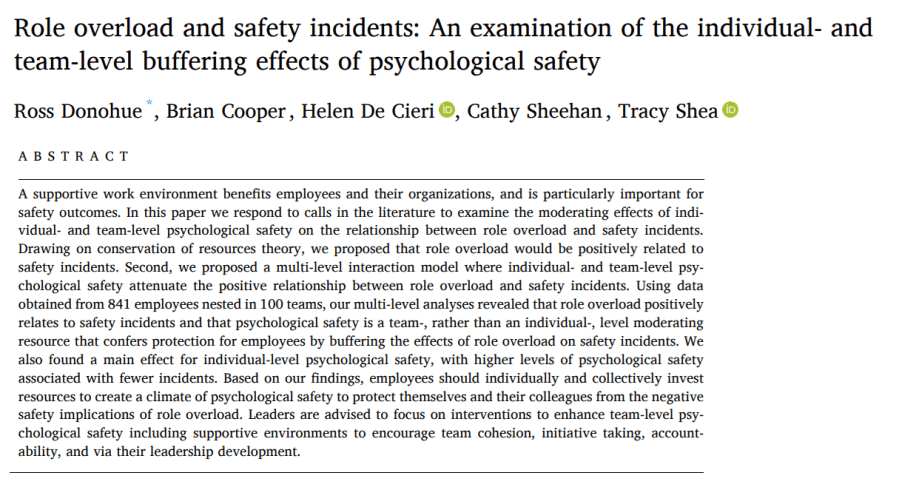
Role overload and safety incidents: An examination of the individual- and team-level buffering effects of psychological safety
This study evaluated the how psychological safety can buffer the effects of role overload on safety incidents. Data was from 841 employees across 100 teams in a large Australian health service. Extracts: · The analysis revealed that “role overload positively relates to safety incidents” · Role overload is defined as quantitative role overload, occuring “when an individual… Continue reading Role overload and safety incidents: An examination of the individual- and team-level buffering effects of psychological safety

