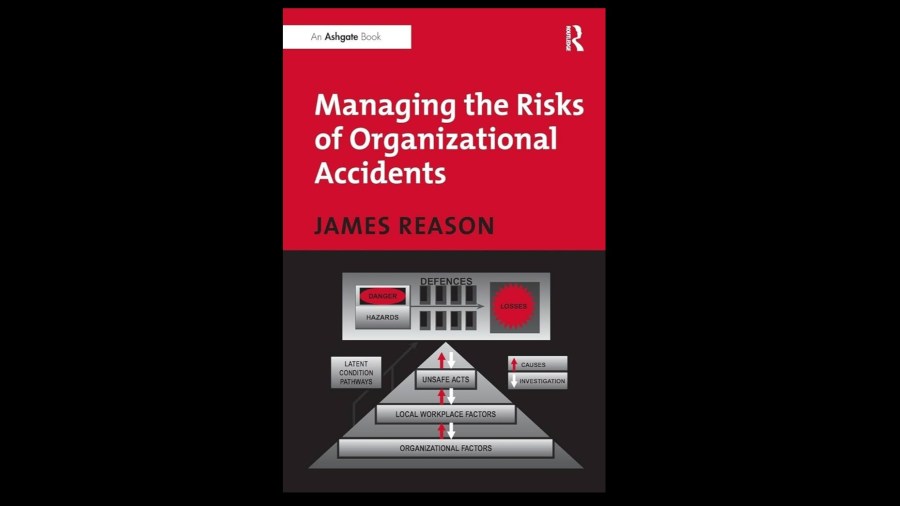
A few random extracts from James Reason’s timelessly awesome Managing the Risks of Organizational accidents. (Note: This isn’t an endorsement of the somewhat linearity of defences-in-depth, since we have evidence that emergent behaviour can playout in reality and with equifinality etc) There’s hundreds of things I could extract (and maybe will in time), but here’s… Continue reading The mixed blessing of risk defences and redundancy: James Reason
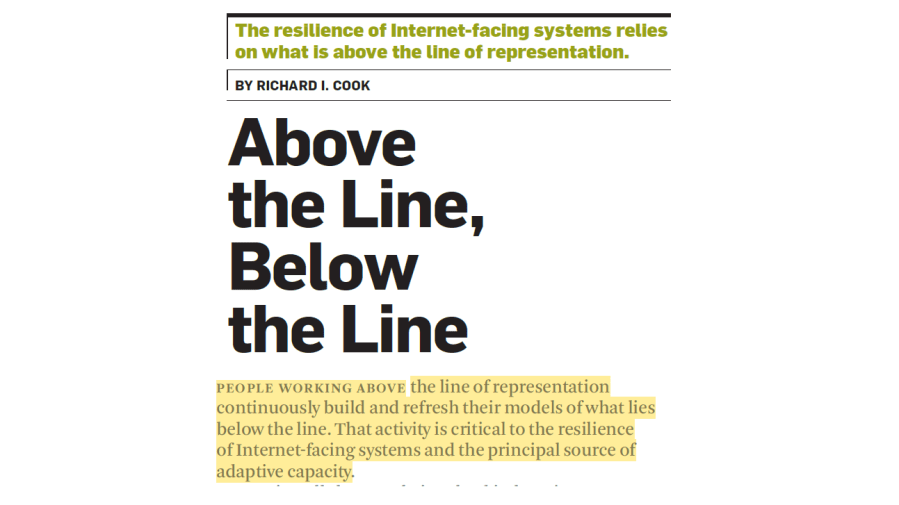
Above the line, below the line – Richard Cook on complex systems failure and recovery
A cool paper from Richard Cook about internet/software failures and complex systems. I’m not a software person – but still found it pretty interesting. ** Parts 2 & 3 in comments ** Just a few extracts: Ref: Cook, R. I. (2020). Above the line, below the line. Communications of the ACM, 63(3), 43-46. Shout me a coffee… Continue reading Above the line, below the line – Richard Cook on complex systems failure and recovery

Efficacy and Understanding of the Safety Hierarchy of Controls
This PhD thesis from Stephen Young was interesting. They studied evidence supporting the hierarchy of control (HOC), constraints on its efficacy, and more. Way too much to cover. Some extracts: · There isn’t a lot of evidence supporting the efficacy of the HOC · One reason is: “An unequivocal demonstration of efficacy [of the HOC] is problematic,… Continue reading Efficacy and Understanding of the Safety Hierarchy of Controls

“I think, therefore I err”: An article about ‘good errors’, heuristics and intelligent systems
“Every intelligent system makes errors”, so said Gerd Gigerenzer. Here’s a couple of page extracts from a 2005 paper. Not sure if I’ll summarise it or not (it’s really interesting, but tough to capture in a summary…) The paper: · Challenges the rationalistic and normative ideal as cognition as purely a logical and rational one, ignoring… Continue reading “I think, therefore I err”: An article about ‘good errors’, heuristics and intelligent systems
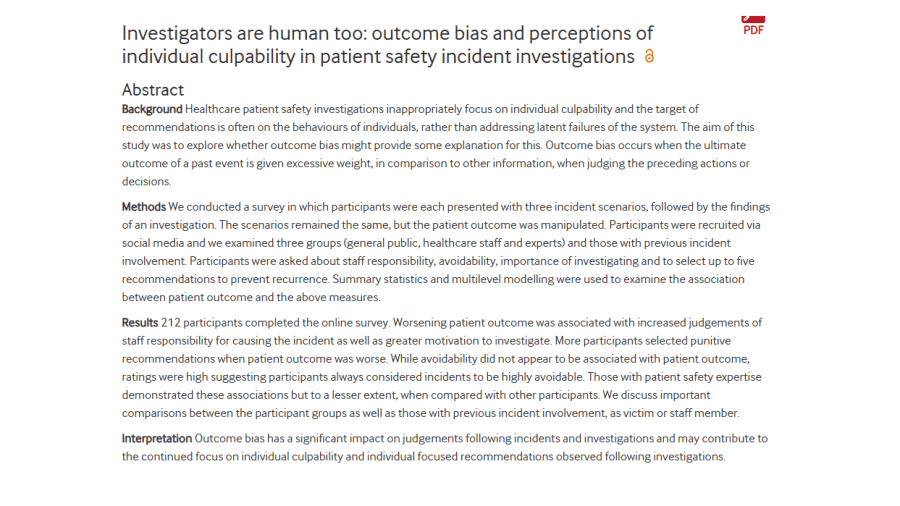
Investigators are human too: outcome bias and perceptions of individual culpability in patient safety incident investigations
This study explored whether outcome bias might explain why healthcare investigations focus on individual culpability over addressing latent conditions in the system. 212 participants were allocated to one of three scenarios followed by the findings of an investigation (see scenario overviews below). For background: · Prior work has identified that the “overwhelming majority of recommendations… Continue reading Investigators are human too: outcome bias and perceptions of individual culpability in patient safety incident investigations

An ode to Drs Richard Cook, Jens Rasmussen & Bob Wears: A mini-compendium of their legacies
This is long overdue – but I wanted to cover some of the work from these giants who have played a significant part in modern safety thinking. Focus is on articles I’ve written about or used extracts from, or could find a full-text link for, and higher-cited articles. It’s not systematic – and unfortunately a… Continue reading An ode to Drs Richard Cook, Jens Rasmussen & Bob Wears: A mini-compendium of their legacies

I did a thing: Podcast discussion about false safety, safety management failures and follies of auditing
James Kell from Scratchie and I recently caught up to chat about safety and organisational stuff. Podcast: https://www.scratchie.com/post/ben-hutchinson-safety-paradox-conversation Covered a bit of ground including my research on false safety in management systems and audits, incentives and more. Was a cool chat but we had little background on what each other did. I felt a bit… Continue reading I did a thing: Podcast discussion about false safety, safety management failures and follies of auditing

Zombie leadership: Dead ideas that still walk among us
A really interesting read about ‘zombie leadership’ ideas. Not a full summary, so check out the paper. Zombie ideas are a “residual commitment to an older set of ideas which have been repeatedly debunked but which nevertheless resolutely refuse to die”, taken from zombie economics. They apply this to leadership. They say that zombie ideas… Continue reading Zombie leadership: Dead ideas that still walk among us
Fukushima was a disaster “Made in Japan” according to the independent commission
Gotta love these really poetic parts of major accident inquiries… This from the Fukushima independent commission:“What must be admitted – very painfully – is that this was a disaster “Made in Japan.” AND “Its fundamental causes are to be found in the ingrained conventions of Japanese culture: our reflexive obedience; our reluctance to question authority;… Continue reading Fukushima was a disaster “Made in Japan” according to the independent commission
Safety metrics and reports “make no contribution to proving the effectiveness of our crucial systems” – Paper Safe, Greg Smith
A few apt extracts from Greg Smith’s excellent ‘Paper Safe’. If you’ve not yet read this or Proving Safety, then do yourself the favour. Greg argues: · Many indicators in use are measures of activity and usually tell us something has been done · But, “They tell us nothing about the quality or effectiveness of the activity”… Continue reading Safety metrics and reports “make no contribution to proving the effectiveness of our crucial systems” – Paper Safe, Greg Smith

