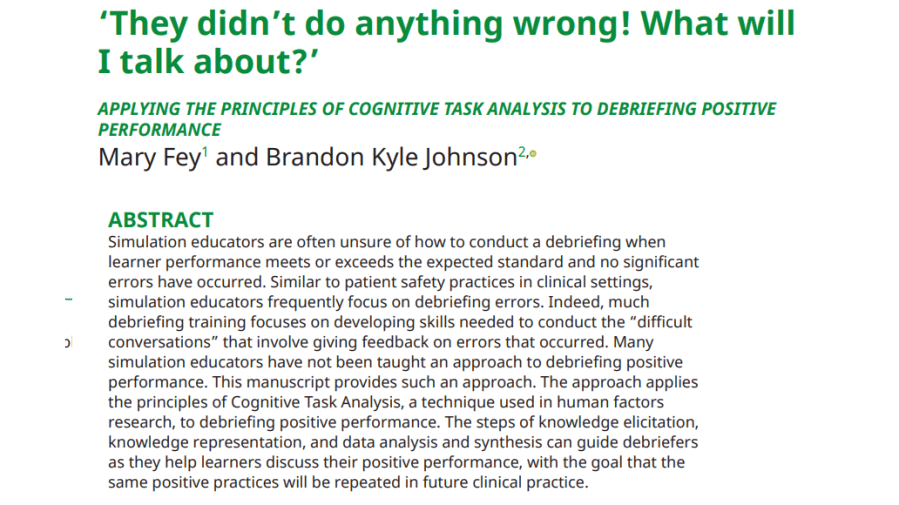
An interesting paper exploring the use of Safety-II inspired debriefs, learning from successful performance. They used cognitive task analysis techniques. Not a summary, but it’s open access and really brief – so check it out 👍 Extracts: · “simulation cases are often deliberately designed to push learners to their zone of proximal development .. where perfect… Continue reading ‘They didn’t do anything wrong! What will I talk about?’ Applying the principles of cognitive task analysis to debriefing positive performance

ChatGPT for analysing investigations
I think this is one of the better uses of LLMs regarding investigations – they trained their model to evaluate accident reports and extract key details from the reports. They found: · It could extract key information from unstructured data and “significantly reduce the manual effort involved in accident investigation report analysis and enhance the overall… Continue reading ChatGPT for analysing investigations

Unsafe acts, unsafe conditions and unsafety – unstable, inconsistent and a matter of perspective
[Edit: Just a minor update] An interesting study to be posted soon evaluated nearly 4000 safety observation reports from a large infrastructure project. What types of ‘unsafe acts’ and ‘unsafe conditions’ are identified by personnel? How do they conceptualise human error, human action or conditions in the workplace? How is blame used as an instrument… Continue reading Unsafe acts, unsafe conditions and unsafety – unstable, inconsistent and a matter of perspective

Human Factors and Ergonomics in Industry 5.0 —A Systematic Literature Review
This open access article may interest people – it explored the future of human factors/ergonomics in Industry 5.0 (I05). Not a summary but you can read the full paper freely. Some extracts: Shout me a coffee Study link: https://doi.org/10.3390/app15042123 LinkedIn post: https://www.linkedin.com/posts/benhutchinson2_this-open-access-article-may-interest-people-activity-7300617102564933632-WGPj?utm_source=share&utm_medium=member_desktop&rcm=ACoAAAeWwekBvsvDLB8o-zfeeLOQ66VbGXbOpJU

The rise of learning teams: How organisations in Australia are adopting group learning practices for safety improvement
This Master’s thesis from Andrew Barrett explored group learning practices, like learning teams, for safety improvement. Specifically, he studied the following question via institutional ethnographic interviews: · how are organisations in Australia adopting group learning practices for safety improvement? Way too much to cover – so check out the thesis. Some background extracts: · “Safety… Continue reading The rise of learning teams: How organisations in Australia are adopting group learning practices for safety improvement

Mini-Compendium: Investigations & Corrective Action Limitations / Bias / Underreporting
This compendium covers a few elements of investigations, investigation limitations and biases, priming, underreporting and more. Because of the breadth of these topics, this sample is pretty limited and biased to my own interests and what I’ve either written about or could find a full-text link for. It also doesn’t cover many investigation methods (if… Continue reading Mini-Compendium: Investigations & Corrective Action Limitations / Bias / Underreporting
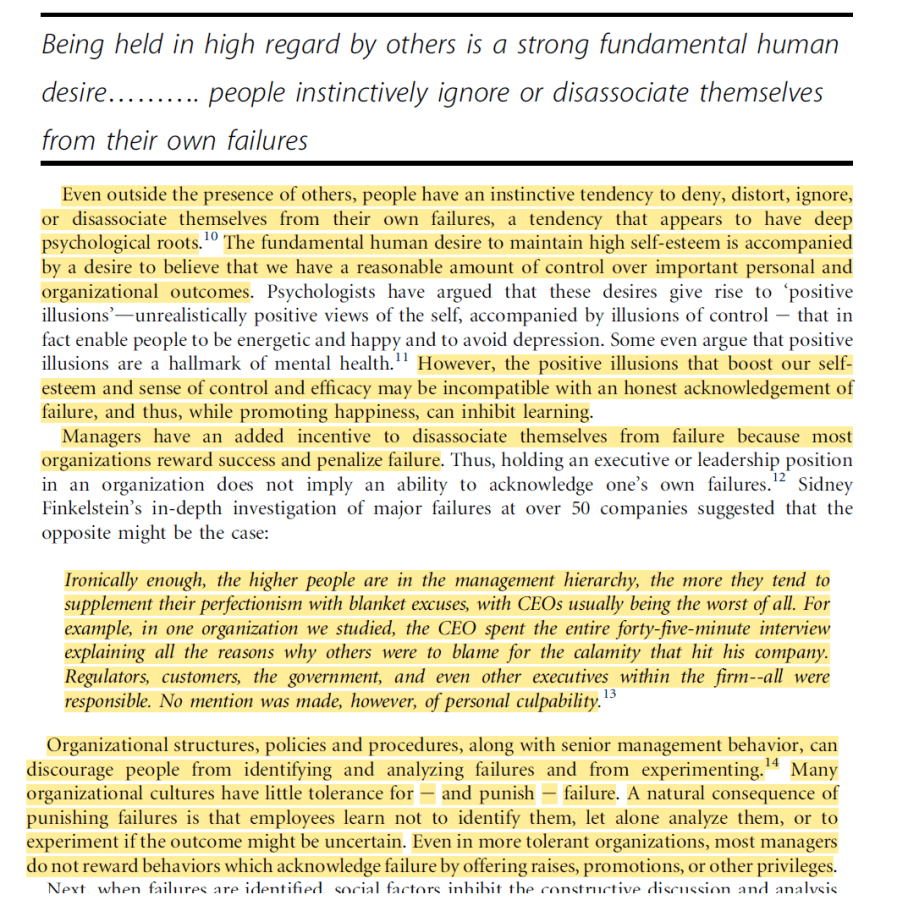
“A natural consequence of punishing failures is that employees learn not to identify them, let alone analyze them, or to experiment if the outcome might be uncertain” Amy Edmondson on ‘failing intelligently’
Another extract from an upcoming summary from Mark Cannon & Amy Edmondson about ‘failing intelligently’. They talk about the various technical, social and structural barriers for organisations to effectively learn from small & large failures. In this section they zero in on the individual and manager-levels: · “Even outside the presence of others, people have an… Continue reading “A natural consequence of punishing failures is that employees learn not to identify them, let alone analyze them, or to experiment if the outcome might be uncertain” Amy Edmondson on ‘failing intelligently’
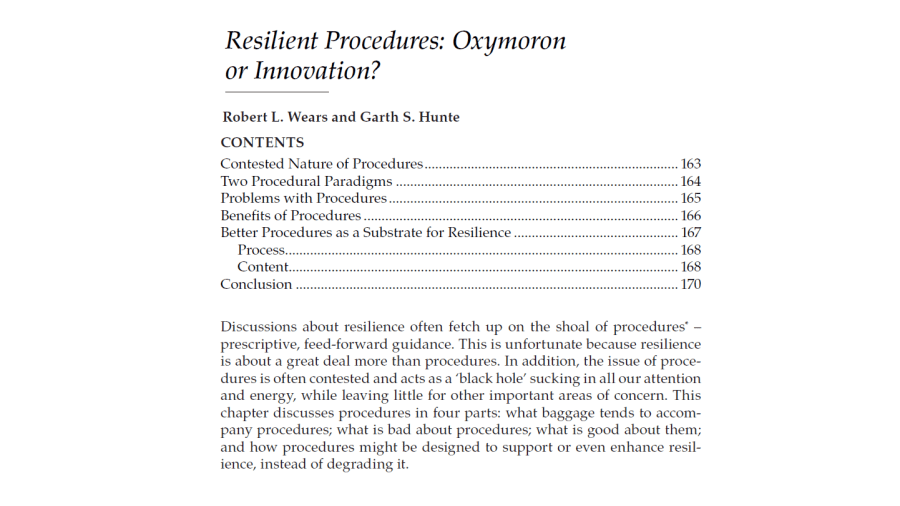
Resilient Procedures: Oxymoron or Innovation?
An interesting chapter from the late Bob Wears around ‘resilient procedures’. I’ve skipped heaps. They specifically explore: · what baggage tends to accompany procedures · what is bad about procedures · what is good about them · how procedures might be designed to support or even enhance resilience, instead of degrading it. Procedures are said… Continue reading Resilient Procedures: Oxymoron or Innovation?

Tight coupling, interactive complexity and an operator zigging instead of zagging known only in hindsight: Charles Perrow
Some wisdom from Perrow’s awesome Normal accidents. This book is full of nuggets, so just some random extracts: · “But if … the operator is confronted by unexpected and usually mysterious interactions among failures, saying that he or she should have zigged instead of zagged is possible only after the fact” · “Before the accident no one… Continue reading Tight coupling, interactive complexity and an operator zigging instead of zagging known only in hindsight: Charles Perrow

Human factor analysis of cockpit work incidents in high-speed workboats: the mystery hidden between the lines
This study unpacked what investigators look at and how they construct causes in high-speed workboats. It employed a Safety-II / HOP / HF perspective. Tl;dr: human factors are poorly evaluated and largely seen as individual-level factors. Some extracts: · “Although the analysis focused on negative observations, it also identified HFs that supported the activity” · “Many pivotal… Continue reading Human factor analysis of cockpit work incidents in high-speed workboats: the mystery hidden between the lines

