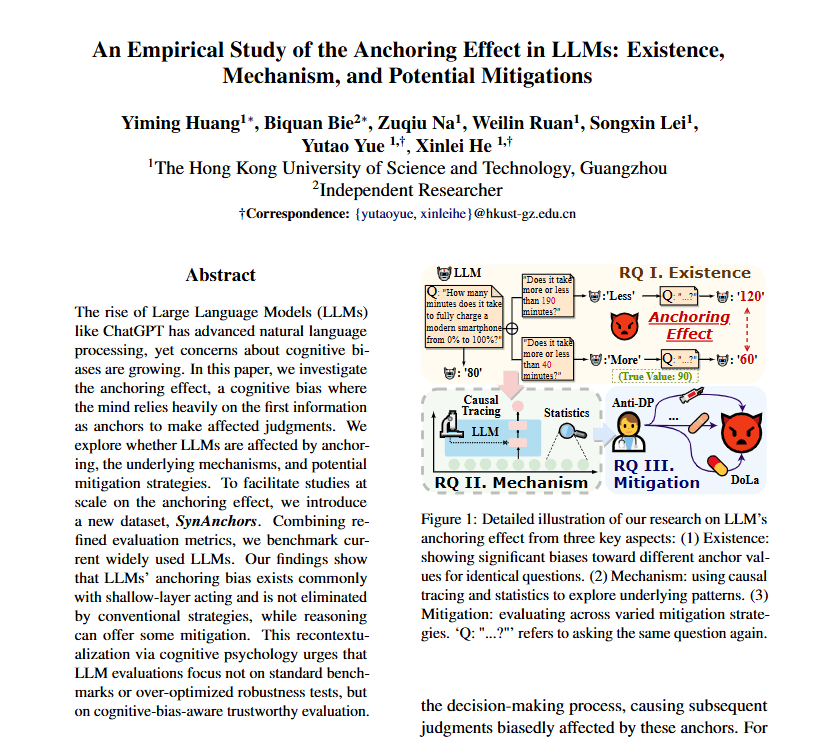
This study found that several LLMs are fairly easily influenced by anchoring effects, consistent with human anchoring bias. Extracts: · “Although LLMs surpass humans in standard benchmarks, their psychological traits remain understudied despite their growing importance” · “The anchoring effect is a ubiquitous cognitive bias (Furnham and Boo, 2011) and influences decisions in many fields” · “Under uncertainty,… Continue reading An Empirical Study of the Anchoring Effect in LLMs: Existence, Mechanism, and Potential Mitigations
Tag: ai
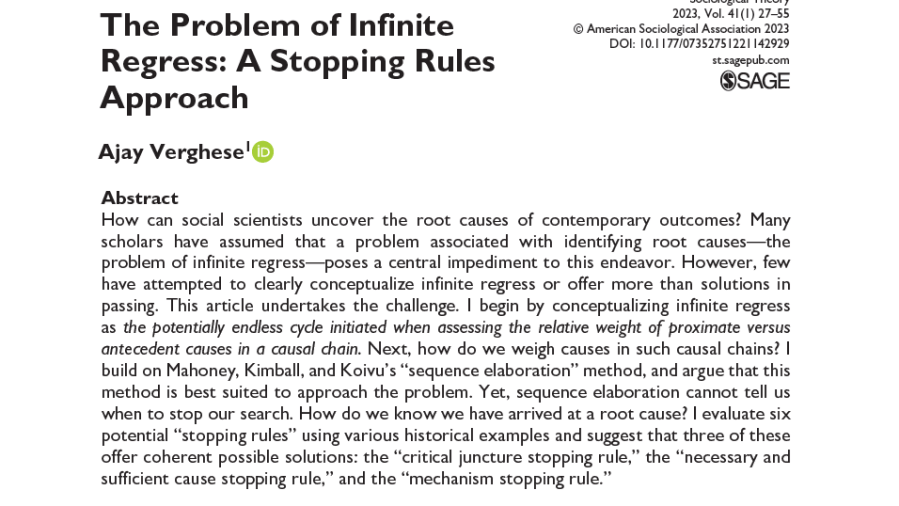
The issues of ‘root causes’ and infinite regression (the endless search for the causes of causes)
A really interesting, but challenging, read about the ontological status of ‘root causes’ and more pointedly, the problem of infinite regression. The author also proposes some stop rules to help navigate infinite regression. I’ve previously posted articles critical of the status of ‘root causes’, who argue it is more a process of implicit or explicit… Continue reading The issues of ‘root causes’ and infinite regression (the endless search for the causes of causes)

LLMs Are Not Reliable Human Proxies to Study Affordances in Data Visualizations
This was pretty interesting – it compared GPT-4o to people in extracting takeaways from visualised data. They were also interested in how well the LLM could simulate human respondents/responses. Note that the researchers are primarily interested in whether the GPT-4o model acts as a suitable proxy for human responses – they recognise there are other… Continue reading LLMs Are Not Reliable Human Proxies to Study Affordances in Data Visualizations
Leverage points to intervene in a system – Donella Meadows
In the lead up to next week’s compendium on systems thinking, here’s a banger from Donella Meadows. She explores system leverage points. Not a summary, but some extracts: · Leverage points are “places within a complex system .. where a small shift in one thing can produce big changes in everything” · The “state of the system”… Continue reading Leverage points to intervene in a system – Donella Meadows
Resilience terminology and a visualisation of resilience/robustness in practice
This may interest people. It covers concepts of resilient performance within seaports. It’s a bit random (seaports), but otherwise gives a handy overview of resilience terms and applications. The first two images are just basic definitions. Extracts: · Image 3 represents resilience elements during disruptions – from pre-disruption, to the disruption, then post-disruption. · During pre-disruption, the… Continue reading Resilience terminology and a visualisation of resilience/robustness in practice

ChatGPT for analysing investigations
I think this is one of the better uses of LLMs regarding investigations – they trained their model to evaluate accident reports and extract key details from the reports. They found: · It could extract key information from unstructured data and “significantly reduce the manual effort involved in accident investigation report analysis and enhance the overall… Continue reading ChatGPT for analysing investigations

Human Factors and Ergonomics in Industry 5.0 —A Systematic Literature Review
This open access article may interest people – it explored the future of human factors/ergonomics in Industry 5.0 (I05). Not a summary but you can read the full paper freely. Some extracts: Shout me a coffee Study link: https://doi.org/10.3390/app15042123 LinkedIn post: https://www.linkedin.com/posts/benhutchinson2_this-open-access-article-may-interest-people-activity-7300617102564933632-WGPj?utm_source=share&utm_medium=member_desktop&rcm=ACoAAAeWwekBvsvDLB8o-zfeeLOQ66VbGXbOpJU

Human factor analysis of cockpit work incidents in high-speed workboats: the mystery hidden between the lines
This study unpacked what investigators look at and how they construct causes in high-speed workboats. It employed a Safety-II / HOP / HF perspective. Tl;dr: human factors are poorly evaluated and largely seen as individual-level factors. Some extracts: · “Although the analysis focused on negative observations, it also identified HFs that supported the activity” · “Many pivotal… Continue reading Human factor analysis of cockpit work incidents in high-speed workboats: the mystery hidden between the lines
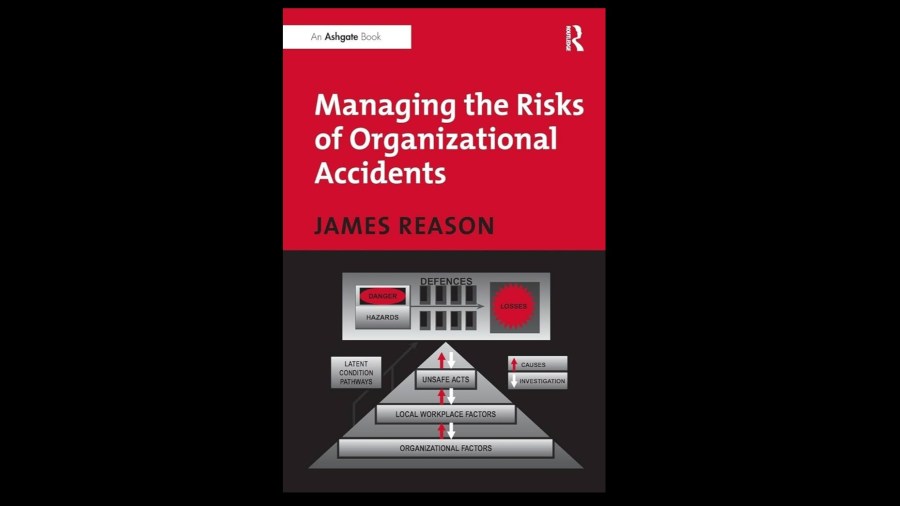
The mixed blessing of risk defences and redundancy: James Reason
A few random extracts from James Reason’s timelessly awesome Managing the Risks of Organizational accidents. (Note: This isn’t an endorsement of the somewhat linearity of defences-in-depth, since we have evidence that emergent behaviour can playout in reality and with equifinality etc) There’s hundreds of things I could extract (and maybe will in time), but here’s… Continue reading The mixed blessing of risk defences and redundancy: James Reason

“I think, therefore I err”: An article about ‘good errors’, heuristics and intelligent systems
“Every intelligent system makes errors”, so said Gerd Gigerenzer. Here’s a couple of page extracts from a 2005 paper. Not sure if I’ll summarise it or not (it’s really interesting, but tough to capture in a summary…) The paper: · Challenges the rationalistic and normative ideal as cognition as purely a logical and rational one, ignoring… Continue reading “I think, therefore I err”: An article about ‘good errors’, heuristics and intelligent systems
 SafetyInsights.org