Minor injuries may have little to no connection with fatal injuries. No great epiphany or diatribe here – just three readily accessible extracts highlighting that focusing on minor stuff may not give many insights into the stuff that kills. 1. “There is no discernible association between Total Recordable Incident Rate (TRIR) and fatalities” 2. “analysis… Continue reading Minor injuries may have little to no connection with fatal injuries
Tag: major accidents

Safe As 36: How audits fail prior to major accidents
How do audits fail to avert major disasters? What do investigations after a major accident say about the performance, or failures, of audits? Today’s article is Hutchinson, B., Dekker, S., & Rae, A. (2024). How audits fail according to accident investigations: A counterfactual logic analysis. Process Safety Progress, 43(3), 441-454. Spotify: https://open.spotify.com/episode/0GiQ6QeAYGFZhxmppb5n3k?si=gB3Hvpi3RpaPtLsGChZSZw Make sure to subscribe to… Continue reading Safe As 36: How audits fail prior to major accidents
“Managing the risks of major accidents” – Andrew Hopkins, YouTube presentation
A 2024 YT video from Andrew Hopkins about managing the risks of major accidents. This comes in the lead up to next week’s compendium of research dedicated to Andrew Hale & Andrew Hopkins. Some extracts: · He refers to the Safety Paradox where managers “honestly believed that safety was their top priority that they never sacrificed… Continue reading “Managing the risks of major accidents” – Andrew Hopkins, YouTube presentation
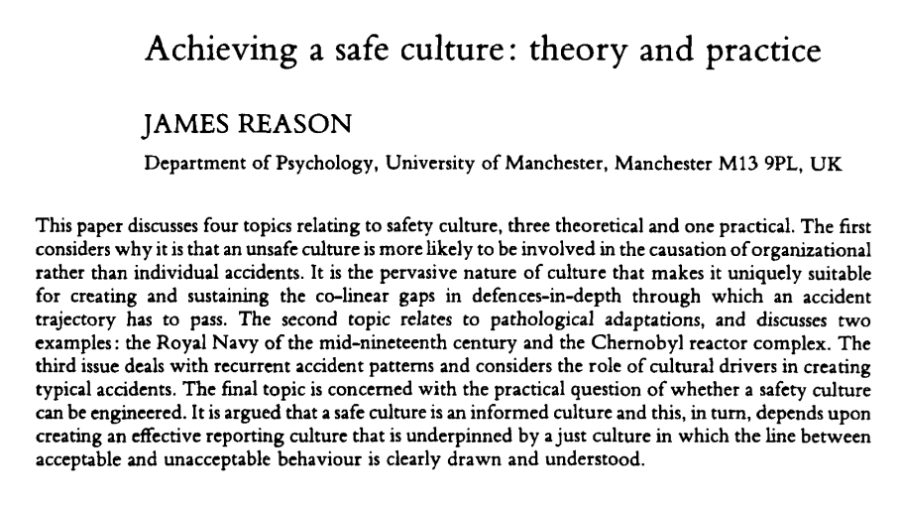
Achieving a safe culture: theory and practice
A 1998 paper from James Reason discussing complex system failures and cultures of safety (which he calls safety cultures, SC—note he often, but not always, says cultures as plural). Way too much to cover, so worth checking out the original paper. First Reason points out the lack of a single definition of SC, but one… Continue reading Achieving a safe culture: theory and practice

Systems thinking, culture of reliability and safety
Fantastic read from Nick Pidgeon on how systems approaches, Turner’s MMD, sensemaking, failure and learning intersect to create or mask ‘safety’. Can’t do it justice, so just a few extracts: · “By 1990, it was clear that the .. intellectual focus was less on analysing how past accidents had occurred .. and more towards .. how… Continue reading Systems thinking, culture of reliability and safety
Failing audits and ‘comprehensively shallow’ evaluations of system performance
Do (some) audits focus too greatly on paperwork? Or is the paperwork focus a strength of audits? In our previous paper, we reviewed 44 major accident reports to assess the accident inquiries’ descriptions of pre-accident audit performance. We argued that: “many audits exhibited a ‘comprehensive shallowness,’ delving excessively into minor system details and paperwork rather… Continue reading Failing audits and ‘comprehensively shallow’ evaluations of system performance
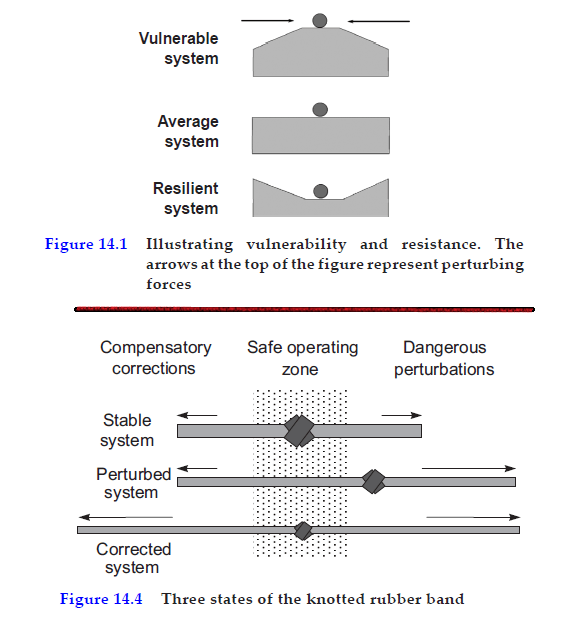
Achieving a safe and stable high-risk system: James Reason ‘Human Contribution’
A few extracts from James Reason’s ‘Human Contribution’. He proposes a couple of different representations of safety (image 1) · The first (14.1), represents the notions of vulnerability and resilience · The ball bearing is sitting at different locations on blocks – in the vulnerable system, perturbations topple the ball · It’s of course the most stable in… Continue reading Achieving a safe and stable high-risk system: James Reason ‘Human Contribution’
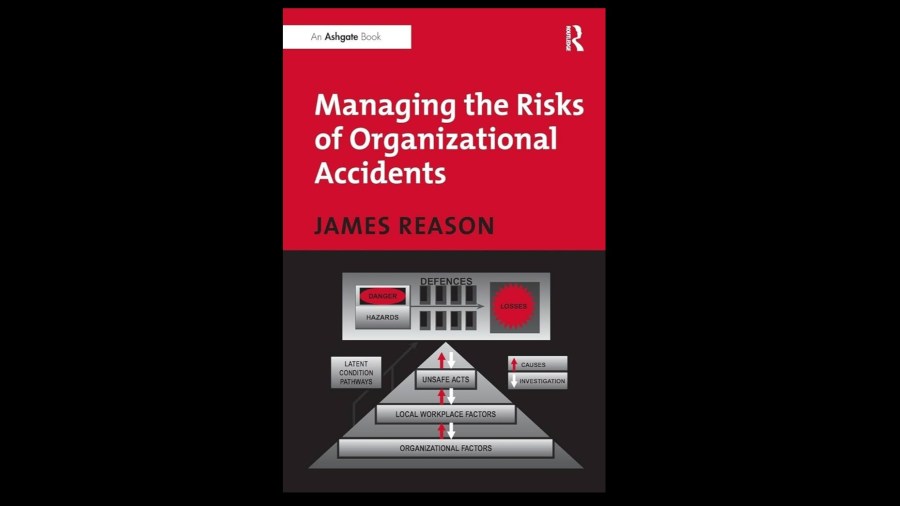
The mixed blessing of risk defences and redundancy: James Reason
A few random extracts from James Reason’s timelessly awesome Managing the Risks of Organizational accidents. (Note: This isn’t an endorsement of the somewhat linearity of defences-in-depth, since we have evidence that emergent behaviour can playout in reality and with equifinality etc) There’s hundreds of things I could extract (and maybe will in time), but here’s… Continue reading The mixed blessing of risk defences and redundancy: James Reason

An ode to Drs Richard Cook, Jens Rasmussen & Bob Wears: A mini-compendium of their legacies
This is long overdue – but I wanted to cover some of the work from these giants who have played a significant part in modern safety thinking. Focus is on articles I’ve written about or used extracts from, or could find a full-text link for, and higher-cited articles. It’s not systematic – and unfortunately a… Continue reading An ode to Drs Richard Cook, Jens Rasmussen & Bob Wears: A mini-compendium of their legacies
Safety metrics and reports “make no contribution to proving the effectiveness of our crucial systems” – Paper Safe, Greg Smith
A few apt extracts from Greg Smith’s excellent ‘Paper Safe’. If you’ve not yet read this or Proving Safety, then do yourself the favour. Greg argues: · Many indicators in use are measures of activity and usually tell us something has been done · But, “They tell us nothing about the quality or effectiveness of the activity”… Continue reading Safety metrics and reports “make no contribution to proving the effectiveness of our crucial systems” – Paper Safe, Greg Smith
 SafetyInsights.org