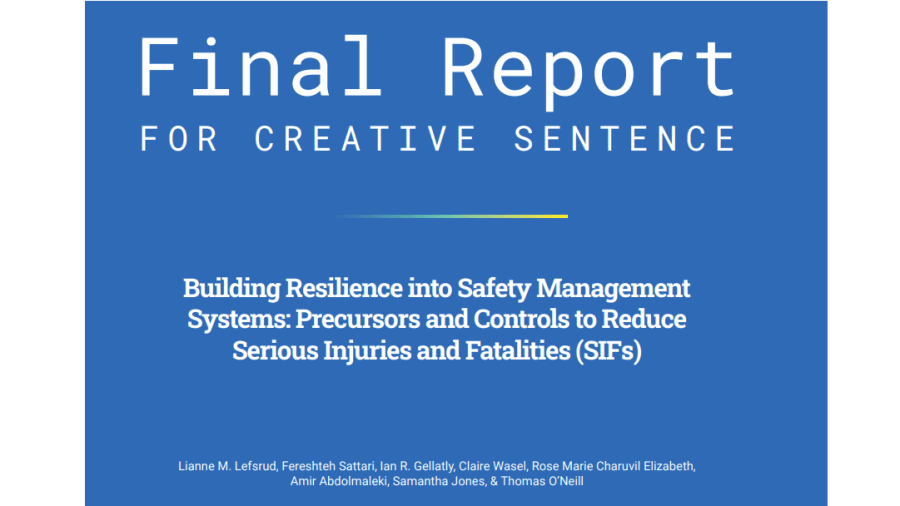
This report, part of creative sentencing research, explored Serious Incidents and Fatalities (SIFs) in mining, and the causes, and the most effective controls for SIFs. Another aim was around the fallibility of people, and when they make mistakes, ensuring there are adequate capacities “so that they ‘fail safely’”, rather than “rather than ‘failing lucky”, or… Continue reading Building Resilience into Safety Management Systems: Precursors and Controls to Reduce Serious Injuries and Fatalities (SIFs)
Tag: major hazard

Exploring the relationship between major hazard, fatal and non-fatal accidents through outcomes and causes
This study from Linda Bellamy explored whether there is a relationship between major hazards, and fatal and non-fatal accidents. Analysis of 23k Dutch serious reportable accidents was analysed via the StoryBuilder software (largely based around bowties). [NB. As always, there’s certain limitations and nuances with relying on reported accidents, particularly around how they’re reported, how… Continue reading Exploring the relationship between major hazard, fatal and non-fatal accidents through outcomes and causes
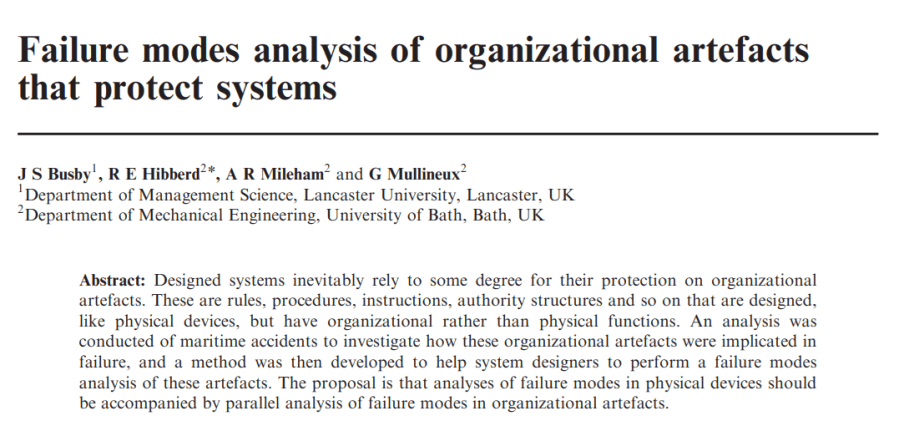
Failure modes analysis of organizational artefacts that protect systems
Really interesting 2004 paper discussing how to study the failures associated with organisational artefacts. Artefacts are “rules, procedures, instructions, authority structures and so on that are designed, like physical devices, but have organizational rather than physical functions”. It’s argued that studying failures of artefacts, like in FMEA, isn’t the same as physical failure modes, and… Continue reading Failure modes analysis of organizational artefacts that protect systems

Moving beyond TRIR: Measuring and monitoring safety performance with high-energy control assessments
Another post on SIFs, this time the High Energy Control Assessments (HECA) from Oguz Erkal & Hallowell. Link to article below, plus to a HECA guide, and to the SIF compendium. Extracts: · HECA is “the percentage of high-energy hazards with a corresponding direct control” · HECA is binary because “every condition observation is modeled only as… Continue reading Moving beyond TRIR: Measuring and monitoring safety performance with high-energy control assessments

Compendium: SIFs, Major Hazards, Fatal & Traumatic hazards, risks
This is an expansion to my prior compendium on Critical Controls, Barriers and Energy thinking. Suggest you read that in conjunction to this, link here: Barriers, Critical Controls, Verifications, Energy Models If you’re after indicators check this mini-compendium out: Safety & Risk Performance indicators (lead, lag, drive, process safety + more) This compendium focuses on articles… Continue reading Compendium: SIFs, Major Hazards, Fatal & Traumatic hazards, risks

Visualizing what’s missing: Using deep learning and Bow-Tie diagrams to identify and visualize missing leading indicators in industrial construction
This study, among a few other things, compared 633 incidents against >9 inspection reports with similar contexts to understand the overlap. Data was from a Canadian construction project over 3 years. E.g. They used multi-methods, including natural language processing, text mining, bow ties and more to evaluate if field inspections are looking at the same… Continue reading Visualizing what’s missing: Using deep learning and Bow-Tie diagrams to identify and visualize missing leading indicators in industrial construction
 SafetyInsights.org