
This study unpacked what investigators look at and how they construct causes in high-speed workboats. It employed a Safety-II / HOP / HF perspective. Tl;dr: human factors are poorly evaluated and largely seen as individual-level factors. Some extracts: · “Although the analysis focused on negative observations, it also identified HFs that supported the activity” · “Many pivotal… Continue reading Human factor analysis of cockpit work incidents in high-speed workboats: the mystery hidden between the lines
Tag: news

Efficacy and Understanding of the Safety Hierarchy of Controls
This PhD thesis from Stephen Young was interesting. They studied evidence supporting the hierarchy of control (HOC), constraints on its efficacy, and more. Way too much to cover. Some extracts: · There isn’t a lot of evidence supporting the efficacy of the HOC · One reason is: “An unequivocal demonstration of efficacy [of the HOC] is problematic,… Continue reading Efficacy and Understanding of the Safety Hierarchy of Controls
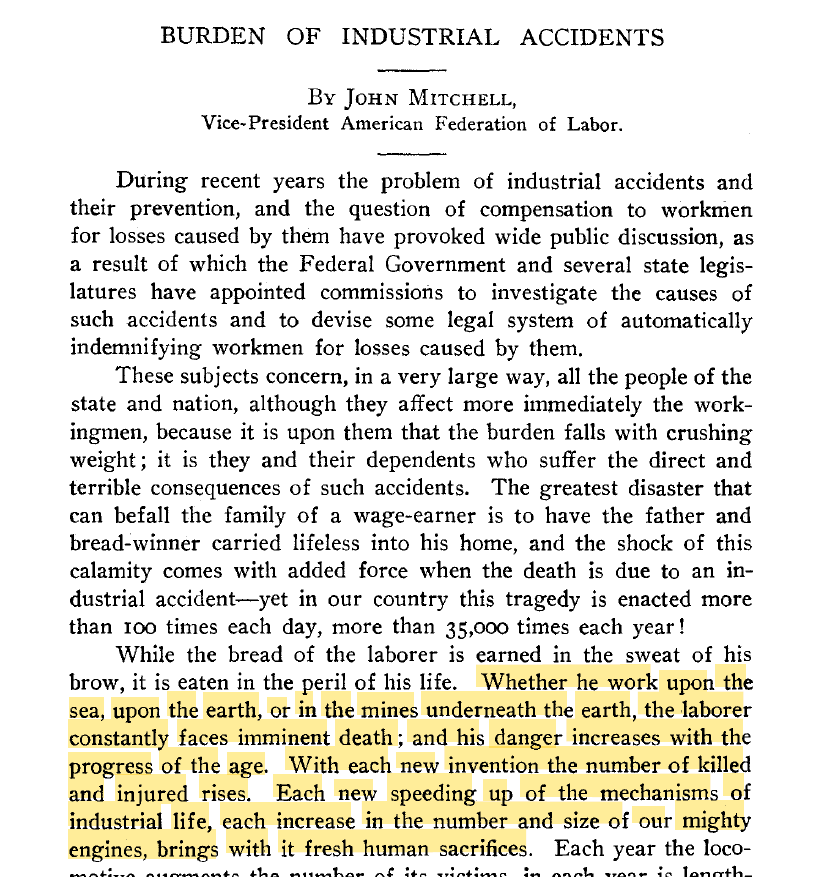
Economic progress brings with it ‘fresh human sacrifices’ in workplace accidents: 1911 article
Another article from 1911. This explores the societal burden of industrial accidents. The writer sounds pretty disgusted by the state of play in the US compared to Europe. This dude was like a poet – remarking about the progress of mighty industrial engines bringing with it “fresh human sacrifices”. Some extracts: · “Whether he work upon… Continue reading Economic progress brings with it ‘fresh human sacrifices’ in workplace accidents: 1911 article
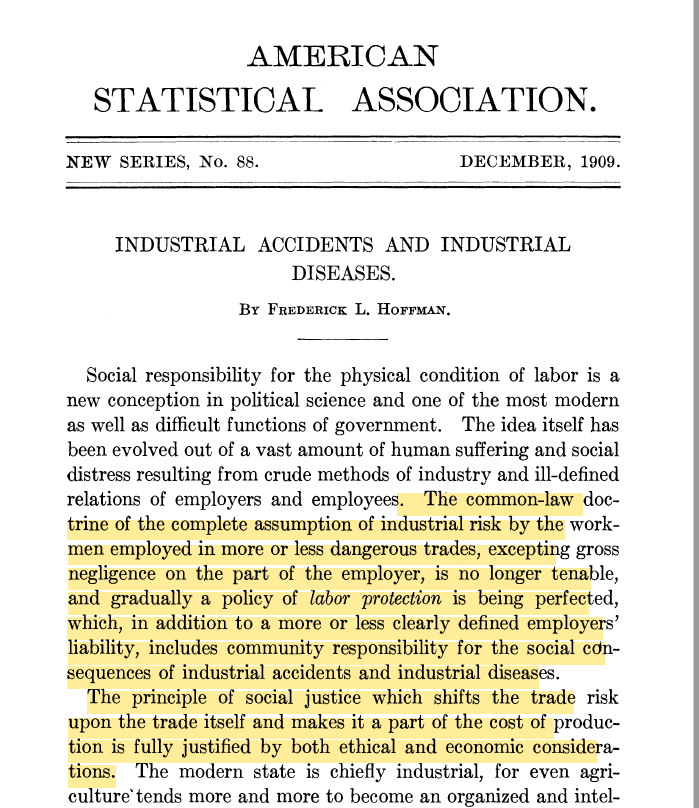
Industrial Accidents and Industrial Diseases – 1909 article
Another interesting read from 1909, talking about ‘social responsibility’ and industrial accidents & diseases in the US. Really modern thinking here – that: 1) ‘trade’ should bear the fair burden of injury 2) compensation is about justice and social responsibility 3) a worker’s free will to work in dangerous industries is a myth (they often… Continue reading Industrial Accidents and Industrial Diseases – 1909 article

Can serious industrial accidents be eliminated? Article from 1917 equally valid today
Can serious industrial accidents be eliminated? Oof, this was a banger read – from 1917. Talks about: · Focusing on effective workplace design and engineering – not just machine guarding · Not focusing on “careless” workers and such stuff · Focusing on the severity of incidents and not just their frequency · The primary duty of the employer should… Continue reading Can serious industrial accidents be eliminated? Article from 1917 equally valid today
Humans are fallible and we should design out harm: 1913 rail safety article
“What a time to be alive!” – People in 1913, probably. This interesting article from 1913 about rail safety comes to some interesting proposals: human fallibility is a normal and expected thing, that we should seek design and systems solutions where possible, and companies always prioritise profit over ‘safety’ trade-offs: · “In the past, when an accident… Continue reading Humans are fallible and we should design out harm: 1913 rail safety article
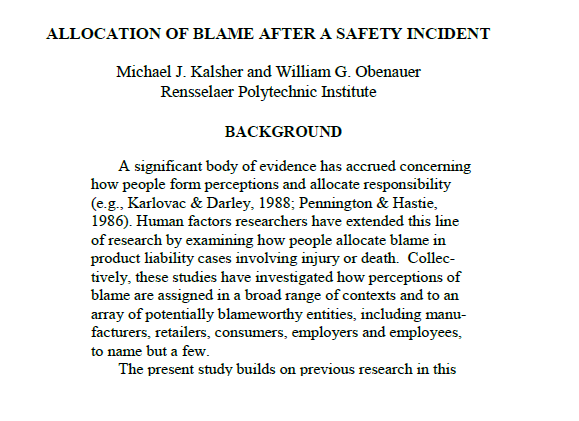
Allocation of Blame After a Safety Incident
This single page conference paper discussed an experiment on how blame is allocated following incidents. The scenario was a “realistic, but fictitious” incident involving a worker (both experienced or not experienced, depending on the scenario), whom is killed when touching an energised bus bar while feeding electrical wire into a pedestal. They systematically manipulated the… Continue reading Allocation of Blame After a Safety Incident

Compendium: Blame, Just Culture & language
Here’s another compendium of articles exploring blame and language in the construction of post-hoc causality explanations, or how blame effects learning and investigations. The other part covers some articles around Just Culture and restorative culture. Note: I’ve mostly focused on articles that I’ve either already summarised or that I could find a full text link… Continue reading Compendium: Blame, Just Culture & language
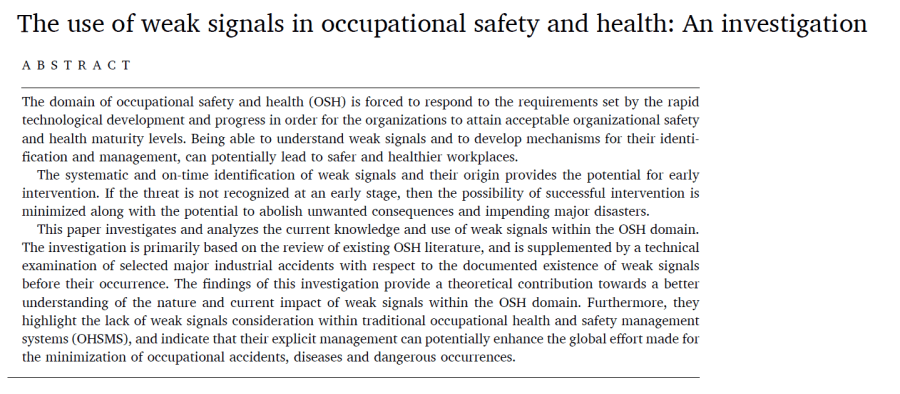
The use of weak signals in occupational safety and health: An investigation
This study explored current knowledge and use of weak signals in safety. Thanks to Clive Lloyd for sharing this a couple weeks back. As you’d expect, this sort of topic, based on accidents, is pretty replete with hindsight and outcome knowledge but is interesting nevertheless. Extracts: · They have been defined as an “…imprecise early indication… Continue reading The use of weak signals in occupational safety and health: An investigation

Boards of directors’ influences on occupational health and safety: a scoping review of evidence and best practices
This literature review evaluated the impact of boards of directors on workplace safety. 49 studies met inclusion. Way too much to cover. Background: · “There is a growing understanding that operative leadership, from line managers to senior management, plays an important role in occupational health and safety” · Leadership “do not act in a vacuum”… Continue reading Boards of directors’ influences on occupational health and safety: a scoping review of evidence and best practices
 SafetyInsights.org