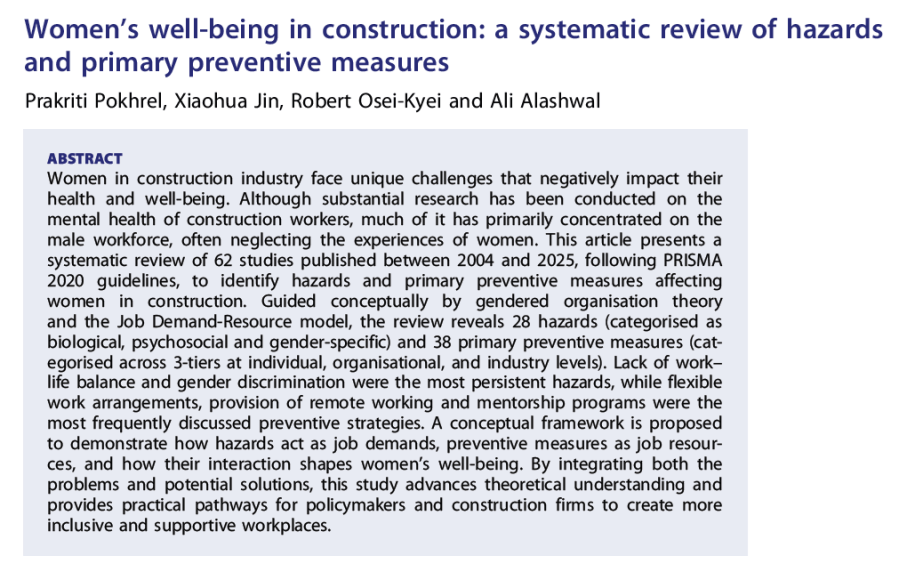
This systematic review unpacked 62 studies looking at women’s well-being in construction, and key hazards and prevention measures. ** Check out my YouTube channel: https://www.youtube.com/@safe_as_pod Background: · “construction industry is often shaped by a macho work culture marked by aggression, bullying, and job insecurity due to the nomadic and cyclical nature of projects” · “women face not… Continue reading Women’s well-being in construction: a systematic review of hazards and primary preventive measures
Tag: politics
“Indicators are partial reflections of reality, based on uncertain and imperfect models” – Part 2 Donella Meadows sustainable indicators
Part 2 of Meadow’s banger ‘Indicators and Information Systems for Sustainable Development’. Extracts: · “Indicators are partial reflections of reality, based on uncertain and imperfect models” · “The stock market price is not the value of the company. No indicator is the real system. Indicators are abstractions from systems” · And are “are abstractions from abstractions, from models,… Continue reading “Indicators are partial reflections of reality, based on uncertain and imperfect models” – Part 2 Donella Meadows sustainable indicators

Mini-Compendium: Power, Safety, Authority Gradients, and the Power of Elites
Here’s some articles, mostly full-text links, exploring power within organisations. Includes broader social power, power gradients, voice, and more. Feel free to shout me a coffee if you’d like to support the growth of my site: Full-Text Articles [Below link will say ‘Discursive effects of safety science’. Download it and its a whole book with… Continue reading Mini-Compendium: Power, Safety, Authority Gradients, and the Power of Elites

Deming’s system of profound knowledge: 14 points for system improvement
Another from Deming while I’m on the theme. Not much needs to be said – I think it does a lot of talking itself. Deming promoted: · Ceasing the dependence of trying to inspect-in quality · Aim for continuous learning, testing and improvement (e.g. plan, do, STUDY, act) · He was critical of zero defect approaches, arguing them… Continue reading Deming’s system of profound knowledge: 14 points for system improvement

“The fetishism of scientific management” – a 1912 criticism
An interesting critique of Scientific Management approach from 1912. Great title – ‘fetishism of scientific management’. The author argues that: · Scientific Management isn’t even that ‘new’, and is kind of what they’ve always done (…where have we heard that argument before?) · Says it takes away from the craftsmanship of people and that people are the… Continue reading “The fetishism of scientific management” – a 1912 criticism
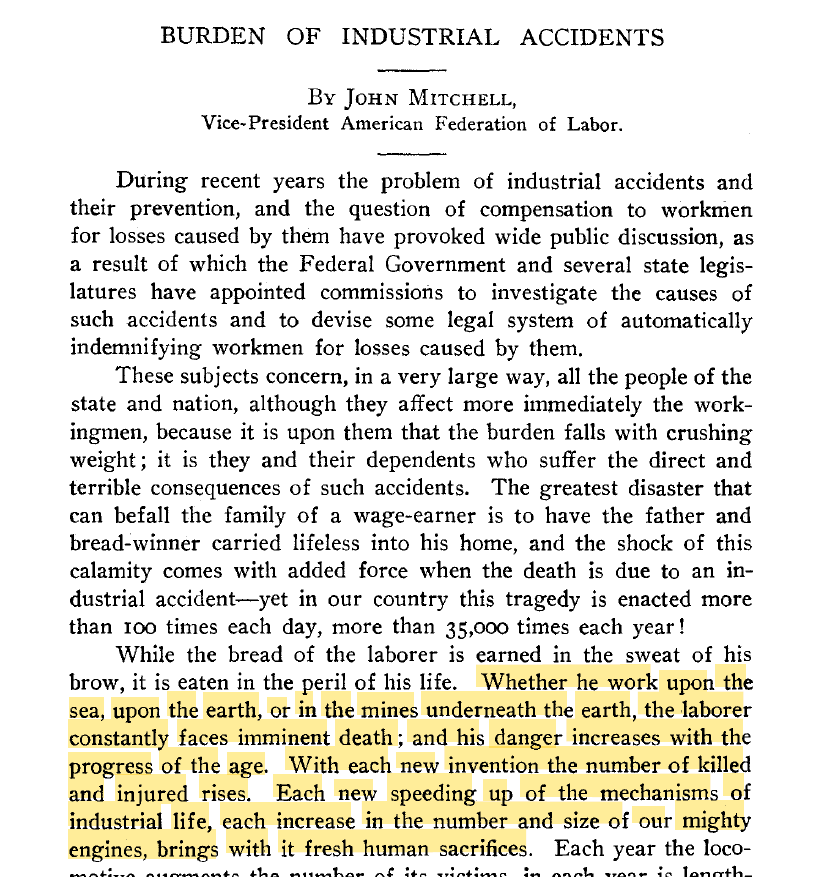
Economic progress brings with it ‘fresh human sacrifices’ in workplace accidents: 1911 article
Another article from 1911. This explores the societal burden of industrial accidents. The writer sounds pretty disgusted by the state of play in the US compared to Europe. This dude was like a poet – remarking about the progress of mighty industrial engines bringing with it “fresh human sacrifices”. Some extracts: · “Whether he work upon… Continue reading Economic progress brings with it ‘fresh human sacrifices’ in workplace accidents: 1911 article
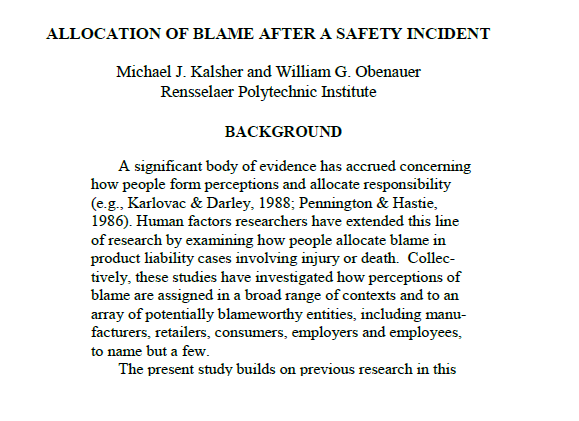
Allocation of Blame After a Safety Incident
This single page conference paper discussed an experiment on how blame is allocated following incidents. The scenario was a “realistic, but fictitious” incident involving a worker (both experienced or not experienced, depending on the scenario), whom is killed when touching an energised bus bar while feeding electrical wire into a pedestal. They systematically manipulated the… Continue reading Allocation of Blame After a Safety Incident

Compendium: Blame, Just Culture & language
Here’s another compendium of articles exploring blame and language in the construction of post-hoc causality explanations, or how blame effects learning and investigations. The other part covers some articles around Just Culture and restorative culture. Note: I’ve mostly focused on articles that I’ve either already summarised or that I could find a full text link… Continue reading Compendium: Blame, Just Culture & language

Safety culture and power dynamics in organizations
Not much to say here. This article briefly touched upon the interactions of power dynamics and safety culture. Some really cool stuff has been written about power in safety (check out my site). This only really briefly touches on a few points: · Starting with safety culture (SC), they say it has “even been abandoned by… Continue reading Safety culture and power dynamics in organizations
 SafetyInsights.org