What is your definition of ‘safety’? For some, safety is defined as the presence of capacities. Here, Drew Rae discusses his thoughts, and scientific logics, of this definition. #safety #hse #risk #science #safetyscience #safetyii
Tag: risk
SafeWork prosecution and the legal definition of risk, reasonably practicable, and what ought reasonably to have been known
This prosecution judgement related to a serious injury, after heavy stone slabs tipped off a truck tray onto a worker. Some extracts I found interesting: · “state of knowledge applied to the definition of practicable is objective. It is that possessed by persons generally who are engaged in the relevant field of activity and not the… Continue reading SafeWork prosecution and the legal definition of risk, reasonably practicable, and what ought reasonably to have been known
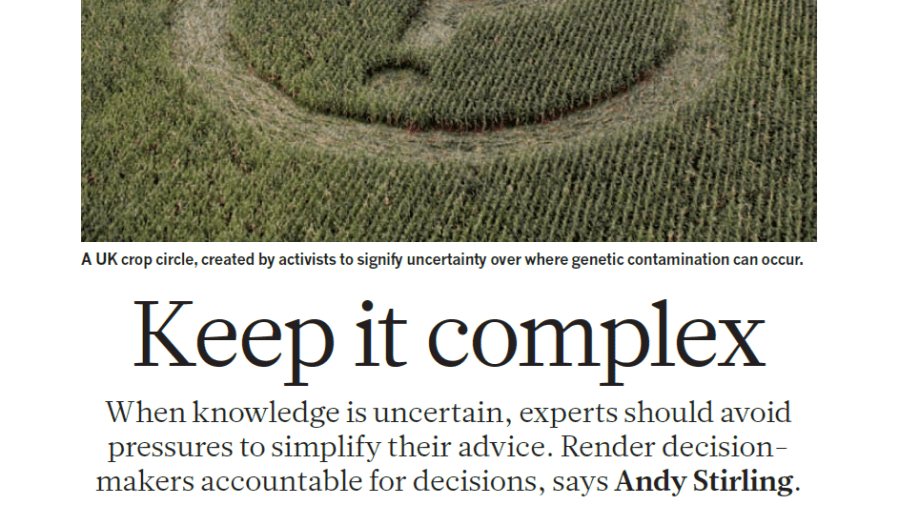
‘Keep It Complex’: perspectives on risk, uncertainty and ambiguity
When uncertainty and ignorance is abound on risk, should we ‘keep it simple’? Or keep it complex by debating multiple perspectives and embracing uncertainty and ambiguity? Extracts: · “When knowledge is uncertain, experts should avoid pressures to simplify their advice. Render decision-makers accountable for decisions” · “Expert advice is often thought most useful to policy when it… Continue reading ‘Keep It Complex’: perspectives on risk, uncertainty and ambiguity
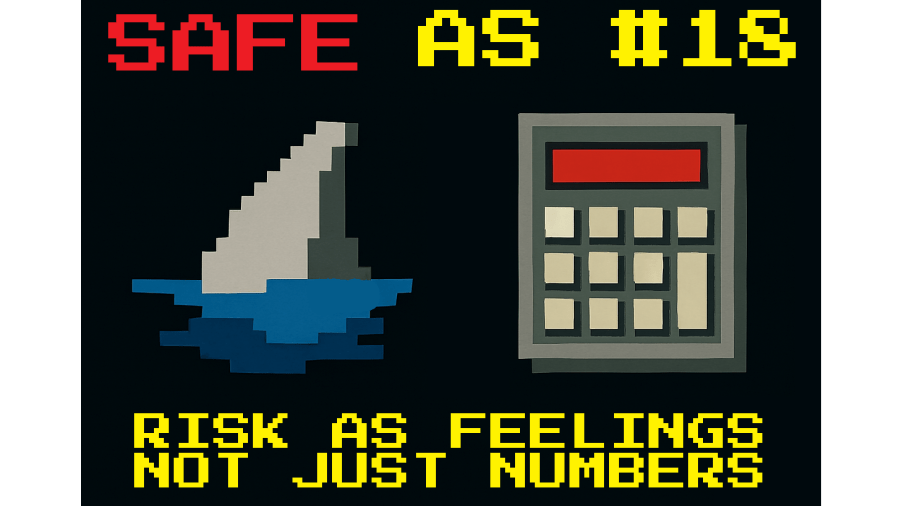
Safe As podcast e18: When emotion leads risk – risk as feelings and not just numbers
Risk in safety is often framed in matrices as likelihood x consequences. It holds an allure of (semi)objectivity – the numbers are the numbers. But what is the role of emotion and feelings within our risk judgements? Today’s article argues that what we ‘feel’ about risk precedes and influences what we ‘think’ about risk. This… Continue reading Safe As podcast e18: When emotion leads risk – risk as feelings and not just numbers

Evaluating the Impact of Hazard Information on Fieldworkers’ Safety Risk Perception
This study investigated how 181 fieldworkers rate the severity and frequency of safety incidents for five construction work scenarios. The scenarios introduced new hazards into the scenarios, assessing how workers responded, if at all. Background: · Safety risk perception (SRP) is estimated using the participants’ perception of the safety hazards severity and frequency of occurrence… Continue reading Evaluating the Impact of Hazard Information on Fieldworkers’ Safety Risk Perception
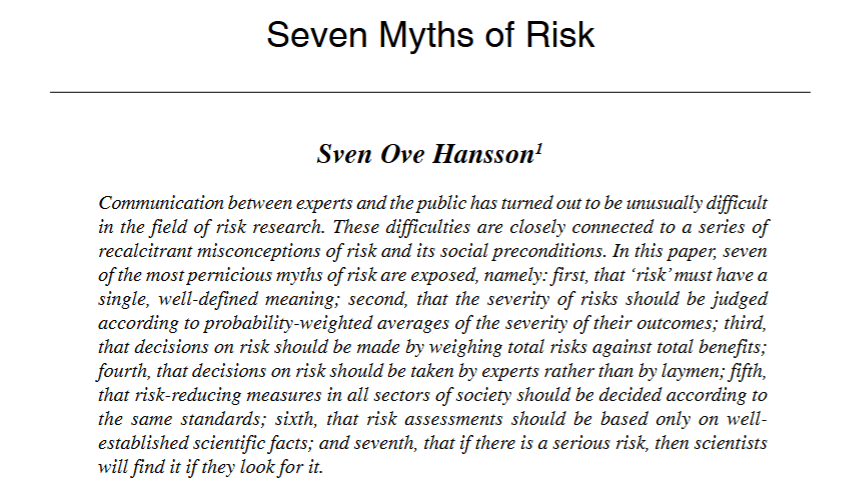
Seven Myths of Risk
This discussion paper explored some myths of the risk construct. Way too much to cover, so just a few extracts. Myth 1: Risk. must have a single, well-defined meaning Risk has many common definitions. An example is provided about lung cancer being one of the major risks that affect smokers. In this sense, 1) risk… Continue reading Seven Myths of Risk
Known risks = risk and unknown risks = uncertainty; some definitions of risk
Just recorded a pod on a paper discussing different notions of ‘risk’. Paul Slovic discusses risk as analysis vs risk as feelings (affect/emotion). It reminded me of these constructs of risk vs uncertainty based on Knights work – discussed by Gigerenzer and colleagues in the two attached extracts. Simply, for Knight, ‘risk’ is represented by… Continue reading Known risks = risk and unknown risks = uncertainty; some definitions of risk

Decluttering Safety: A Multistakeholder Approach to Enhancing Safety Management in Construction
This study from Lingard and colleagues studied the types, causes and perceived consequences of safety clutter. Sample was interviews with 18 construction industry participants. For background: · First they argue that “Contemporary safety management systems have been criticised for being impractical, duplicative, ill-fitting, excessive, wasteful, and ineffective”. · Others argue that SMSs are “characterised by… Continue reading Decluttering Safety: A Multistakeholder Approach to Enhancing Safety Management in Construction

Visualizing what’s missing: Using deep learning and Bow-Tie diagrams to identify and visualize missing leading indicators in industrial construction
This study, among a few other things, compared 633 incidents against >9 inspection reports with similar contexts to understand the overlap. Data was from a Canadian construction project over 3 years. E.g. They used multi-methods, including natural language processing, text mining, bow ties and more to evaluate if field inspections are looking at the same… Continue reading Visualizing what’s missing: Using deep learning and Bow-Tie diagrams to identify and visualize missing leading indicators in industrial construction

Compendium of Nancy Leveson: STAMP, STPA, CAST and Systems Thinking
Although I don’t often mention or post about Leveson’s work, she’s probably been the most influential thinker on my approach after Barry Turner. So here is a mini-compendium covering some of Leveson’s work. Feel free to shout a coffee if you’d like to support the growth of my site: https://direct.mit.edu/books/oa-monograph/2908/Engineering-a-Safer-WorldSystems-Thinking-Applied https://doi.org/10.1177/0170840608101478 https://doi.org/10.1145/7474.7528 http://therm.ward.bay.wiki.org/assets/pages/documents-archived/safety-3.pdf http://sunnyday.mit.edu/papers/Rasmussen-Legacy.pdf https://www.tandfonline.com/doi/pdf/10.1080/00140139.2015.1015623… Continue reading Compendium of Nancy Leveson: STAMP, STPA, CAST and Systems Thinking
 SafetyInsights.org