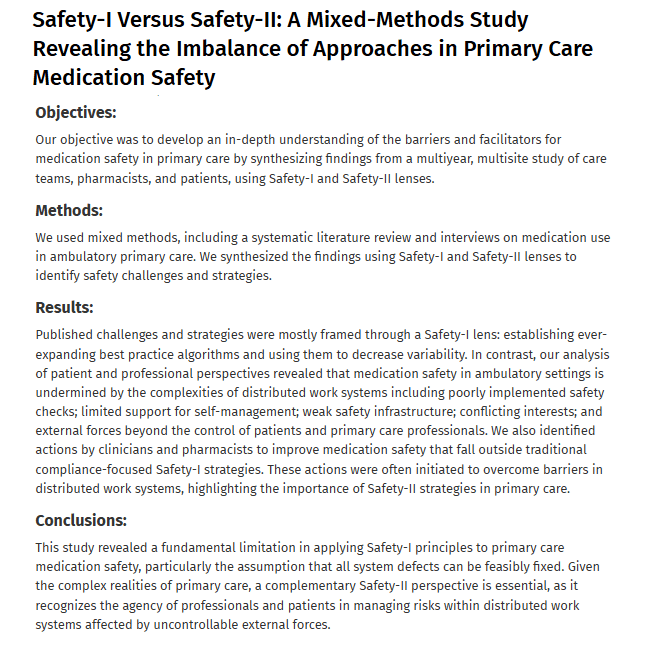
Extracts from a paper that studied medication safety in primary care from both a Safety-I and Safety-II lens – using “medication management in the wild” as their data. · 2 decades after the ‘To Err is Human’ report has “given way to hard bitten realism that there has been little measurable improvement in the overall rates… Continue reading Safety-I Versus Safety-II: A Mixed-Methods Study Revealing the Imbalance of Approaches in Primary Care Medication Safety
Tag: safety-i
Resilience terminology and a visualisation of resilience/robustness in practice
This may interest people. It covers concepts of resilient performance within seaports. It’s a bit random (seaports), but otherwise gives a handy overview of resilience terms and applications. The first two images are just basic definitions. Extracts: · Image 3 represents resilience elements during disruptions – from pre-disruption, to the disruption, then post-disruption. · During pre-disruption, the… Continue reading Resilience terminology and a visualisation of resilience/robustness in practice
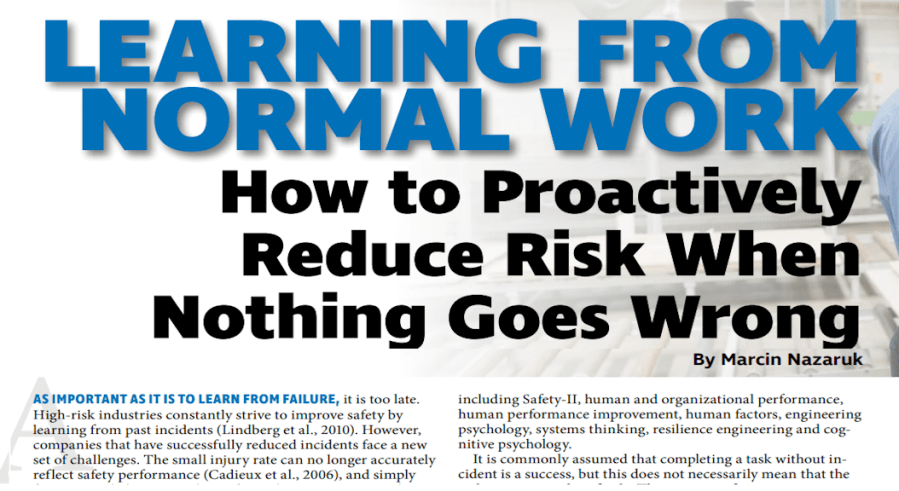
Learning from normal work: How to Proactively Reduce Risk When Nothing Goes Wrong
An interesting article from Marcin Nazaruk, exploring learning from everyday work. Skipping a bit, so check out the full article. First he says that while it’s important to learn from failure “it is too late”. For one, diminishing incident rates “can no longer accurately reflect safety performance … and simply focusing on behaviours and unsafe… Continue reading Learning from normal work: How to Proactively Reduce Risk When Nothing Goes Wrong
The harms of promoting ‘Zero Harm’
This brief editorial discussed some challenges to zero harm approaches (‘absolute safety’) in healthcare. I particularly liked how the author argued that not only is zero harm not attainable, in an absolute sense, but “is unknowable”. Some points: · The authors encourage shifting away from ‘absolute safety’ “towards doing a better job of actively managing risk,… Continue reading The harms of promoting ‘Zero Harm’
 SafetyInsights.org