
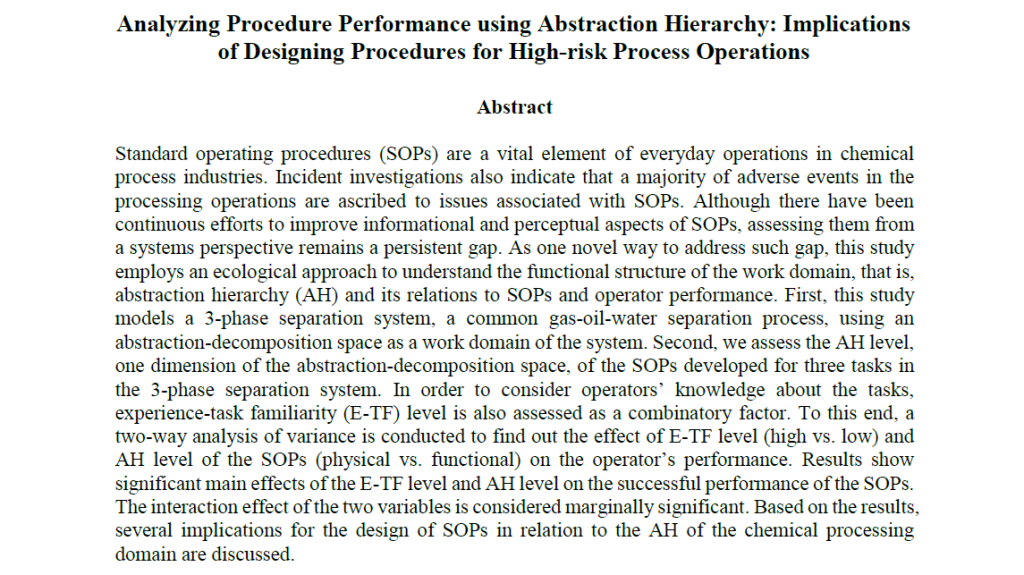
This paper explored the use of procedures and operator performance from the perspective of work domain analysis/abstraction hierarchy.
I’ve skipped heaps – the ‘doing’ part of the abstraction hierarchy, but their descriptions of the problem and the discussion had some gold.
For context:
· Procedural issues have been linked in a number of major accidents
· One example was from BP Texas City, where the SOP for start-up process wasn’t adequately followed by operators (for reasons) and there was “insufficient hazard information to be specified in the SOPs”
· They cover three approaches to the better design of SOPs – informational, perceptual and ecological
· For informational, a major focus is on specifying SOP requirements like purpose, scope, task description, tools, supplies, procedural steps and more
· Perceptual approaches examines the visual attributes of SOP components, like symbols, signal words, numbering and more
· Both of these approaches can improve the comprehension of SOPs and what areas need the most prioritisation, but often focus on a lens of compliance
· Here they note “other researchers assert that the zero-tolerance adherence to SOPs may be impossible and even deleterious to achieving safety of complex industrial operations due to constantly changing work environments, being often degraded from what was imagined in the SOPs”
· The ecological approach “views SOPs as decontextualized and abstracted artifacts that guide, not dictate, operators’ problem-solving depending on their experience and knowledge regarding the system to be operated”
· Hence, “SOPs should be designed in such a way that they support operators to adjust their actions to unstable circumstances in order to accomplish higher system-level goals”
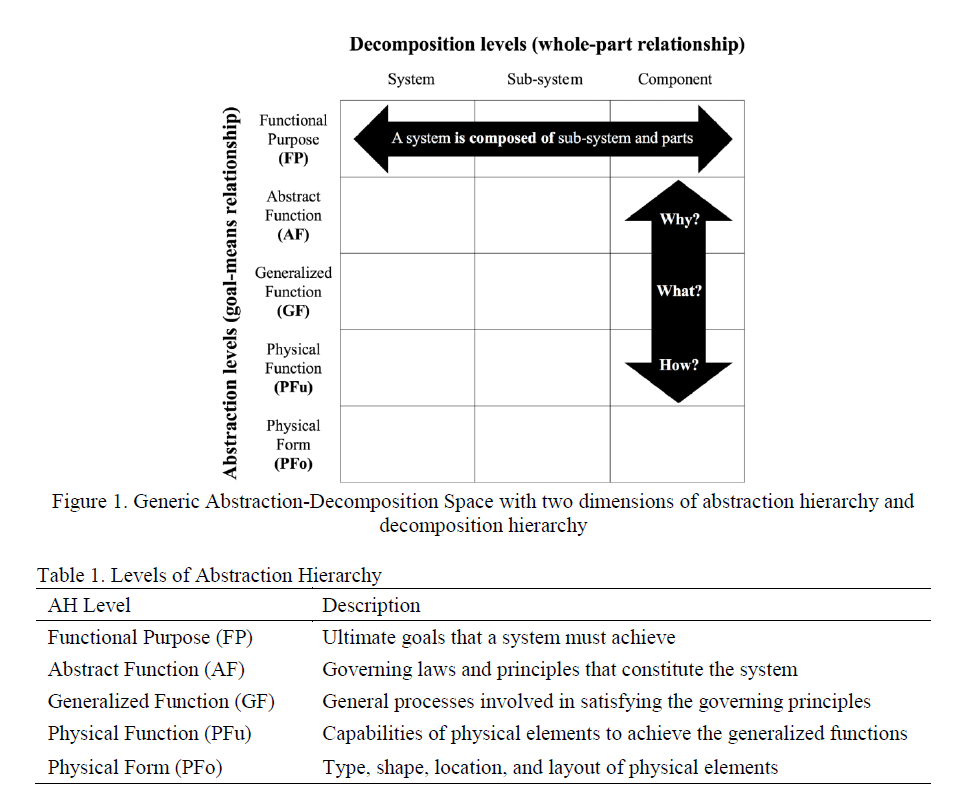
· The key hierarchical terms they used in the analysis are shown below-
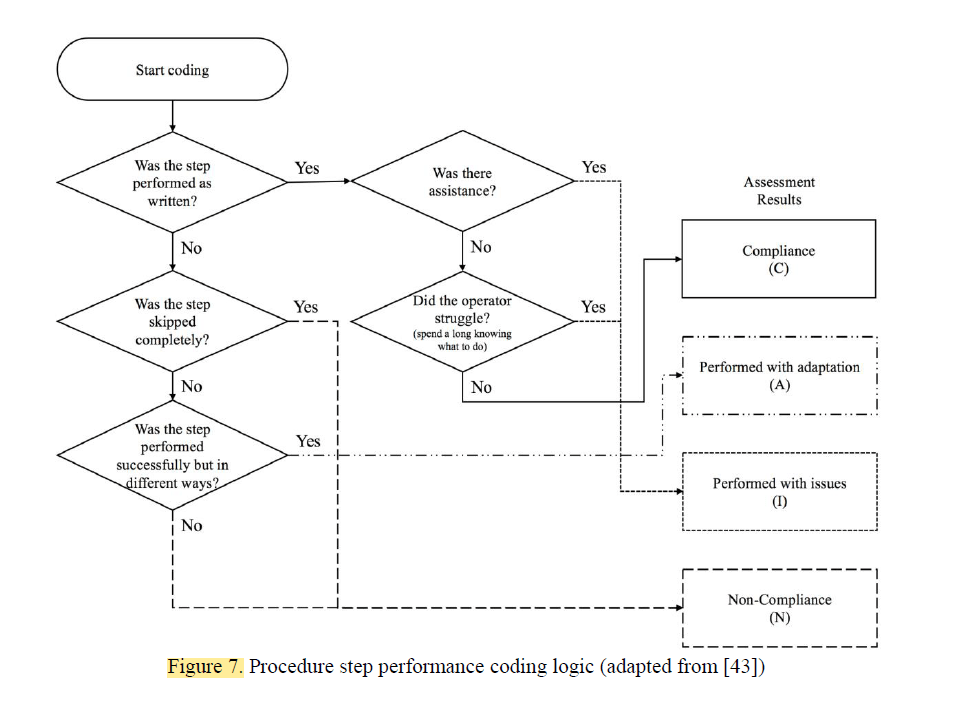
Procedure step performance was assessed via the following:
Results
** Note: I’ve skipped the entire results section, covering the results of their hierarchical analysis.
For key discussion points:
· They found that individual steps in the SOPs represented different hierarchical levels and that physical-level steps were, unexpectedly, more prevalent than functional-level steps, e.g. steps telling people the actions to take were more prevalent than steps which gave operators the why or purpose
· Hence “The predominance of physical-level steps appears to be in line with the emphasis on standardization and specification of actions to be taken from the prescriptive approach”
· They found that the more experienced and familiar an operator was with a task, the “more successful steps he/she performs”
· Further, they found that the more physical steps an SOP contained, the more successful steps the operator carried out
· They note that while on the surface this may suggest that SOPs should largely contain physical-level abstraction hierarchy steps it “still leaves the SOPs vulnerable to unpredicted and abnormal situations in which the operators have to deviate”
· To address this “double-bind”, the results from the ecological approach suggest that “operators with higher experience and task familiarity may have utilized their mental model of the system and thus exhibited comparatively consistent performance in the face of more functional, abstraction step descriptions”
· That is, SOPs should be “designed in a way that they externalize the functional structure (e.g., AH) of the system and thus support operators’ goal-achieving behaviors when confronted with unexpected situations”
· So practically speaking, SOPs should provide some context – the why and purpose – of the goals and not just always the specific tasks operators must take
· An example of what they mean is below –
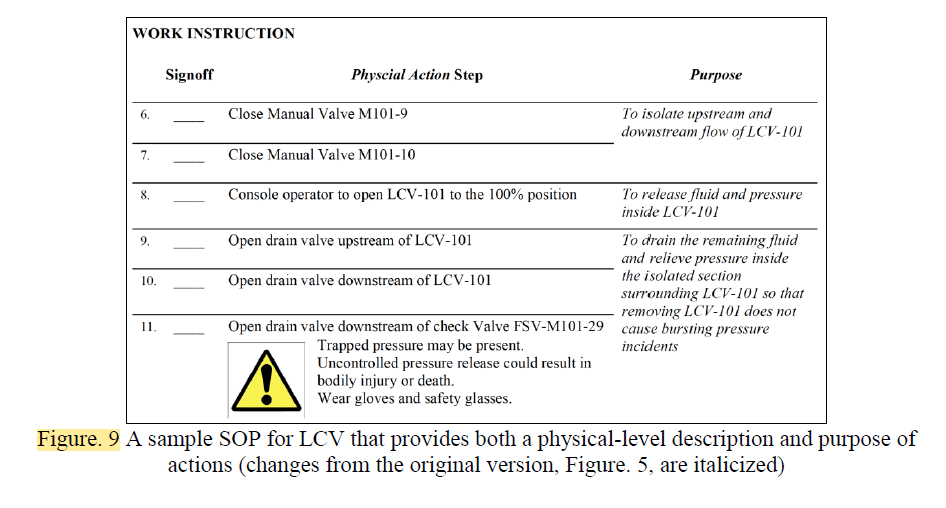
In concluding, they argue for leveraging an ecological perspective on SOPs. And that a stable level of performance was found in groups that included functional-level steps and not just physical-level.
Ref: Ade, N., Peres, S. C., Sasangohar, F., & Son, C. (2019). Analyzing procedure performance using abstraction hierarchy: Implications of designing procedures for high-risk process operations.

Study link: https://oaktrust.library.tamu.edu/bitstreams/cd75a478-c72b-4118-8dc8-b06fc57994ad/download
LinkedIn post: https://www.linkedin.com/pulse/analyzing-procedure-performance-using-abstraction-ben-hutchinson-eeeac

 SafetyInsights.org
One thought on “Analyzing Procedure Performance using Abstraction Hierarchy: Implications of Designing Procedures for High-risk Process Operations”