
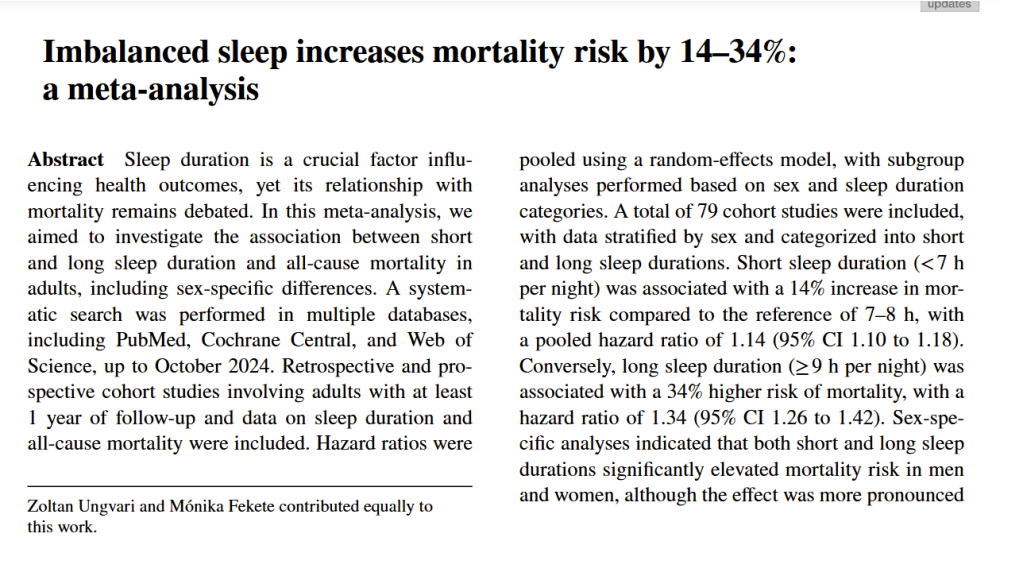
Poor sleep increases mortality risk by 14 – 34% according to a new meta-analysis.
79 cohort studies were included.
Findings:
· Inadequate sleep was defined as fewer than 7 h per night
· 1/3 of adults regularly experience insufficient sleep which are “driven by lifestyle factors deeply rooted in modern society”
· Chronic sleep deprivation has been linked to impaired immune response, cognitive decline, CVD, metabolic dysregulation, accelerated aging, dementia, diabetes, cancer, higher inflammation, hormonal imbalances and more
· Short sleep (<7 h) was associated with a 14% increase in mortality risk compared to 7-8 h per night
· Long sleep duration (>9 h) was associated with a 34% higher risk of mortality
· Short and long sleep durations significantly elevated mortality risk in men and women, but the effects of long sleep duration was more pronounced for women
· Short sleep duration has been linked to a slightly higher mortality risk in men “possibly due to a greater incidence of common public health concerns as sleep apnea, cardiovascular disease, and lifestyle factors like smoking and alcohol use”
· This effect might also be compounded by sex differences in sleep architecture, hormonal regulation and other facets
· “Taken together, this meta-analysis reinforces the significance of sleep duration as a crucial factor in mortality risk, particularly highlighting inadequate sleep as a modifiable risk factor for unhealthy aging and premature death”

Ref: Ungvari, Z., Fekete, M., Varga, P., Fekete, J. T., Lehoczki, A., Buda, A., … & Győrffy, B. (2025). Imbalanced sleep increases mortality risk by 14–34%: a meta-analysis. GeroScience, 1-22.
Study link: https://link.springer.com/article/10.1007/s11357-025-01592-y

 SafetyInsights.org