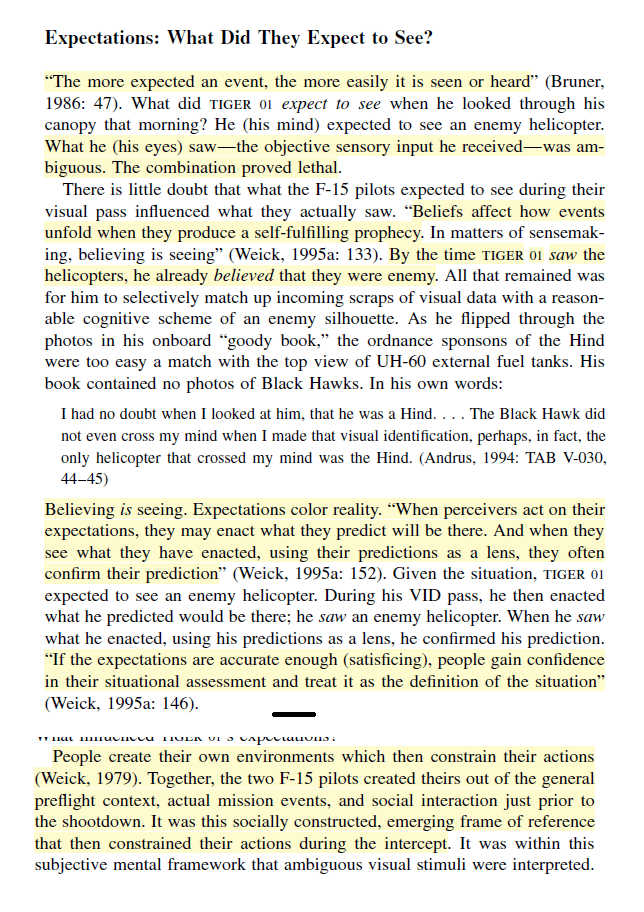
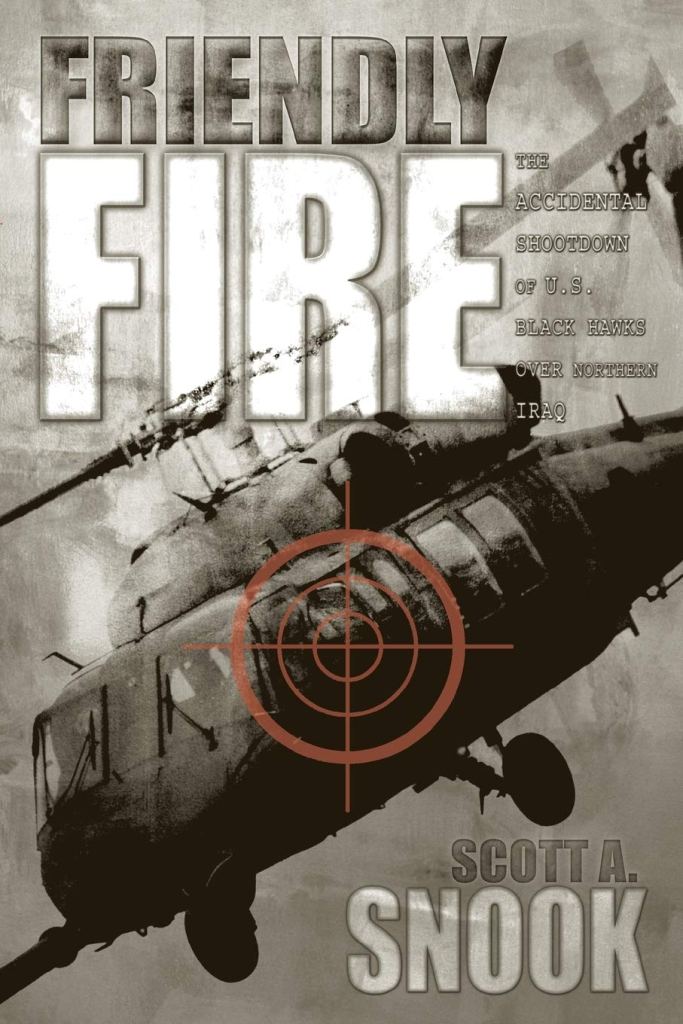
Extracts from one of my fav books – Scott Snook’s Friendly Fire.
It’s a masterclass in applying sensemaking to understand a tragic event – in this case the 1994 friendly fire shootdown of two US Black Hawks, mistaken for enemy Hind helicopters.
I’ve recorded a YouTube vid focusing on the sensemaking / Weick & practical drift sections of the book – posted week after next.
Please subscribe and share my channel with your colleagues: https://youtube.com/@safe_as_pod?si=iUaDPJynPemQRZhY
This vid was…difficult.
Snook challenges how we investigate failure, shifting from rational decisions (e.g. why did they *decide* to shoot), to the construction of meaning (why did they *see* enemy helicopters instead of friendlies).
1. Meaning vs deciding: “Rather than framing the puzzle as, ‘Why did they decide to shoot?”, Weick proposes “What’s going on here?”
2. Expectations shape reality: “Seeing is not necessarily believing; sometimes we must believe before we can see… The Hind was constructed in [the pilot’s] mind’s eye at the intersection of a sufficiently ambiguous stimulus, a strong set of expectations, and a perverse desire to see an enemy target”
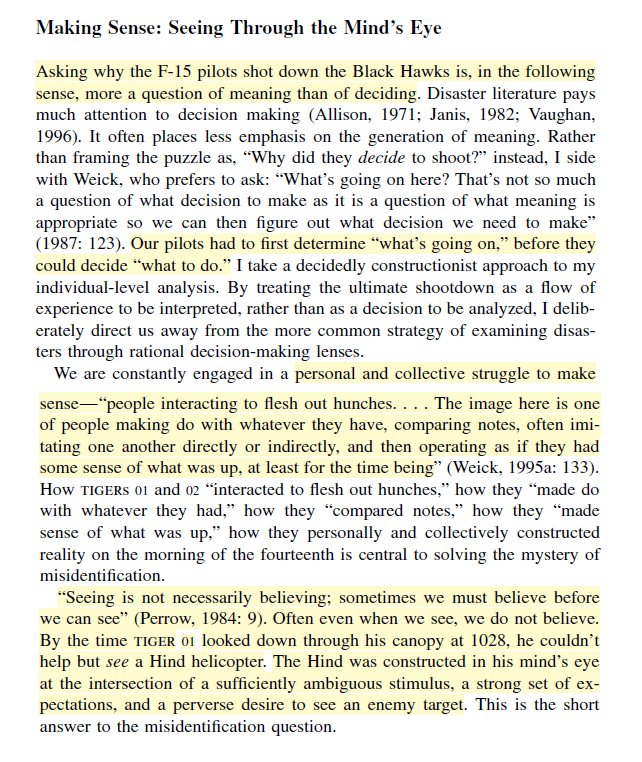
3. Believing is seeing, expectations colour reality: “The more expected an event, the more easily it is seen or heard… When perceivers act on their expectations, they may enact what they predict will be there. And when they see what they have enacted… they often confirm their prediction”
4. Social forces: “People create their own environments which then constrain their actions… It was within this subjective mental framework that ambiguous visual stimuli were interpreted”
For the lead pilot observing the helicopter, “he couldn’t help but **see** a Hind helicopter”.
And “if the expectations are accurate enough (satisficing), people gain confidence in their situational assessment and treat it as the definition of the situation”.