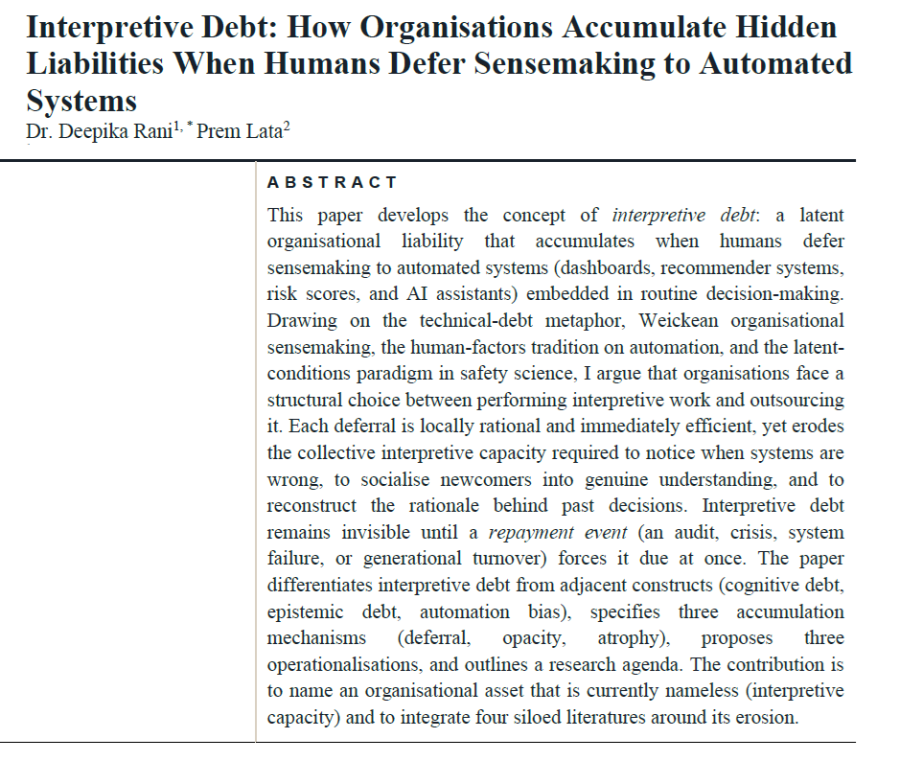
Does deferring decision-making to automated systems degrade our ability to understand our own organisations? This Weickian sensemaking theory article argues ‘Perhaps’ – what they call interpretive debt. E.g. a loan officer dets a ‘decline’ flag from an AI tool but accepts the recommendation without reviewing the applicant’s bank statements, or a manager relies on a… Continue reading Interpretive Debt: How Organisations Accumulate Hidden Liabilities When Humans Defer Sensemaking to Automated Systems
Tag: weick
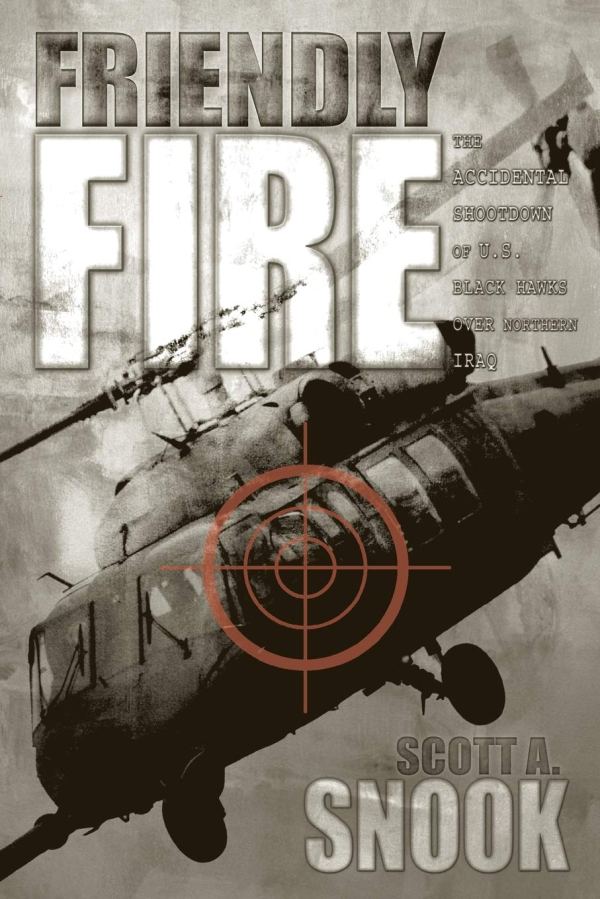
Snook Friendly Fire: “Seeing is not necessarily believing; sometimes we must believe before we can see… The Hind was constructed … at the intersection of a … ambiguous stimulus, a strong set of expectations, and a perverse desire to see an enemy”
Extracts from one of my fav books – Scott Snook’s Friendly Fire. It’s a masterclass in applying sensemaking to understand a tragic event – in this case the 1994 friendly fire shootdown of two US Black Hawks, mistaken for enemy Hind helicopters. I’ve recorded a YouTube vid focusing on the sensemaking / Weick & practical… Continue reading Snook Friendly Fire: “Seeing is not necessarily believing; sometimes we must believe before we can see… The Hind was constructed … at the intersection of a … ambiguous stimulus, a strong set of expectations, and a perverse desire to see an enemy”
“How can I know what I think till I see what I say?” – Karl Weick on sensemaking
“How can I know what I think till I see what I say?” I’ve always liked this expression from Karl Weick (taken from Graham Wallas), discussing the retrospective justification element of sensemaking. Pretty heavy for a Sunday morning my time. But here we are. Sensemaking is argued to entail: (image 1) · Thoughts justifying earlier words… Continue reading “How can I know what I think till I see what I say?” – Karl Weick on sensemaking
 SafetyInsights.org