
Does HOP improve organisational learning behaviours and reduce quality deviations? It turns out, probably.
This Master’s thesis from Chris Mastrangelo studied the effects of HOP principles on learning-behaviours, multi‑year trends in deviations, root‑cause classifications, corrective and preventive actions (CAPAs), and Human Performance Assessment (HPA) maturity assessments.
Thesis link in comments.
The HOP adoption was also discontinued during the study period, so there’s data on what happens when these principles are withdrawn, which is cool.
I’ve skipped HEAPS.
PS. Check out my YouTube: https://youtube.com/@safe_as_pod?si=iUaDPJynPemQRZhY
Shout a coffee: https://buymeacoffee.com/benhutchinson
Extracts:
· HOP “is a philosophy of how humans and organizations interact to accomplish work, which when adopted creates a cultural change that enables improved overall performance for an organization”
· It “supports better system design, allowing organizations to improve outcomes over time [and] based upon an understanding of how people work together with processes, facilities and each other as part of a system”
· It’s “not only a philosophy of risk management and system design; it is also a framework that shapes how organizations learn”
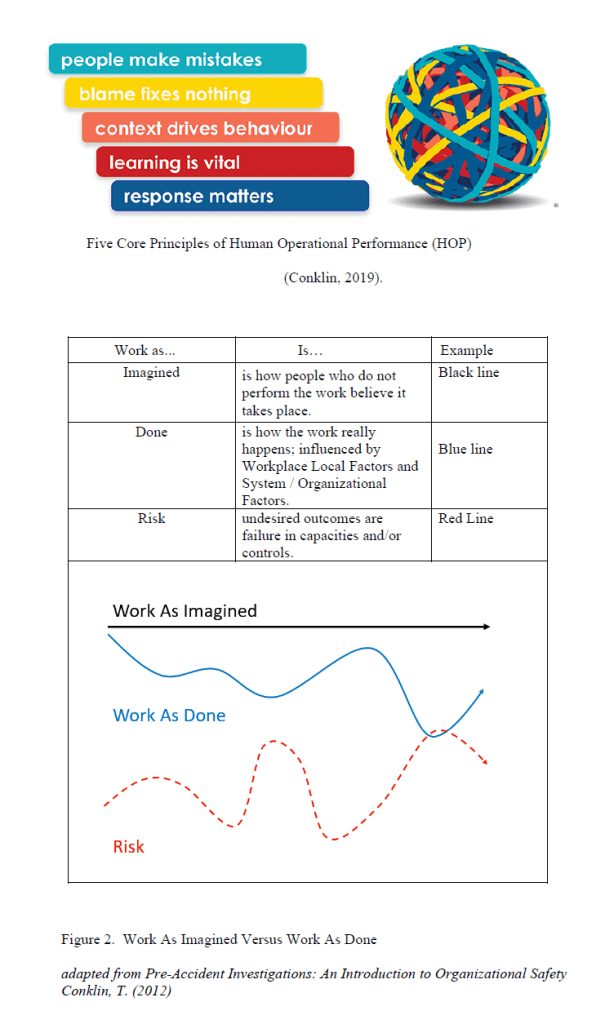
· Chris found a “strong alignment between HOP implementation milestones and improved operational and learning outcomes”
· “Deviation initiation rates declined steadily over several years, while root‑cause analysis shifted from Human Factors to Method‑based causes, indicating increased system‑based thinking”
· “The rise in system‑focused CAPAs, particularly Change Controls, further reflects a move toward strengthening work design and organizational reliability”
· “Increased use of system-focused CAPAs (notably Change Controls) demonstrates that the organization endeavored to strengthen reliability by improving how work is designed and executed, rather than relying on retraining”
· Interestingly, “Periods of reduced HOP oversight—most notably following the dissolution of the HOP team in mid‑2024—corresponded with declines in training maturity, leadership engagement, and system‑level corrective actions, reinforcing the importance of sustained governance”
· “findings support the hypothesis that implementing HOP principles enhances learning‑organization capabilities by improving psychological safety, problem solving, and error reduction”
· “When HOP is implemented well, it stops being a standalone initiative and becomes part of how people think, lead, and solve problems. Leaders begin asking better questions and respond differently when things go wrong. Investigations naturally incorporate systems thinking versus focusing on trying to fix people”
Thesis: https://dash.harvard.edu/handle/1/42731250
Ref: MASTRANGELO, CHRISTOPHER. 2026. Assessment of Efficacy of Human and Organizational Performance Methodology at a Large Biopharma Company. Masters Thesis, Harvard University Division of Continuing Education.


