Is your system configured to primarily learn from what goes wrong, ignoring the 99.9% of work that goes right (enough)?
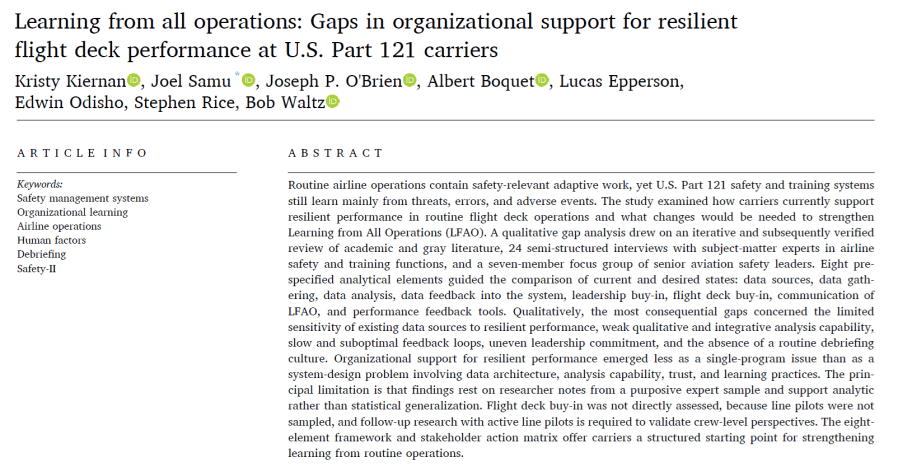
This aviation study investigated the gaps in org support mechanisms around resilient flight deck performance. Data via lit review, 24 semi-structured interviews & focus groups.
PS. Check out my YouTube: https://youtube.com/@safe_as_pod?si=V2dbdmW–WbnhzA9
Shout a coffee: https://buymeacoffee.com/benhutchinson
Background:
· “Historically, aviation safety research and practice have been organized mainly around failure”
· And while systems frameworks have helped broaden the analytical lens, “they too are anchored in the analysis of adverse events”
· “In ultra-safe systems, ordinary operations make up nearly all work, and they show how crews adapt to variability, resolve ambiguity, and keep operations within acceptable bounds”
· “Learning from All Operations (LFAO) addresses that blind spot by extending safety management beyond hazards and adverse events toward the study of everyday work”
Findings:
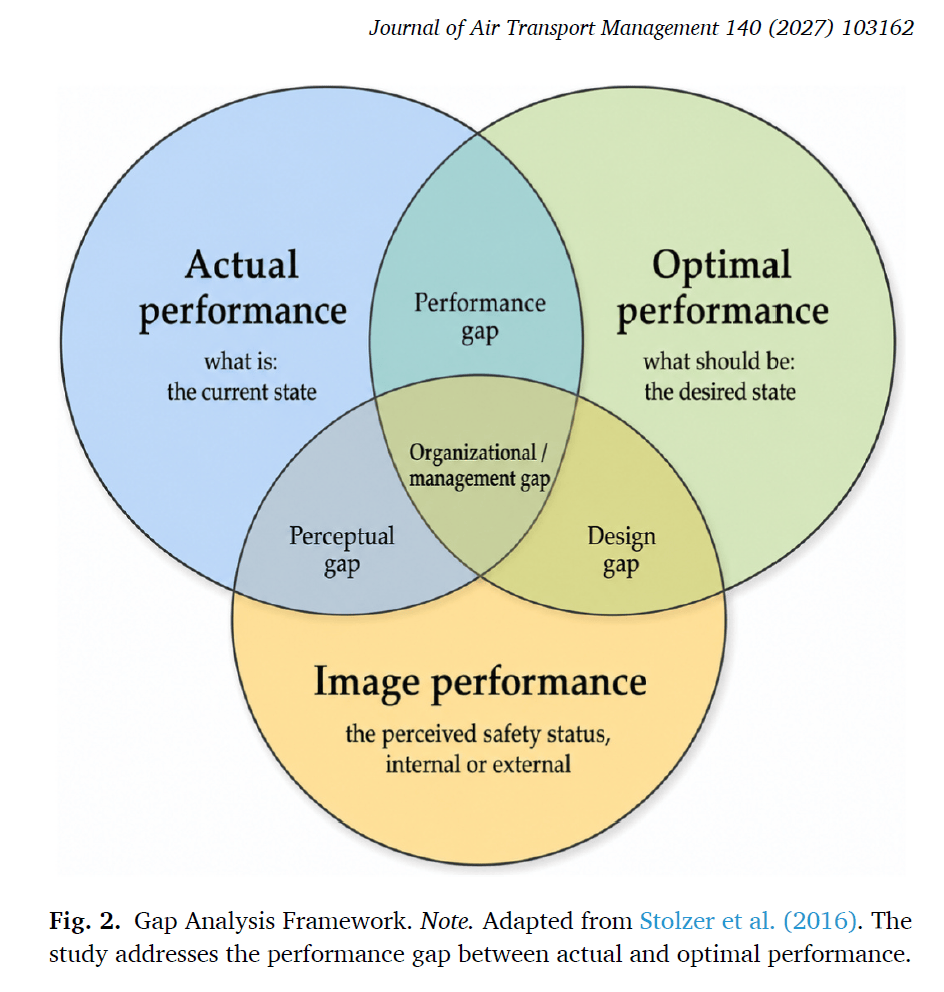
· “No standard yet exists for organizational support of resilient performance in routine operations”
· “Qualitatively, the most consequential gaps concerned the limited sensitivity of existing data sources to resilient performance, weak qualitative and integrative analysis capability, slow and suboptimal feedback loops, uneven leadership commitment, and the absence of a routine debriefing culture”
· “Organizational support for resilient performance emerged less as a single-program issue than as a system-design problem involving data architecture, analysis capability, trust, and learning practices”
· At the org level, “safety and training data that capture resilient performance should flow into simulator training, initial operating experience, and line checks”
· “Processes for revising standard operating procedures (SOPs) in response to routine-operations insights should be agile”
· “At the individual and team level, tools and processes should support informal learning: debriefs delivered via the electronic flight bag (EFB), short and digestible materials, storytelling that preserves context, and feedback loops that return information to pilots quickly”
· “Flight crews should understand the vocabulary of resilient performance and LFAO”
· “Performance feedback tools should provide pilots with actionable, timely, and accessible feedback for self-evaluation”
· “Existing gathering instruments have limited sensitivity to resilient performance”
· “Classification practices often strip operational context, producing analysis too generic to yield actionable insight into positive performance”
· “No standardized indicator set for resilient performance exists, and participants highlighted the difficulty of fusing data sources into a comprehensive picture of an event”
· Resilient ‘concepts remain abstract to decision-makers, demonstrated benefits are scarce, and commitment must extend through the organization rather than residing only at the top”
· “the vocabulary of resilient performance is not widely known among line pilots, that pilots often regard their own adaptive work as unremarkable and not worth reporting”
· “pilots’ necessary adaptations often remain hidden from management”
· “Debriefing after routine flights is neither formalized nor culturally expected: it is not taught, not evaluated, and not supported with paid time”
· “Although airlines collect large amounts of operational data, most safety learning still centers on threats … with far less systematic attention to how crews adapt successfully in ordinary work”
Why do the gaps exist?
· “the regulatory and institutional architecture of safety management rewards hazard documentation … so investment in hazard-oriented data infrastructure is auditable and defensible”
· “qualitative accounts of adaptive performance are discounted as anecdote, which suppresses demand for qualitative analysis capability and, in turn, keeps that capability scarce”
· “the economics of learning from success are unfavorable in the short run: benefits are diffuse and delayed, while costs (analyst time, observation programs, paid debriefing time) are concentrated and immediate”
Study link: https://doi.org/10.1016/j.jairtraman.2026.103162
#aviationsafety #resilienceengineering #hop #newview #safetyii #safetydifferently #resilience #humanandorganizationalperformance


