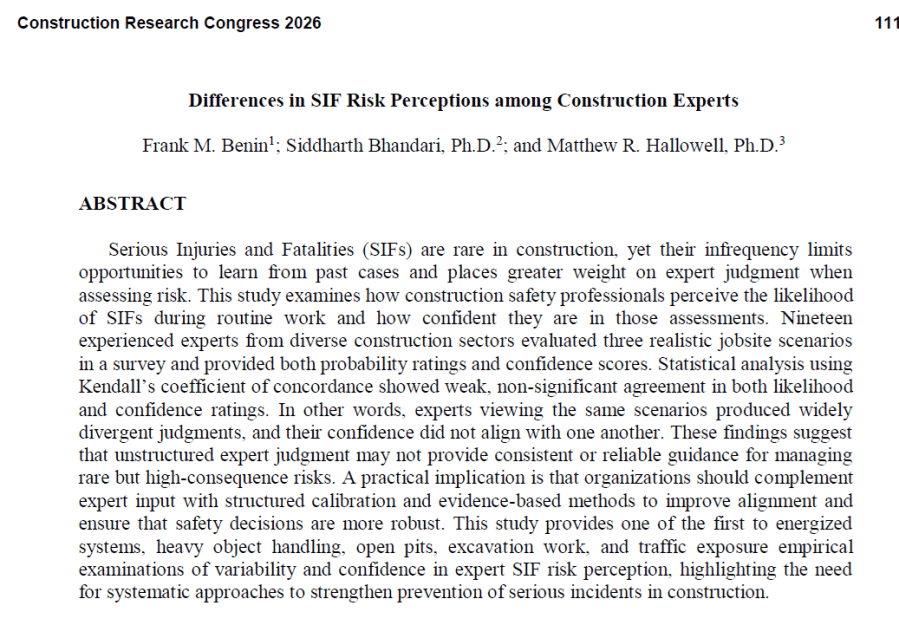
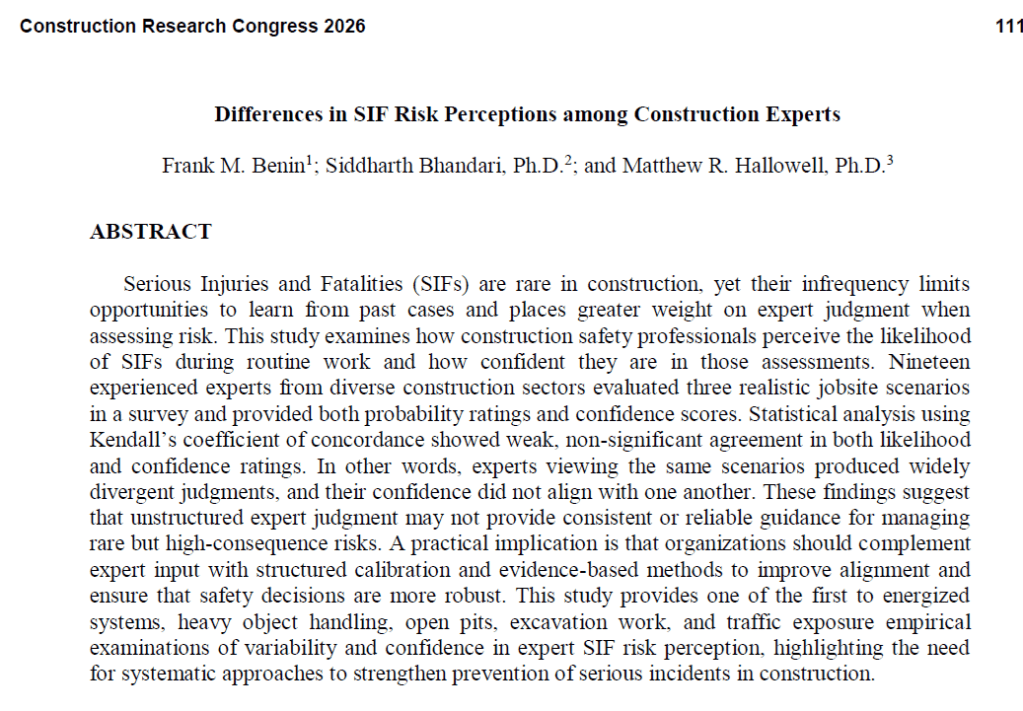
Would two construction experts see the same SIF threat on the same site?
This study from Frank Benin, Sid Bhandari & Matthew Hallowell evaluated how 19 construction experts perceive the likelihood of SIFs during routine work and how confident they were in those assessments.
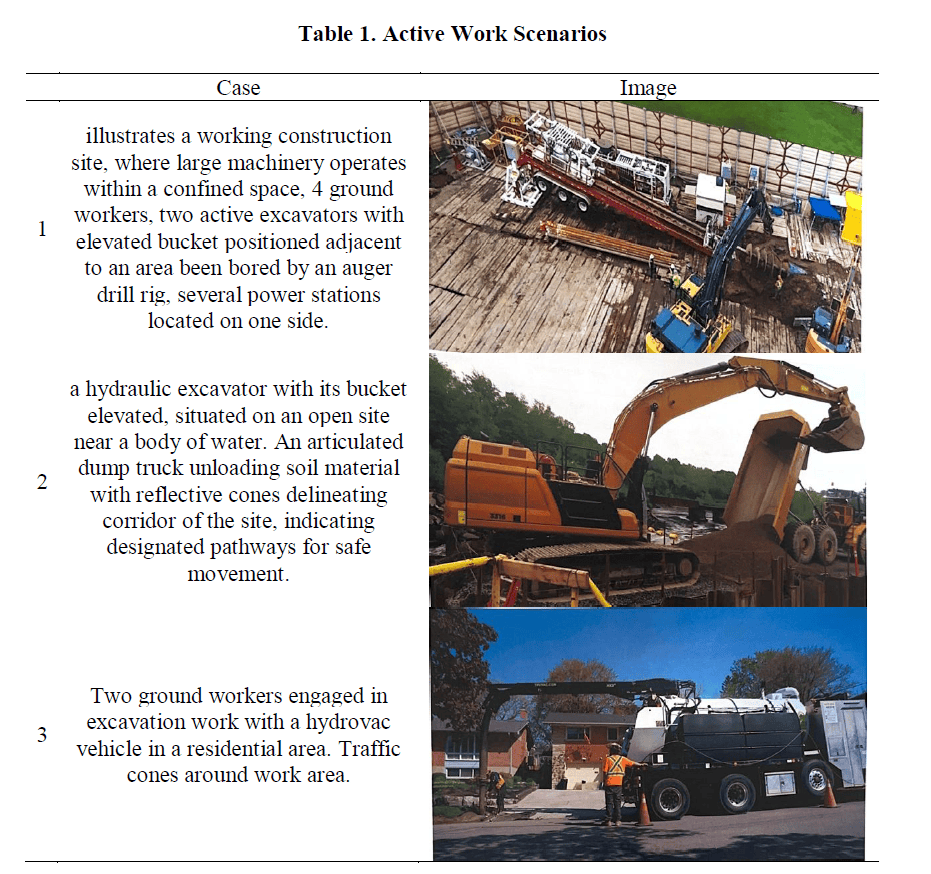
Assessments were sought via 3 work site scenario photos (so note limitations).
PS. Check out my YouTube and recent Critical Control / barrier vid: https://youtu.be/Ly1mEn_KCLQ?si=yG3yRVOM0r2eyyKI
Shout a coffee: https://buymeacoffee.com/benhutchinson
Extracts:
· The “infrequency of SIFs complicate efforts to analyze trends, extract lessons, and implement”
· “SIFs refer to life-threatening, life-altering, or life-ending events”
· “Yet because SIF events are rare … traditional metrics such as TRIR offer little guidance for prevention. Infrequent outcomes place greater weight on the judgments of safety professionals, yet these judgments are inherently uncertain”
· “Risk perception is defined as the subjective judgment that people make about the likelihood and severity of potential hazards”
· “Experts viewed the same routine construction scenarios and their SIF likelihood judgments varied widely”
· “They did not consistently rate SIF likelihood as very low. This is notable because SIF events are rare, so one might expect uniformly low ratings”
· “experts did not reach a reliable consensus on SIF likelihood across shared scenarios. Their confidence also did not line up, reinforcing that certainty and consensus diverged”
· They found that “unstructured expert judgment may not provide consistent or reliable guidance for managing rare but high-consequence risks”
· “Prior work shows that confidence does not reliably track accuracy, especially in low feedback domains, and that experts can be overconfident in their judgments”
· Even when experts are “presented with the same high energy elements for example proximity to mobile equipment or open excavations experts may prioritize different indicators or apply different internal thresholds for what constitutes a serious risk”
· “The rarity of SIFs also limits the reference class available for calibration, which can amplify divergence in judgments”
· “Inconsistent judgments mean that organizations cannot assume consensus when prioritizing safety interventions. If walkthroughs and audits yield divergent conclusions, attention and resources may be directed toward hazards that are not the most pressing, while higher-risk exposures receive less focus”
· “organizations should complement expert input with structured calibration and evidence-based methods to improve alignment and ensure that safety decisions are more robust”
Though notably, sample size was relatively limited, and static photos lack all of the salient cues people normally draw on.
#sif #safety #constructionsafety #csra


