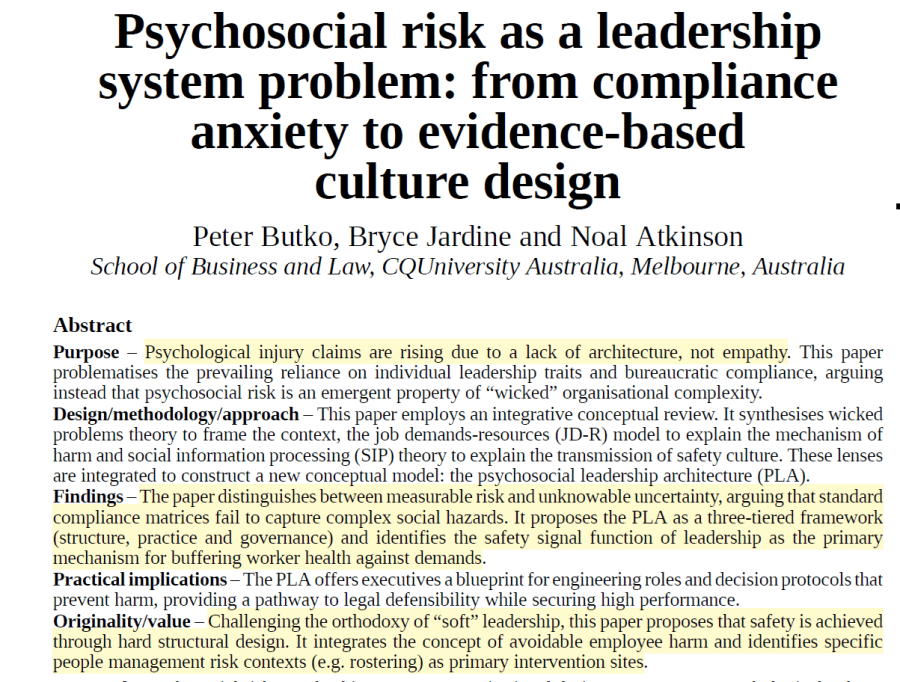
“Psychological injury claims are rising due to a lack of architecture, not empathy” An interesting ‘integrative conceptual review’ of the traps of current compliance-driven approaches to psychosocial challenges, and a way forward. They argue that the current approach places “reliance on individual leadership traits and bureaucratic compliance” over recognising the emergent/wicked nature of psychosocial risk.… Continue reading Psychosocial risk as a leadership system problem: from compliance anxiety to evidence-based culture design
Tag: technology
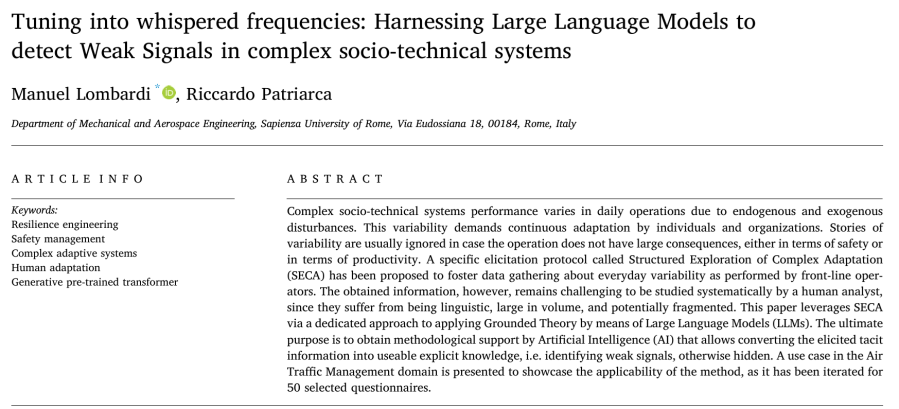
Tuning into whispered frequencies: Harnessing Large Language Models to detect Weak Signals in complex socio-technical systems
This study evaluated whether LLMs can support a scaled and systematic analysis of surveyed data about worker adaptive practices, to foster weak signal ID. E.g. can LLMs help identify weak signals from large-scale data. In this case, textual data describing frontline personnel adaptive behaviours during everyday operations. This was obtained via survey. PS. Check out… Continue reading Tuning into whispered frequencies: Harnessing Large Language Models to detect Weak Signals in complex socio-technical systems
How is AI changing the nature of work?
What can we learn about how AI changes work based on >180k GitHub users? Turns out, quite a lot. AI induces people to shift task allocation towards their core work and away from non-core, project management activities. #ai #chatgpt #github #work #llm #artificialintelligence
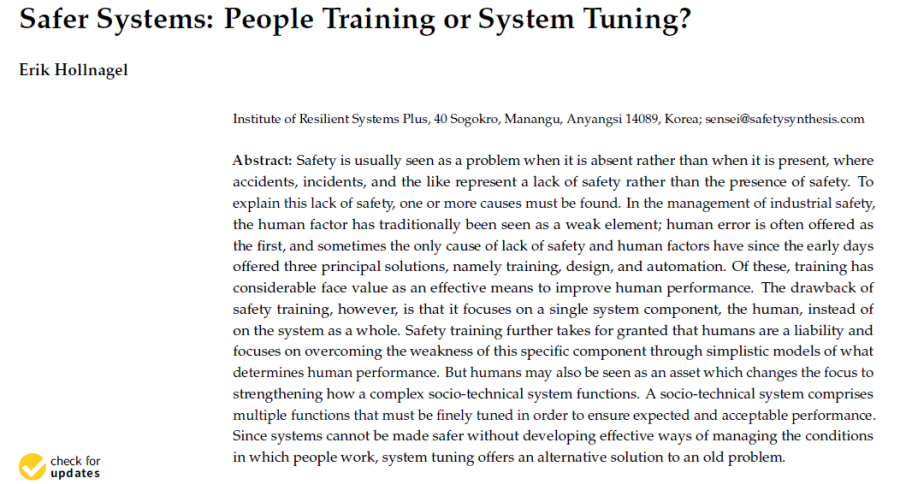
Safer Systems: People Training or System Tuning?
Hollnagel discusses the role of training in complex systems. Shared under open access licence. PS. Check out my YouTube channel: Safe As: A thrifty analysis of safety, AI and risk – YouTube Extracts:· “Safety is usually seen as a problem when it is absent rather than when it is present, where accidents, incidents, and the like… Continue reading Safer Systems: People Training or System Tuning?
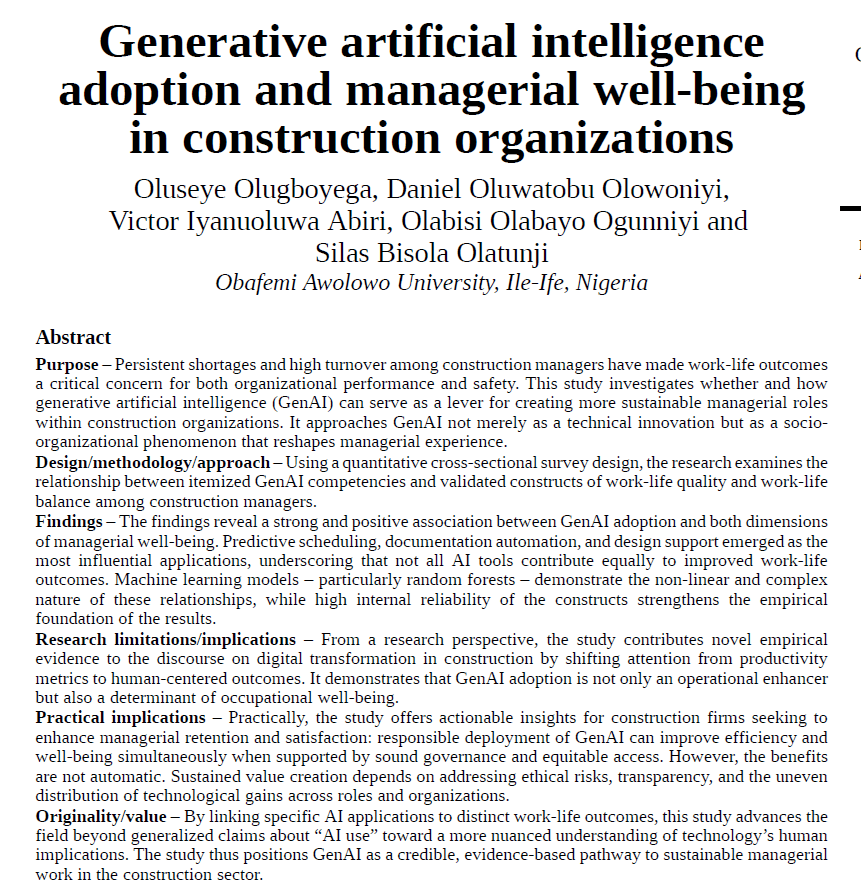
Generative artificial intelligence adoption and managerial well-being in construction organizations
Can GenAI improve workplace well-being and work-life balance? Perhaps. This survey study of 261 construction industry managerial professionals in Nigeria provided insights. PS. Check out my YouTube channel – link in comments. Findings: · “findings reveal a strong and positive association between GenAI adoption and both dimensions of managerial well-being” · “Predictive scheduling, documentation automation, and design… Continue reading Generative artificial intelligence adoption and managerial well-being in construction organizations
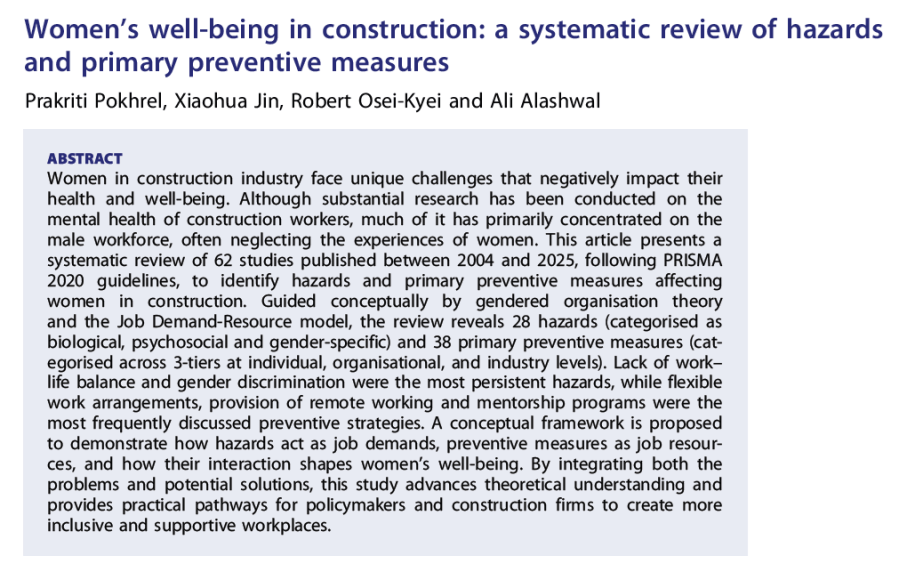
Women’s well-being in construction: a systematic review of hazards and primary preventive measures
This systematic review unpacked 62 studies looking at women’s well-being in construction, and key hazards and prevention measures. ** Check out my YouTube channel: https://www.youtube.com/@safe_as_pod Background: · “construction industry is often shaped by a macho work culture marked by aggression, bullying, and job insecurity due to the nomadic and cyclical nature of projects” · “women face not… Continue reading Women’s well-being in construction: a systematic review of hazards and primary preventive measures
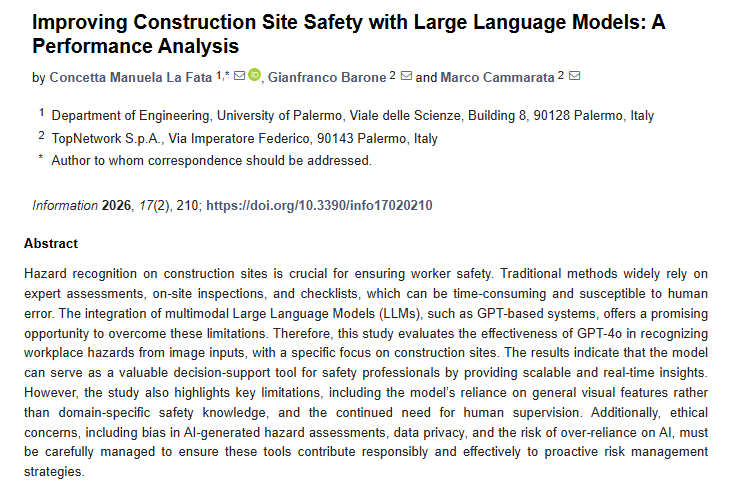
Improving Construction Site Safety with Large Language Models: A Performance Analysis
This preliminary, proof of concept study explored the effectiveness of GPT-4o in construction visual hazard recognition. They contrasted performance against OHS experts. Source was **static images** from Google and real construction sites (not real-time video analysis). The LLM & experts were asked to rate the hazard, justify their judgement, and assess the immediate issues, use… Continue reading Improving Construction Site Safety with Large Language Models: A Performance Analysis
Safe As: Can AI make your doctors worse at their job?
Can #AI make your doctor worse at their job? This multicentre study compared physician ADR (Adenoma Detection Rate) before and after AI-assisted detection – and then after removing the AI-assistance. What do you think – will the overall benefits of AI overweigh the negative and unintended skill drops of people? (*** Please subscribe, like and… Continue reading Safe As: Can AI make your doctors worse at their job?

Knowledge in the head vs the world: And how to design for cognition. Norman – Design of Everyday Things
Here Don Norman discusses knowledge in the head vs knowledge in the world – from The Design of Everyday Things. Extracts:· “Every day we are confronted by numerous objects, devices, and services, each of which requires us to behave or act in some particular manner. Overall, we manage quite well” · “Our knowledge is often quite incomplete,… Continue reading Knowledge in the head vs the world: And how to design for cognition. Norman – Design of Everyday Things

The literacy paradox: How AI literacy amplifies biases in evaluating AI-generated news articles
This study explored how AI literacy can amplify biases when evaluating AI-generated news based on their content type (data-driven vs emotional). Extracts: · “Higher AI literacy can intensify opposing biases. When individuals better understand the use of AI in creating data-driven articles, they exhibit automation bias… Conversely, when AI generates opinion- or emotion-based articles, high literacy… Continue reading The literacy paradox: How AI literacy amplifies biases in evaluating AI-generated news articles
 SafetyInsights.org